
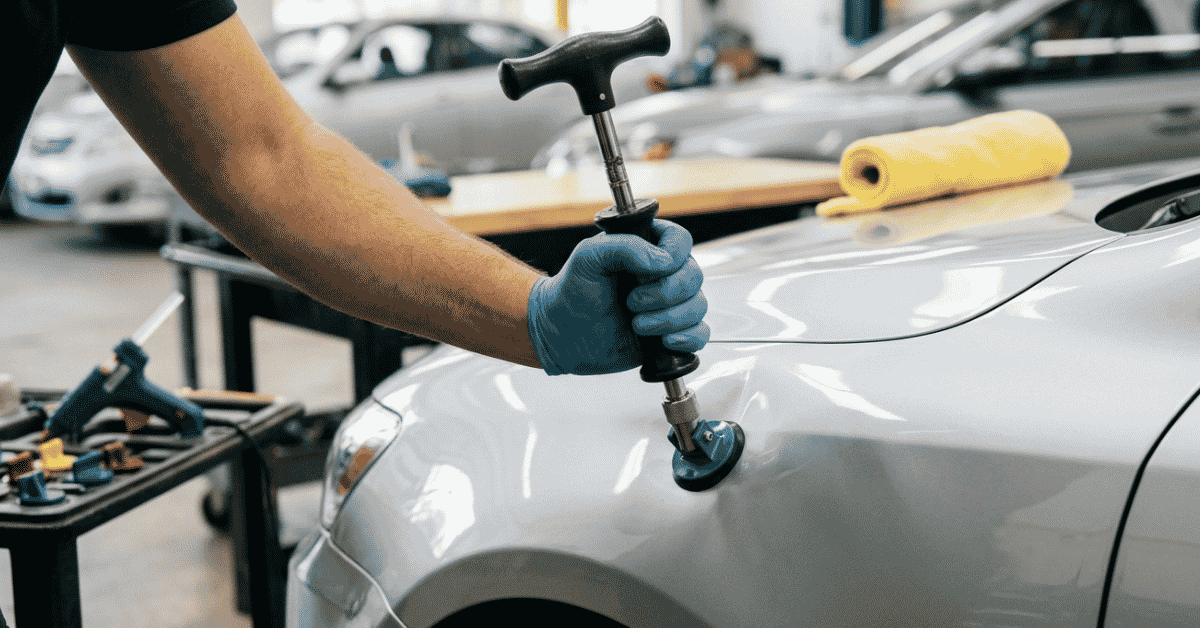
Dealing with a dent on your car can be frustrating, but you don’t always need a trip to the body shop. The right tool can make the difference between a quick DIY fix and a costly mistake. Our research shows countless vehicle owners are looking for effective ways to restore their car’s appearance after minor impacts.
When you’re eyeing that ding, understanding your options is key. Manufacturer specifications confirm that panel material and dent shape significantly impact success rates. As of 2026, many DIY kits aim to replicate professional techniques, but selecting the correct tool for the specific damage is paramount.
Quick Answer: What’s Your Best Bet for Popping Dents?
For most shallow, round dents, a glue puller kit offers good control and effectiveness. For very light, smooth dents, a suction cup dent puller can work. Sharp dents or those on body lines are best handled with more advanced PDR tools or professional intervention.
Understanding Different Dent Repair Tools
When you’ve got a dent, the first step is knowing what you’re working with. There’s a range of tools designed to tackle these imperfections, each with its own approach and best use case. It’s less about a single “magic wand” and more about matching the tool to the specific type of damage.
Suction Cup Dent Pullers: Easy Does It
These are probably the simplest tools you’ll find for dent removal. Think of them as strong vacuum cups. You press one onto a smooth surface around the dent, create a seal, and then pull.
Aggregated reviews report they work best on larger, shallow dents where the panel surface is relatively flat. The key is a good, airtight seal. They’re generally inexpensive and don’t involve chemicals, making them appealing for minor dings.
Glue Puller Kits: Precision and Power
Glue puller kits represent a step up in complexity and often, effectiveness, especially for smaller or slightly sharper dents. These kits typically include a pulling device, specialized hot glue sticks, and various-sized plastic tabs. You heat the glue, apply it to a tab, stick the tab onto the dent, let the glue cure, and then use the pulling device to yank the tab, hopefully lifting the dent.
Manufacturer specifications indicate that the bond strength of the glue is critical for success. This method requires a bit more patience and precision than a simple suction cup.
Rod and Knockdown Tools: For the Detail-Oriented
This category is closer to what professional Paintless Dent Repair (PDR) technicians use. It involves specialized metal rods that can be inserted through small openings in the car’s body (like around window seals or light fixtures) to access the backside of the dent. By carefully and gently pushing on the dent from behind, the panel can be massaged back into its original shape.
Often, a “knockdown” tool is used on the front side to tap down any high spots created during the process. This method offers the most control but has the steepest learning curve for DIY users.
DIY Hacks: When to Try Them (and When Not To)
You’ve probably seen or heard about some unconventional methods for dent removal. These often involve common household items like hairdryers, compressed air cans, or even boiling water. The idea is to rapidly heat and then cool the metal or plastic, causing it to contract and potentially pop the dent back into place.
While these can sometimes work for very minor dents, especially on plastic bumpers, they are highly inconsistent. Our research indicates that significant risk of paint damage exists with rapid temperature changes, particularly from heat. For anything more than a minor cosmetic imperfection, relying on dedicated tools is far more reliable.
Comparing Tools: Pros and Cons for Your Dent
Choosing the right tool hinges on understanding what each offers and where it falls short. It’s a balance of ease of use, effectiveness, and the potential for making things worse if misapplied.
Suction Cups: The Good and The Meh
These are fantastic for their simplicity. You clean the area, place the cup, and pull. They require no chemicals and are generally the most budget-friendly option.
However, their limitations are significant. They only work on smooth, non-creased dents on relatively flat surfaces. If the dent has sharp edges or is on a curved panel, the suction cup won’t create a proper seal, rendering it useless.
Forget using them on textured surfaces or areas with body lines.
Glue Pullers: What Works and What Doesn’t
Glue pullers offer more versatility. They can often tackle dents with slightly sharper characteristics than suction cups can handle, and the precision of placing tabs allows for more targeted pulling. The downside?
You need to buy the specialized glue sticks, and improper use, like pulling too hard or too fast on fragile paint, can potentially cause damage. Aggregate reviews report that the quality of the glue and the technique used are as important as the tool itself. They also require a bit more cleanup to remove the glue residue.
Rods and Knockdowns: Professional Control
This is where you get fine-tuned control. With access to the back of the panel, you can meticulously work the dent out, essentially massaging the metal back into place. This allows for the most precise repairs, especially for complex dents.
The major drawback is the steep learning curve. It takes practice to understand how the metal responds and to avoid creating new high spots or stretching the metal. For many DIYers, this method can be intimidating.
What Kind of Dent Can You Actually Fix?
Not all dents are created equal, and the success of any tool dramatically depends on the damage itself. Understanding the shape and location of a dent is your first real step in choosing the right approach.
Best Tools for Shallow, Round Dents
For those common, coin-sized indentations that are softer and round, a good quality suction cup dent puller can be your best friend. The key here is a clean, flat surface around the dent to ensure a strong vacuum seal. You press firmly, pump the handle or lever to create suction, and then pull steadily.
It’s often about finding one strong pull that pops it back out.
Tackling Larger, Broader Dents
Think of the kind of dent a shopping cart might leave, wider and less defined. For these, a heavier-duty suction cup dent puller with a larger surface area might work, providing more surface to grip. Alternatively, a glue puller kit with a larger tab can also apply more even force across the broader area.
The goal is to get enough consistent pull to gently lift the entire section of the panel.
The Challenge of Sharp Dents and Body Lines
These are tougher nuts to crack for DIY tools. Sharp dents, often called “crease dents,” have deformed the metal significantly. Dents located directly on a body line, where the panel’s contour changes sharply, present an even greater challenge because the metal is already stressed.
While a glue puller kit might offer some success here by allowing precise tab placement, it often requires multiple pulls and careful manipulation. Many times, these types of dents are best left to professionals who use specialized PDR rods and techniques.
Fixing Dents on Plastic Bumpers
Plastic bumpers are different from metal panels. They’re more flexible. Sometimes, you can heat the plastic with a hairdryer (not too hot!) and then gently push the dent out from behind.
Conversely, rapidly cooling a heated area with compressed air (held upside down) can cause contraction that might pop it out. These DIY hacks, while not foolproof, are often your first line of defense for plastic bumper damage. Specialized plastic dent pullers also exist if the hack doesn’t do the trick.
If you’re interested in general car maintenance and keeping your vehicle running smoothly, check out this guide on Car Maintenance Schedule.
How to Use Dent Pulling Tools: Getting It Right
Successfully removing a dent with a tool isn’t just about the tool itself; it’s about the preparation and the technique. Even the best suction cup dent puller or glue puller kit won’t work if you skip crucial steps or rush the process. Our editorial analysis of many DIY repair attempts shows that patience and following a methodical process yield the best results.
Step 1: Prep the Area for Repair
Before you even reach for a tool, cleanliness is key. Wash the dented area thoroughly with car soap and water to remove dirt and grime. Then, use an isopropyl alcohol solution to degrease the spot.
This removes any wax, polish, or residue that could prevent a strong bond for suction cups or glue. A clean surface ensures maximum adhesion for whatever method you choose.
Step 2: Applying the Tool (Suction, Glue, or Rod)
For suction cups, firmly press the cup onto the center of the dent, ensuring a complete seal. For glue pullers, heat the specialized glue to the recommended temperature and apply it to the selected tab. Quickly press the tab onto the dent’s surface, holding it for a few seconds to ensure it adheres.
If using rods, this step involves carefully positioning the tip against the backside of the dent.
Step 3: The Pull or Push
With suction cups, engage the pulling mechanism, which might be a lever or a slide hammer, and pull steadily. For glue pullers, attach the pulling bridge or slide hammer to the tab and apply firm, controlled force. It might take several attempts, varying the pulling pressure slightly each time.
If using rods, apply gentle, consistent pressure to push the metal outward. Remember, it’s about coaxing the metal, not forcing it.
Step 4: Finishing Touches and Cleanup
Once the dent seems popped out, carefully remove the tab or suction cup. For glue pullers, you’ll need to use a plastic scraper and a specialized glue remover. Any remaining residue should be cleaned with isopropyl alcohol.
Inspect the area; if any high spots remain, a technique called “tapping down” with a PDR knockdown tool might be necessary, but this is advanced. A final polish will restore shine. For more on maintaining your car’s appearance, consider looking at 7 Car Window Washing Tools That Shine.
Common Mistakes to Avoid When Fixing Dents
Even with the right tool, mistakes happen. They can range from simple procedural errors to fundamental misunderstandings about how dent repair works. These errors often lead to frustration, wasted effort, or even making the dent worse.
Over-Pulling and Damaging Paint
This is a big one. Pulling too hard or too fast, especially with glue pullers or strong suction cups, can lift the paint off the car. This is particularly common if the original paint is already compromised by age, UV exposure, or previous damage.
Manufacturer specifications for automotive finishes advise against excessive force on delicate surfaces. Always start with gentle pressure and gradually increase if needed.
Using the Wrong Tool for the Dent Type
Trying to pull a sharp crease with a basic suction cup is a recipe for disappointment. Likewise, attempting to fix a large, shallow dent with a tiny glue tab might not provide enough surface area for effective pulling. Matching the tool’s capability to the dent’s severity and shape is crucial.
If you’re interested in a broader overview of automotive tools, 9 Car Engine Oil Change Tools Worth Having offers insight into specialized equipment.
Inadequate Surface Preparation
As mentioned, dirt, grease, or wax can ruin a repair attempt before it even begins. These contaminants interfere with the adhesion of suction cups and glue, leading to loss of seal or the tab detaching prematurely. Always ensure the area is meticulously cleaned and degreased.
This simple step dramatically improves the chances of success, a fact confirmed by numerous automotive repair guides.
When to Call in the Pros Instead
While DIY dent repair is appealing, there are definite limits. If a dent is deep, involves a sharp crease, or is on a complex body line, professional Paintless Dent Repair (PDR) technicians have the specialized tools and expertise to handle it. They can often repair dents that are beyond the scope of consumer-grade kits.
Damage that has broken or cracked the paint is also a job for professionals, as attempting to pull such dents can lead to further paint flaking. For complex repairs, it’s often a more cost-effective long-term solution.
Final Verdict: Which Dent Tool Should You Grab?
For most small to medium-sized dents that are shallow and round, a glue puller kit generally offers the best balance of effectiveness and user-friendliness for DIYers. They provide more control than suction cups and are less intimidating than professional rod sets. If you’re dealing with very light, smooth dents, a suction cup dent puller is a low-cost option to try first.
For anything more significant or complex, consider that professional PDR services might be a wiser investment to avoid further damage.