
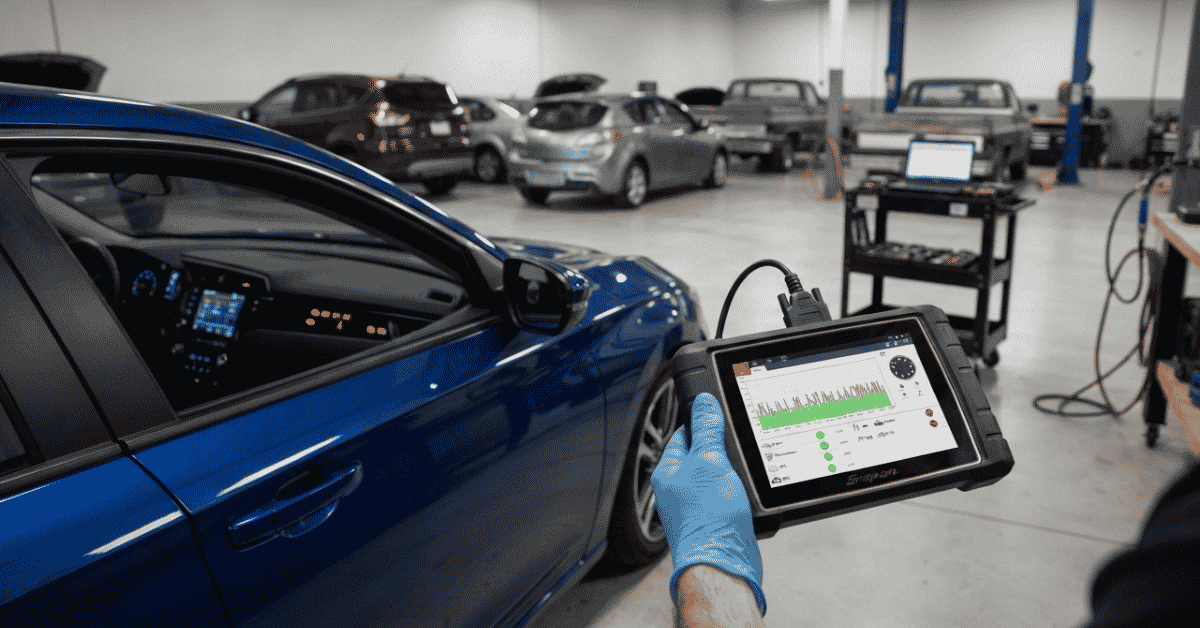
Scan Tools for All Cars help read fault codes, check warning lights, track live data, and make basic car checks less stressful and more clear.
Scan Tools for All Cars once seemed too technical. I pictured strange codes, wires, and hard menus. Then one check-engine light changed my mind. The dash glowed amber while the engine sounded normal. I wanted facts before guessing at repairs. A scan tool gave me that first clue. This guide covers tool types, smart use, limits, and habits. Start simple, then build skill with each scan.
Can Scan Tools for All Cars Really Help?
Scan Tools for All Cars can help quite a lot. Still, I doubted them before my first real test.
One evening, a warning light came on suddenly. The cabin smelled faintly like warm plastic and coffee.
The engine still felt smooth at idle. That made the light even more confusing.
I plugged in a small scanner nearby. The port sat low beneath the dash.
The tool lit up with a soft beep. A code appeared within a few short moments.
That code did not fix the car. Still, it gave me a useful place to start.
I stopped guessing about random parts. I could read the fault, note symptoms, and plan next steps.
Maybe that is their best use. Good scan tools turn confusion into useful clues.
Life Before I Found This
Before owning a scanner, warning lights felt mysterious. I would stare at the dash and imagine huge repair bills.
The garage smelled like old oil and rubber. My phone screen stayed bright beside the steering wheel.
I would search broad symptoms for hours. Each page gave a different possible cause.
That made me more confused, not less. A rough idle could mean many things.
A warning light could also mean many things. Without codes, I was working from weak clues.
I even replaced one part too early once. That was an expensive lesson.
A basic scan tool helped slow me down. I learned to read first and replace parts later.
That change alone saved me stress.
Why This Matters Right Now
Cars now rely on many electronic systems. Engine, transmission, brakes, airbags, and other parts may use control modules.
That means warning lights can hold useful data. A scan tool can read some of that data.
Basic models may only read common engine codes. Better units can reach more systems.
Some tools can also show live sensor data. That makes diagnosis much more useful.
Still, not every tool works with every car feature. Vehicle year, brand, protocol, and module access matter.
That is why the phrase all cars needs care. One scanner may support many cars, but not every feature.
I always check coverage before buying. Broad support sounds great, but real compatibility matters more.
The First Big Lesson
The first big lesson was simple. A fault code is not the same as a failed part.
I used to think a code named the bad component. That idea can lead to costly mistakes.
A code often points toward a system or condition. It may show lean fuel, bad signal, or sensor range issues.
The true cause could sit somewhere else. A loose hose might trigger a related sensor code.
Bad wiring can create strange readings too. A weak battery can even cause odd faults.
I now treat codes like clues. I read the code, check symptoms, and inspect related parts.
Live data can help next. Freeze-frame data can also show conditions during the fault.
That process feels slower at first. Still, it saves me from throwing parts at the car.
Small Tactics That Actually Work
I keep a simple scan routine every time. First, I make sure battery voltage seems healthy.
Then I plug the tool into the diagnostic port. I turn the key or start the car as needed.
I read all stored and pending codes first. I write them down before clearing anything.
That step matters a lot. Clearing too soon can erase useful clues.
Next, I check freeze-frame data if available. It may show speed, load, temperature, or fuel values.
I also compare live data at idle. Odd readings can point me toward the next check.
I never clear a code just to hide a light. I clear it after I understand the issue.
Then I drive and scan again. Repeat faults often tell a stronger story.
A Strange Detail I Noticed
One strange detail surprised me after many scans. Sometimes the quietest data line tells the most.
I once watched several live values at once. Most numbers bounced as expected.
One sensor barely moved at all. That flat reading felt odd right away.
The engine sound had a soft uneven pulse. I could hear it more than feel it.
That sensor was not proven bad yet. Still, the flat data gave me a clue.
I guess scan work is partly pattern watching. Numbers do not need to look dramatic to matter.
A value that stays too still can be useful. So can one that jumps too much.
Tiny changes can tell a bigger story.
Style Comparison & Data
Different Scan Tools for All Cars serve different users. I compare them by access, ease, and depth.
| Tool Type | Best Use | Main Benefit |
|---|---|---|
| Basic code reader | Check-engine lights | Fast code reading |
| Bluetooth scanner | Phone-based checks | Small, easy setup |
| Midrange scanner | DIY diagnosis | More live data |
| Bidirectional tool | Advanced testing | Active system tests |
| Pro scan tablet | Shop-level work | Broad module access |
I think beginners often need less than expected. A basic scanner can handle many first checks.
Advanced tools make sense for deeper work. More functions also mean more learning.
The best tool should match the repairs you actually do.
Non-Obvious Gains
Good Scan Tools for All Cars can offer more than fault codes. Some benefits only become clear with time.
-
Less guessing: Codes give a stronger starting point.
-
Better records: Saved scans help track repeat faults.
-
Smarter repairs: Data can prevent random part changes.
-
Better shop talks: You can describe symptoms with more detail.
-
Early warning: Pending codes may show issues before lights stay on.
The better shop talk surprised me most. A clear code plus symptoms can save time.
I can explain what happened, when it happened, and what data looked odd.
That does not replace a skilled tech. It simply makes the conversation more useful.
Myths vs. My Reality
I used to think scan tools could diagnose everything. But then codes led to several possible causes.
I used to think clearing a code fixed the issue. But then the same light returned the next day.
I used to think more expensive meant easier. But then some advanced menus slowed me down.
I used to think Bluetooth tools were toys. But then a good one gave useful live data.
I also thought one scanner truly worked on every car. That was too broad.
Basic OBD functions may work across many vehicles. Deep module access can vary by make and year.
Now I check compatibility before buying. I also check which systems the tool can reach.
That saves disappointment later.
Essential Principles for Mastery
My scan routine has four parts: read, record, compare, and test.
Read means pulling all available codes first. Stored, pending, and permanent codes can each matter.
Record means saving codes before clearing them. I also note mileage, symptoms, and warning lights.
Compare means checking live data against normal behavior. One odd value should not stand alone.
I look for patterns across related sensors. That often gives better clues.
Test means confirming the cause before replacing parts. Visual checks still matter a lot.
Wiring, hoses, plugs, and connectors can fail. Scan tools cannot see every physical problem.
I also avoid random resets. Clearing adaptations can change how the car runs.
Advanced commands need extra care. Bidirectional tests can move parts or start systems.
Good scan work mixes data with common sense. The tool helps, but judgment still leads.
FAQs About Scan Tools for All Cars
What are Scan Tools for All Cars?
Scan Tools for All Cars are diagnostic devices made to read vehicle fault data across many makes and models. Features vary, but they may read codes, show live data, clear faults, and access extra modules.
Do scan tools really work on every car?
Not always. Many tools support common OBD functions across a wide range of cars, but deeper access can vary. I always check make, model, year, system coverage, and protocol support before buying.
Can a scan tool tell me which part is bad?
Not always. A code often points to a system or fault condition, not one guaranteed failed part. I use codes with symptoms, live data, visual checks, and tests before replacing anything.
Is a Bluetooth scan tool good enough?
It can be good for basic and mid-level DIY work. A quality adapter plus a solid app may read codes and live data well. Advanced functions may still need a dedicated scanner or brand-level tool.
Should I clear codes after reading them?
I save the codes first. Then I clear them only after checking the issue or finishing repairs. Clearing too early can remove useful data and make the next diagnosis harder than it needs to be.
My Final Takeaway
Scan Tools for All Cars can make car problems feel less vague. I like them most for clues, not instant answers.
Read the codes before buying parts. Save the data and compare related values.
Check tool coverage before spending money. One scanner may be broad, but no tool does everything.
Start with the features you truly need. A calm scan and good notes can save far more than random guessing.