
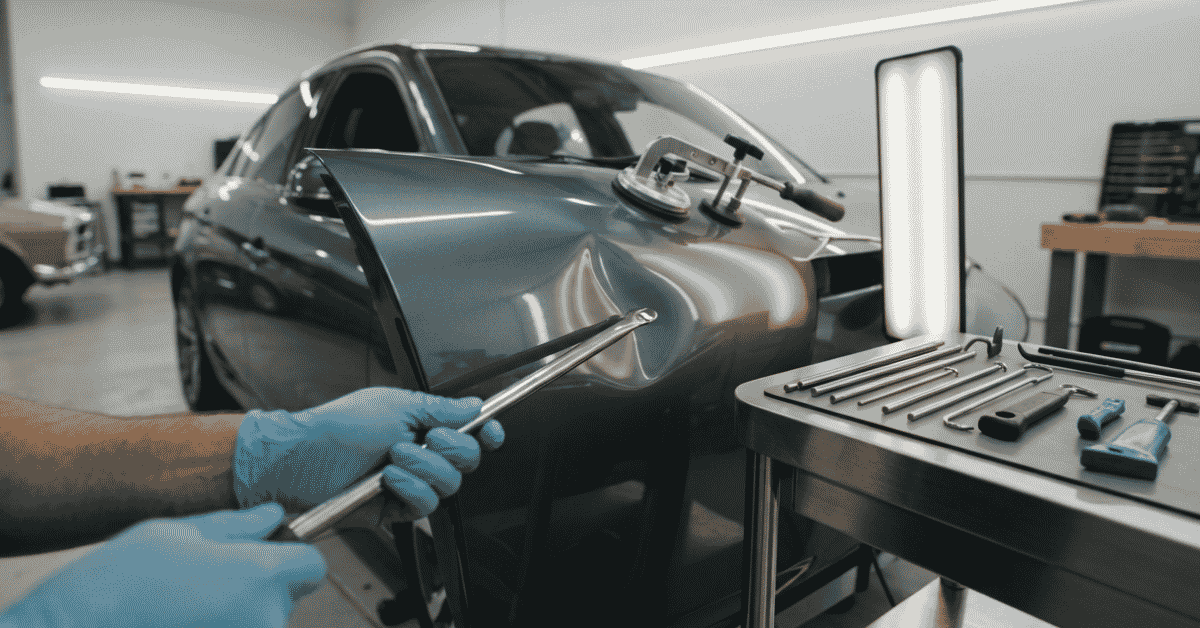
Tools for Dent Repair of Car can help fix small dings, shape panels, and reduce shop visits when damage is light and access is good.
Tools for Dent Repair of Car once looked odd. Rods, tabs, hammers, lights, and glue felt excessive. Then one small door ding changed my view. The paint looked fine, but the dent caught light badly. I wanted a cleaner fix without making things worse. This guide shares the tools, methods, limits, and small habits I trust most. Start slow, protect the paint, and judge each dent first.
Can Tools for Dent Repair of Car Really Work?
Tools for Dent Repair of Car can work surprisingly well. Still, I had doubts before trying them myself.
One small dent sat near my rear door. It looked tiny from straight ahead.
Then sunlight hit the panel at noon. A dark wave bent across the paint.
The garage smelled like warm rubber and old cardboard. A loose fan clicked near the wall.
I kept staring at that little dip. It bothered me more each time.
A simple reflection light showed the dent much better. I could finally see its shape and center.
That was the first useful step. Repair became less about force and more about reading metal.
I guess that is the real trick. Good tools help you see before you push.
Life Before I Found This
Before learning dent repair, I used bad shortcuts. I once tried pushing a panel by hand.
That did almost nothing useful.
The metal felt cold beneath my palm. My fingers slipped across the smooth inner panel.
I also tried a suction cup once. It popped free with a loud slap.
The dent barely changed at all.
I felt annoyed because the damage looked so small. Yet small dents can have sharp centers and tight edges.
Without the right tools, I was guessing. Guessing usually meant too much force in the wrong place.
Once I learned basic dent tools, the process felt less chaotic.
The tools gave each move a clear purpose.
Why This Matters Right Now
Small dents happen all the time. Parking lots seem especially good at creating them.
A cart rolls loose, a door swings wide, or hail drops fast.
Minor dents may not hurt how the car runs. Still, they can hurt appearance and resale appeal.
Professional repair can be worth the cost. Yet very small dents may tempt owners toward DIY work.
That makes tool choice important. The wrong tool can crack paint or stretch metal.
Paintless dent repair tools are most useful when paint stays intact.
Sharp creases and deep body damage are harder. Some dents also sit near braces or panel edges.
I think knowing the limit matters most. A cheap fix can become costly after one bad push.
The First Big Lesson
The first lesson was simple: find the dent shape first.
I used to focus only on the deepest spot. That made me miss the wider low area.
A dent is rarely just one tiny point. Metal around it may also hold tension.
Reflection boards or line lights help show that shape. The lines bend as they cross low spots.
I found this strange at first. Then the pattern started making sense.
Dent rods can push from behind. Glue tabs can pull from the front.
Knockdown tools can tap raised spots back down. Each tool solves a different part.
That means repair is often push, check, tap, then repeat.
Hard force is rarely the smart move. Tiny changes give you much more control.
That lesson saved me from chasing the dent around.
Small Tactics That Actually Work
I start every repair by cleaning the panel. Dirt can hide marks and ruin glue grip.
Then I inspect the paint closely. Cracks or chips change the whole plan.
Next, I study panel access. Good rear access may make rods easier.
No access may point toward glue pulling. I keep heat in mind on cool panels.
Warm metal can behave better than cold metal. Still, I avoid excess heat near paint.
I use very small pushes with rods. I check the reflection after each move.
For glue tabs, I match tab size carefully. Oversized tabs can pull too much area.
A soft knockdown tool helps control high spots. I tap lightly instead of striking hard.
Patience seems boring here, but it works. Ten small moves beat one wild correction.
A Strange Detail I Noticed
One strange detail changed the way I work. My eyes get tired before my hands do.
Dent work needs close visual focus. After several minutes, the panel can start looking flat.
That is when I stop.
I step back and change the light angle. Sometimes I walk outside for a minute.
The smell of warm garage dust hits me. Then I come back with fresh eyes.
Suddenly, the low spot appears again. It feels almost silly.
Light angle matters that much.
I also noticed dents look different from each side. One angle shows depth, while another shows waves.
Maybe the best dent tool is partly patience. The metal rarely needs panic.
Style Comparison & Data
Different dent tools suit different damage and panel access. I compare them by method and control.
| Tool Type | Best Use | Main Benefit |
|---|---|---|
| Dent rods | Rear panel access | Precise push control |
| Glue tabs | No rear access | Front-side pulling |
| Slide hammer | Stronger pull needs | Added pull force |
| Knockdown tool | Raised metal spots | Fine surface control |
| Reflection light | Dent shape checks | Better visual feedback |
I would not use every tool on every dent. Access and paint condition change the choice.
Simple dents may need just two tools. Hard dents can need a full kit.
Non-Obvious Gains
Good Tools for Dent Repair of Car offer more than cosmetic fixes. Some gains surprised me over time.
-
Better judgment: You learn which dents are realistic DIY jobs.
-
Less overwork: Reflection tools help stop needless pushing.
-
Paint care: Light methods may avoid sanding or filler.
-
Lower stress: Small dents feel less mysterious after practice.
-
Better control: Proper tools replace risky household shortcuts.
That last gain matters a lot. Screwdrivers and random metal bars can damage panels fast.
Purpose-made rods feel much easier to guide. They also give cleaner pressure points.
The right tool can make restraint feel natural.
Myths vs. My Reality
I used to think suction cups fixed most dents. But then tight dings barely moved.
I used to think pulling hard worked faster. But then metal jumped past the correct shape.
I used to think dent repair was all about pushing. But then high spots needed careful tapping.
I used to think the deepest point came first. But then panel tension changed that plan.
I also thought paintless repair meant zero risk. That was too simple.
Paint can still crack if the panel is cold. Old paint may be more fragile too.
Now I inspect first and move slowly. I treat every dent like a different problem.
That feels slower at first. Yet it often saves time because I make fewer bad moves.
Essential Principles for Mastery
My dent repair framework has four parts: inspect, access, move, and read.
Inspect means checking paint and dent depth first. Sharp creases deserve extra care.
Access means choosing push or pull methods. Rear access can make rod work easier.
Move means changing metal in tiny steps. I avoid large corrections whenever possible.
Read means checking reflection lines after each move. The metal tells you where pressure remains.
I also keep tools clean and smooth. Sharp edges can leave marks on inner panels.
For glue work, I clean the surface first. Good adhesion needs a dry, clean panel.
I stop if paint begins acting strange. Cracking, lifting, or sharp stress means trouble.
A professional may be the better choice then. Skill includes knowing when to stop.
That rule has saved me more than any tool.
FAQs About Tools for Dent Repair of Car
What are the best Tools for Dent Repair of Car?
A basic kit often includes dent rods, glue tabs, a small puller, knockdown tools, and a reflection light. I would choose tools based on dent size, paint condition, and rear panel access.
Can I repair a car dent without painting?
Sometimes, yes. Paintless dent repair may work when the paint stays intact and the metal is not badly stretched. Deep creases, cracked paint, or edge damage may need body and paint work.
Do glue pullers really work on car dents?
Yes, glue pullers can work well on some shallow dents with poor rear access. The panel should be clean and paint should be sound. I use small pulls and check progress often.
Are dent rods safe for beginners?
Dent rods can be useful, but they need careful control. Too much force can create high spots. I start with soft pressure and use a reflection light so each small metal change stays visible.
When should I stop DIY dent repair?
I stop if paint cracks, metal feels stretched, access is poor, or the dent sits near a hard edge. Large creases and complex body damage often deserve professional repair instead.
My Final Takeaway
Tools for Dent Repair of Car can be genuinely useful. Still, patience matters more than owning a huge kit.
I would start with good light and small corrections. Then add rods, tabs, and knockdown tools as needed.
Watch the panel after every move. Stop before force turns into damage.
A clean dent repair feels slow and controlled. That quiet pace is usually the safest path.