
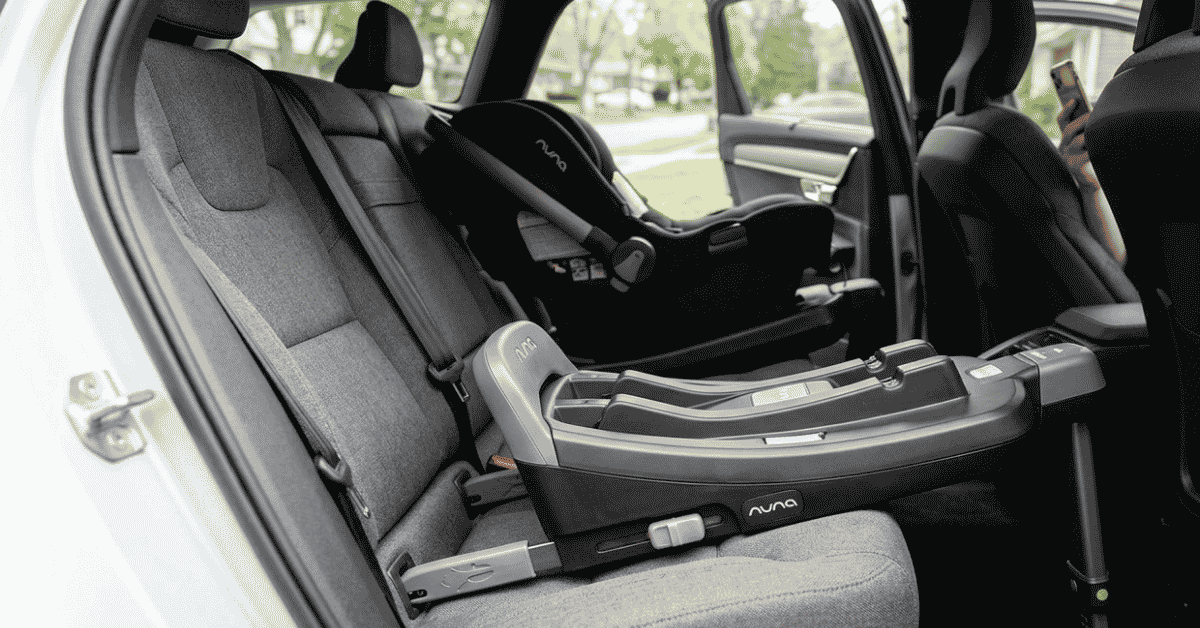
Nuna Car Seat Base Compatibility can seem tricky at first. Learn which PIPA seats fit each base, plus key tips for safe setup and smart buys.
Nuna Car Seat Base Compatibility can seem tricky at first.
I once saw three Nuna bases side by side.
Each had a sleek shape and neat parts.
Still, I had one big fear: wrong fit.
A base must match the seat with care.
This guide breaks down the key match rules.
Stay with me before you buy a base.
Is Nuna Car Seat Base Compatibility Easy?
I once spent too long near my car seat.
The base sat on the floor by me.
Its latch arms felt cold and firm.
Still, the model name gave me pause.
Nuna makes more than one base type.
That can make a quick buy feel hard.
The PIPA series base fits many PIPA seats.
It does not fit the PIPA urbn.
The PIPA RELX base also fits PIPA seats.
Nuna says it works with all PIPA series seats.
Yet, the PIPA urbn breaks that rule.
It has its own built-in rigid latch system.
It does not need a base for use.
That one detail can save you cash.
I now check the seat model first.
Life Before I Found This
Before that, I thought Nuna bases were alike.
The sleek black shape made that seem true.
Then I saw the labels on each base.
Some parts looked close at a quick glance.
The small clips had the same smooth feel.
Even the plastic had that same clean smell.
Still, the names told a new tale.
One base served the PIPA family.
Another base served the newer NEXT system.
I kept hearing the soft click of latches.
That sound made me check each part twice.
Maybe I was being too picky, I guess.
Yet, baby gear is not worth a guess.
The right seat and base must work together.
That rule now guides each choice I make.
Why This Matters Right Now
Parents often move from car to stroller fast.
A good base can make that task much easier.
The seat can click in without much fuss.
Nuna’s PIPA series base fits many PIPA seats.
That includes older and newer model years.
The base fits PIPA, PIPA RX, and PIPA Lite.
It also fits Lite R, Lite LX, and Lite RX.
PIPA aire and aire RX are listed too.
The PIPA urbn stands apart from this group.
It needs no base at all for car use.
That makes the model name quite key.
A fast online buy can go wrong fast.
I would check the seat before any order.
The First Big Lesson
The first big lesson is simple: check the system.
Nuna has more than one base family.
In the US, the PIPA series base fits.
It works with all US PIPA series seats.
The PIPA urbn is the clear exception.
The PIPA RELX base also works with PIPA seats.
Nuna says it connects with all PIPA series models.
Yet, regional models can use other base systems.
The BASE curv belongs to the NEXT system.
It can fit PIPA next and PIPA lite.
It may also fit ARRA flex and CARI next.
TODL models can work with select model numbers.
That is the part many quick guides miss.
Region can affect the base match too.
So, I would not mix US and EU charts.
Use the chart made for your seat’s market.
That small step can stop a costly mistake.
Small Tactics That Actually Work
I use a four-step check before buying any base.
First, I find the full car seat name.
I do not stop at just “PIPA.”
Next, I check the exact base name.
Then, I check the Nuna match list online.
The PIPA series base has a clear list.
I also check the seat manual if unsure.
The base manual can help with fit too.
Nuna says never use another brand’s seat.
Last, I test the base in my car.
Lower anchors should sit in the right spot.
The seat should lock with a clear click.
I check the level marks as well.
A base can be secure yet poorly set.
Nuna uses level guides to help set angle.
That small test gives me much more calm.
A Strange Detail I Noticed
One odd thing stood out to me.
The PIPA urbn needs no base at all.
That feels strange after using base systems.
Its steel lower anchors sit in the seat shell.
They form part of the seat itself.
So, the seat can use lower anchors directly.
It can also use the car belt for install.
That design can help on trips away.
Think taxis, rental cars, or air trips.
There is no loose base to lug around.
I can see the charm in that setup.
Still, I would read both manuals first.
The sleek design should not replace a fit check.
That part seems small, yet matters most.
Style Comparison & Data
The base names can sound alike at first.
Their system and seat range set them apart.
| Base type | Main seat match | Key note |
|---|---|---|
| PIPA series base | PIPA series | Not PIPA urbn |
| PIPA RELX | PIPA series | Adjustable base |
| BASE curv | NEXT system | PIPA next, lite |
| BASE next | NEXT system | Regional fit varies |
Nuna says the PIPA series base fits many models.
The RELX base also supports the PIPA series.
BASE curv serves select NEXT system seats.
The table shows one key point.
Base names alone do not tell the whole tale.
The seat model must be checked too.
Non-Obvious Gains
A right base can bring more than ease.
It can also cut stress in small ways.
- A clear click can build trust.
- A fixed base can save time each trip.
- Level marks can aid the right seat angle.
- A spare base can help with two cars.
- A baseless seat can ease travel plans.
I like the two-car point most.
A spare base can cut daily seat swaps.
That may save more time than expected.
The baseless PIPA urbn has another gain.
It can work well for rides away from home.
Nuna made it for a more mobile use case.
Still, ease should never beat safe setup.
The fit check must come first each time.
Myths vs. My Reality
I used to think all PIPA bases matched.
But then I found the PIPA urbn.
That seat does not use either PIPA base.
I used to think one base covered all.
But then I found the NEXT system.
Its bases serve a set group of seats.
I used to think newer meant better for all.
But then I checked the model list.
The best base depends on your exact seat.
I used to shop by looks and price.
But then I saw the cost of mismatch.
A sleek base means little if it cannot fit.
Now, I start with the seat model.
Then I match the base to that seat.
That order feels much safer to me.
Essential Principles for Mastery
I use five rules for Nuna base checks.
They keep the choice plain and easy.
1. Start with the seat.
Find its full name and model line.
PIPA, PIPA RX, and urbn are not alike.
2. Check the base family.
PIPA series bases serve PIPA series seats.
The urbn is not part of that match.
3. Check your region.
US and global Nuna systems can differ.
The NEXT system is a good example.
4. Read both manuals.
Use the seat and base guides as one set.
Nuna warns against mixing brands on its base.
5. Test the full setup.
Check the latch, angle, belt, and car fit.
Never rely on a name alone.
I also keep the base clean and dry.
Dust can build up near small moving parts.
A quick wipe takes less than a minute.
I check for odd play or loose parts.
A base should not feel loose after install.
If unsure, I stop and check the guide.
That habit may seem slow at first.
Still, it gives me far more peace.
FAQs about Nuna Car Seat Base Compatibility
Does the Nuna PIPA base fit all PIPA seats?
Yes, the US PIPA series base fits all Nuna PIPA infant seats from any model year listed by Nuna. It does not fit the PIPA urbn, which uses built-in lower anchors instead.
Can the PIPA urbn use a Nuna base?
No, the PIPA urbn does not use a base. Its pipaFIX steel lower anchors are built into the seat shell. Nuna says it is not compatible with either the PIPA series or RELX base.
Does the Nuna PIPA RELX base fit PIPA RX?
Yes, Nuna lists the RELX base for all PIPA series seats. That includes the PIPA RX, along with other PIPA models. The urbn remains the main base-free exception.
Can BASE curv fit a Nuna PIPA seat?
BASE curv can fit select NEXT system seats. Nuna lists PIPA next and PIPA lite among its matches. Regional model rules may differ, so check the current chart for your seat.
Can I use a Nuna base with another brand seat?
No, the PIPA series base is made for Nuna PIPA seats. Nuna’s base manual says never to use another maker’s seat on that base. Always check both manuals before use.
My Final Takeaway
Nuna Car Seat Base Compatibility is less hard than it seems.
The trick is to start with the seat.
Then, match its base by model and region.
The PIPA urbn needs no base at all.
The PIPA series base fits many PIPA seats.
Other bases serve set Nuna system groups.
I now check the seat name first.
That small habit keeps the whole task calm.
Maybe it takes one extra minute.
For baby gear, I think that minute wins.