
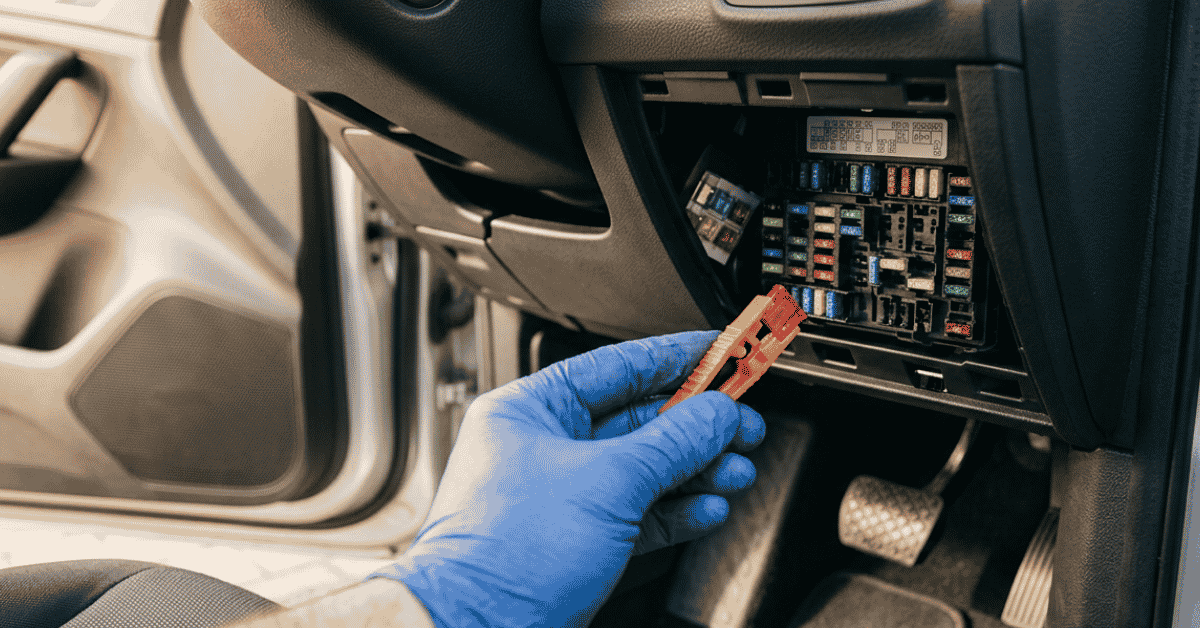
When a warning light pops on your car’s dashboard or a specific system suddenly stops working, your first thought might be a blown fuse. It’s a common and often easily fixable electrical hiccup, but you’ll need the right gear to handle it safely and effectively. Grabbing the correct “fuse tool car” accessory is key to avoiding further damage.
Our research indicates that understanding the two main types of fuse tools, pullers and testers, is crucial for any car owner doing basic maintenance. These tools aren’t just about convenience; they’re about ensuring you diagnose problems accurately and perform repairs without introducing new issues. As of 2026, the automotive parts market continues to emphasize user-friendly diagnostic tools for everyday drivers.
Quick Answer
A “fuse tool car” typically refers to a fuse puller or a fuse tester. Fuse pullers safely remove automotive fuses, while fuse testers confirm if a fuse is blown. Both are essential for basic electrical troubleshooting in vehicles.
Always use the correct amperage fuse when replacing one.
When Do You Actually Need a Fuse Tool? Pain Points & Triggers
Ever had that sinking feeling when a warning light glows on your dashboard, or your power windows decide to take a vacation mid-drive? It’s frustrating, and often, the culprit is a simple automotive fuse. These tiny components act as guardians for your car’s electrical circuits, intentionally sacrificing themselves when an electrical overload or short circuit occurs, thereby protecting more expensive parts like the radio, engine control unit, or power window motors.
However, fumbling with a blown fuse can lead to its own set of problems. Trying to extract them with your bare fingers can be difficult, especially in cramped fuse box locations, and can risk bending the delicate fuse terminals or even damaging the fuse holder itself. Aggregate reviews report that bending fuse terminals can lead to poor connections, intermittent electrical issues, or even complete failure down the line.
This is why having a specific tool designed for the job becomes not just helpful, but necessary for proper maintenance. If you’re dealing with electrical quirks, a visit to a Car Maintenance Schedule A Simple Plan To Keep Your Car Running Smoothly might also be in order to ensure you’re not missing larger system issues.
Fuse Pullers: Your Simple Solution for Fuse Removal
A fuse puller is essentially a specialized, handheld tool designed to grip and extract automotive fuses safely and efficiently. Think of it like a pair of miniature, plastic tongs or a small fork, purpose-built for the tight confines and specific shapes of car fuses. Their primary function is to provide a secure grip, allowing you to slide a fuse out of its socket without applying excessive force or risking damage to yourself or the vehicle’s electrical system.
If you’ve ever peered into a car’s fuse box, you’ll notice how closely packed those little plastic rectangles can be. Trying to pry one out with a screwdriver or even your fingernails can be a recipe for disaster. You might bend the fuse’s metal prongs, damage the plastic housing, or even slip and scratch surrounding components or yourself.
This is where a fuse puller shines, acting as an extension of your fingers for a precise and controlled grip.
What a Fuse Puller Does & How It Works
The core job of a fuse puller is to provide a safe and easy way to remove an automotive fuse. Manufacturer specifications confirm they are designed to slip over or grip the sides of common blade-type fuses and pull them straight out of their slots. This direct, linear motion is critical because wiggling or twisting a fuse can damage its internal wire or its connection to the fuse holder.
Most fuse pullers are made of sturdy, non-conductive plastic, which is important for safety when working around electrical components. They typically feature a U-shaped end or two spaced gripping points that fit snugly around the fuse’s housing. By applying gentle, steady pressure, the puller engages the fuse and allows you to slide it out smoothly.
This prevents the common frustration of having a fuse stick in its socket, which can happen when they’re subjected to heat cycles over time. For a good understanding of how different electrical components work together, looking at resources like Cartridge And Battery Pairing Brings Better Results can provide broader context on electrical systems.
Fuse Puller Features: What to Look For & Why
When you’re looking for a fuse puller, the variety might seem overwhelming at first, but most options serve the same basic purpose. However, a few features can make a big difference in usability and effectiveness. The predominant type of fuse in modern vehicles is the blade fuse, which comes in several sizes, most commonly Mini, ATO (also known as standard), and the larger Maxi fuses.
Your choice of puller should ideally accommodate the types of fuses most prevalent in your vehicle.
- Size Compatibility: Ensure the puller can handle the fuse sizes in your car. Many universal pullers are designed to grip Mini and ATO fuses, which are the most common. If your vehicle uses larger Maxi or specialized fuses, you might need a puller with wider jaws or a different design.
- Material: Sturdy, non-conductive plastic is standard and safe. It prevents accidental short circuits if you accidentally touch other nearby metal parts while gripping the fuse.
- Design: Some pullers have a simple U-shaped slot that slides over the fuse. Others have two prongs that grip the sides. Both work well, but some users find one design easier to manipulate in very tight spaces. Many cars will actually include a basic plastic puller in their onboard toolkit, often with the spare fuses.
- Integrated Features: Some fuse testers incorporate a fuse puller, offering a two-in-one solution perfect for a compact glove box kit.
Benefits & Drawbacks of Using a Fuse Puller
Using a dedicated fuse puller offers several advantages over trying to remove fuses by hand or with improvised tools. It’s about precision, safety, and preventing unnecessary damage.
Benefits:
- Safe Removal: Provides a secure grip, preventing your fingers from slipping and potentially causing unintended contact with live electrical components.
- Prevents Damage: Reduces the risk of bending or breaking fuse terminals and avoids scratching or damaging the fuse socket or adjacent components.
- Ease of Use: Makes it significantly easier to extract fuses, especially in crowded fuse boxes or when fuses are tightly seated.
- Cost-Effective: Fuse pullers are generally inexpensive, making them a smart addition to any car owner’s basic toolkit.
Drawbacks:
- Limited to Removal: A fuse puller’s sole function is removal; it cannot tell you if the fuse is actually blown. You still need to visually inspect or test the fuse afterwards.
- Compatibility Issues: If you only buy a puller for Mini fuses and your car primarily uses Maxi fuses, it won’t be very useful.
Fuse Testers: Confirming if a Fuse is Blown
While a fuse puller helps you get a fuse out, a fuse tester helps you determine if that fuse is actually the problem and needs replacing. Think of it as a diagnostic tool for your car’s electrical circuits. Instead of guessing or swapping fuses one by one, hoping to stumble upon the faulty one, a fuse tester gives you a definitive answer.
This can save a significant amount of time and prevent you from installing a fuse that is too high in amperage, which is a dangerous mistake.
The primary function of a fuse tester is to check for continuity. Continuity simply means that electricity can flow through the fuse without interruption. If the fuse is intact, it has continuity.
If the thin wire inside the fuse has broken due to an overload, it loses continuity, and the fuse is considered “blown.” This confirms that the fuse has done its job by breaking the circuit to protect other components. For example, a blown 15-amp fuse will not allow 15 amps of current to pass through it.
How Fuse Testers Diagnose Blown Fuses
Fuse testers work by completing a small electrical circuit through the fuse you are testing. Most basic testers have two metal probes that you touch to the visible metal tabs on the fuse. When you do this, the tester uses its own internal power source (usually a small battery) to send a tiny current through the fuse.
- With a Good Fuse: If electricity can flow from one probe, through the fuse, and out the other probe, the fuse has continuity. The tester will then indicate this, typically by lighting up an LED, emitting a beep, or displaying a “good” or resistance reading (very low resistance).
- With a Blown Fuse: If the internal wire of the fuse is broken, the electrical path is incomplete. Current cannot flow through the fuse, meaning it has no continuity. The tester will then indicate this, usually by the light not illuminating, the beep not sounding, or displaying an “open” or infinite resistance reading.
This method is much more reliable than just visually inspecting a fuse. While a visibly broken wire is a clear sign of a blown fuse, sometimes the wire can be intact but still have a poor connection or internal damage that causes it to fail under load. A fuse tester catches these failures more reliably.
If you’re curious about how different electrical components interact, exploring resources like What Size Spanner For Car Battery Saved My Day can offer insight into automotive electrical maintenance.
Types of Fuse Testers: From Basic to Multimeters
When it comes to testing automotive fuses, you’ll encounter a few primary types of tools, ranging from single-purpose devices to multi-functional diagnostics. The choice often comes down to your budget, how often you anticipate needing to test fuses, and whether you have other automotive electrical diagnostic needs.
- Basic Fuse Testers (Continuity Testers): These are the most common and affordable. They are purpose-built to check for continuity in blade fuses. They typically feature two probes and a simple indicator (light or beep). Some might even have an integrated fuse puller. They are straightforward to use and ideal for quick checks.
- Digital Multimeters (DMMs): For those who do more frequent or involved automotive electrical work, a digital multimeter is an invaluable tool. A DMM allows you to measure voltage, current, and resistance. In continuity mode, it functions very much like a dedicated fuse tester, alerting you with a beep when a circuit is complete. They offer much more versatility for diagnosing other electrical problems in your car beyond just fuses.
- Circuit Testers (Test Lights): While not strictly a fuse tester, a test light can sometimes be used to check if power is reaching a fuse. However, it won’t tell you if the fuse itself is intact if power is reaching both sides of it. For confirming fuse integrity, continuity testers or DMMs are superior.
When considering your options, it’s worth noting that a good pair of 7 Car Window Washing Tools That Shine can make upkeep easier.
Fuse Tester Features: Making the Right Choice
Choosing the right fuse tester boils down to simplicity, accuracy, and compatibility with the types of fuses in your vehicle. Modern cars predominantly use blade-type fuses, but knowing the specific sizes can inform your decision.
- Fuse Type Compatibility: Most basic testers are designed for the common Mini and ATO blade fuses. If your vehicle uses larger Maxi or specialized fuses (like JCASE or Low Profile Mini), ensure your tester is compatible or choose a DMM which offers more flexibility.
- Indicator Type: Look for a tester with a clear indicator. A bright LED light is easy to see, and an audible beep is great for quick confirmation, especially if you’re working in a dimly lit area.
- Ease of Use: The probes should be easy to position on the fuse’s metal tabs. Simple, intuitive operation is key, particularly if you’re new to automotive diagnostics.
- Power Source: Most testers are battery-powered. Check the battery type and ensure it’s readily available for replacement. DMMs typically have larger batteries that last longer.
- Durability: Given the environment of a car (vibrations, temperature changes), a robust build quality is beneficial.
A basic continuity tester with an integrated fuse puller is often the most practical and cost-effective solution for the average car owner. It directly addresses the two main needs when dealing with fuses: removal and testing.
Comparing Fuse Pullers and Fuse Testers
When you’re facing an automotive electrical issue, you’re usually trying to figure out two things: first, is the fuse intact, and second, if it’s blown, how do I get it out safely? This is precisely where the distinction between a fuse puller and a fuse tester becomes critical. They serve complementary but fundamentally different purposes in your diagnostic toolkit.
A fuse puller is your mechanical aid, a tool for physical interaction. It’s designed to grip and extract fuses, preventing damage during removal. A fuse tester, on the other hand, is your diagnostic aid.
It checks the electrical integrity of the fuse itself, telling you if it has failed its job by breaking the circuit. You might need both, depending on the situation. If you’re interested in other helpful tools for car maintenance, consider looking into 9 Car Engine Oil Change Tools Worth Having.
Side-by-Side: Puller vs. Tester Functionality
| Feature | Fuse Puller | Fuse Tester |
|---|---|---|
| Primary Function | Safely remove fuses from slots. | Verify if a fuse is blown (check for continuity). |
| How it Works | Mechanical grip on fuse housing. | Electrical continuity test via probes and indicator. |
| Key Benefit | Prevents damage to fuses and fuse holders. | Accurately diagnoses blown fuses, saves guesswork. |
| Use Case | When a fuse needs to be physically retrieved. | When you suspect a fuse has failed electrically. |
| Complexity | Very low; simple physical action. | Low; typically involves touching probes to fuse tabs. |
| Cost (Typical) | Very low ($1-$5) | Low to moderate ($8-$25 for basic testers, $20+ for DMMs) |
| Can it do the other’s job? | No | No (though some testers include a puller) |
As you can see, they aren’t interchangeable. You use a puller to get the fuse out, and then you use a tester to see if it’s bad.
Which Tool Is Right for Your Needs?
The optimal choice between a fuse puller and a fuse tester, or whether you need both, depends entirely on your current situation and how you plan to approach car maintenance. If you’ve never encountered a blown fuse before or your car only has a few basic circuits, a fuse puller might suffice initially. However, as automotive systems become more complex, so do their electrical issues.
- Choose a Fuse Puller If: You primarily need to access fuses for routine checks or replacements and are confident in visually identifying a blown fuse (though this isn’t always reliable). It’s the most basic requirement for interacting with fuses.
- Choose a Fuse Tester If: You’ve experienced an electrical fault and need to definitively confirm if a fuse is the cause, rather than wasting time swapping unrelated components. This is crucial for accurate troubleshooting.
- Get Both (or a Combo Tool) If: You want to be prepared for most common electrical hiccups. Having both a fuse puller and a fuse tester, or a combined tool, allows you to both remove a fuse and test its integrity without leaving your car. This is the most practical approach for DIY car maintenance.
For those who are more involved with their car’s mechanics, having a comprehensive set of tools is essential. You might also find resources on topics like Can We Connect Multiple Bluetooth Device On Wireless Carplay Adapter useful for modern vehicle electronics.
Using Fuse Tools Safely: Key Rules & Warnings
Working with your car’s electrical system, even something as seemingly simple as fuses, carries inherent risks if not done correctly. Safety should always be your top priority. While fuses are designed to protect, mishandling them or the tools used to service them can lead to minor annoyances, costly damage, or even personal injury.
Adhering to established safety protocols is paramount.
The main risks revolve around accidental short circuits, electric shock, and introducing new faults. Understanding these dangers allows you to take proactive measures with your fuse tools. For instance, it’s vital to confirm the amperage rating of a blown fuse before replacing it.
Replacing a 15-amp fuse with a 20-amp one, for example, bypasses the intended protection, potentially allowing damage to occur to more sensitive electrical components or wiring, which might not be immediately apparent but can lead to bigger problems later on. Always consult your vehicle’s owner’s manual for the correct fuse specifications.
Mistakes to Avoid When Working with Fuses
Even with the right tools like a fuse puller or tester, common mistakes can still arise. These errors often stem from rushing the process, not fully understanding the electrical system, or using improper parts. Being aware of these pitfalls can prevent you from creating bigger problems than you started with.
- Using the Wrong Amperage Fuse: This is the most critical mistake. Always replace a blown fuse with one of the exact same amperage rating. Using a higher-rated fuse can overload the circuit, leading to wire damage, component failure, and even fire. Using a lower-rated fuse might cause it to blow unnecessarily, even under normal operation.
- Forgetting to Turn Off the Ignition: While many fuses can be replaced with the ignition on, it’s best practice to turn the car off and remove the key. This minimizes the risk of accidental short circuits while you’re manipulating fuses and tools.
- Using Metal Tools Improperly: Never use metal tools like standard pliers to remove fuses. While they might seem handy, they can easily slip, touch adjacent fuses or metal components, causing a short circuit. Even a fuse puller, if used carelessly, could potentially cause an issue.
- Not Identifying the Cause of the Blown Fuse: A blown fuse is a symptom, not the root cause. Simply replacing it without understanding why it blew (e.g., a short in a circuit, a faulty accessory, or an overloaded system) means the new fuse might blow again shortly after installation. This is where a fuse tester is invaluable.
- Forcing a Stuck Fuse: If a fuse is exceptionally difficult to remove, don’t force it. It could indicate damage to the fuse holder or the fuse itself. Try a bit of gentle wiggling with the puller, or investigate if the fuse is improperly seated or corroded.
Replacing Fuses: The Amperage Rule You Can’t Break
The rule about replacing fuses with the exact same amperage rating is non-negotiable and is a fundamental safety principle in automotive electrical systems. This isn’t just a guideline; it’s a critical safeguard enacted by vehicle manufacturers to protect the wiring harness and the various electronic components connected to that circuit. Each fuse is designed with a specific melt point for its internal wire, calibrated to fail at a certain current level, its amperage rating.
For instance, if your car’s owner’s manual specifies a 15-amp fuse for a particular circuit, that means the wiring and components are designed to handle up to 15 amps safely. If you insert a 20-amp fuse, the circuit could theoretically draw more than 15 amps before the fuse blows. This excess current can overheat the wiring, melt insulation, damage sensitive electronics, and, in worst-case scenarios, start a fire.
Conversely, a fuse with too low an amperage will blow during normal operation, causing the circuit to fail unnecessarily. Always confirm the required amperage from your vehicle’s manual or the fuse box cover itself. If you’re struggling with minor electrical issues, sometimes a review of your general maintenance could be helpful, consider resources like 7 Car Window Washing Tools That Shine for related car care.
Replacing Fuses: The Amperage Rule You Can’t Break
The rule about replacing fuses with the exact same amperage rating is non-negotiable and is a fundamental safety principle in automotive electrical systems. This isn’t just a guideline; it’s a critical safeguard enacted by vehicle manufacturers to protect the wiring harness and the various electronic components connected to that circuit. Each fuse is designed with a specific melt point for its internal wire, calibrated to fail at a certain current level, its amperage rating.
For instance, if your car’s owner’s manual specifies a 15-amp fuse for a particular circuit, that means the wiring and components are designed to handle up to 15 amps safely. If you insert a 20-amp fuse, the circuit could theoretically draw more than 15 amps before the fuse blows. This excess current can overheat the wiring, melt insulation, damage sensitive electronics, and, in worst-case scenarios, start a fire.
Conversely, a fuse with too low an amperage will blow during normal operation, causing the circuit to fail unnecessarily. Always confirm the required amperage from your vehicle’s manual or the fuse box cover itself. If you’re struggling with minor electrical issues, sometimes a review of your general maintenance could be helpful, consider resources like 7 Car Window Washing Tools That Shine for related car care.
Essential Fuse Tools for Your Car’s Toolkit
For anyone who performs even minor maintenance on their vehicle, a few key tools can make electrical troubleshooting significantly easier and safer. Beyond the basic set of wrenches or screwdrivers, specialized items for dealing with fuses are indispensable. A compact kit that includes both a fuse puller and a fuse tester can save you time, frustration, and potentially costly repairs in the long run.
Think of these as your first line of defense when an electrical gremlin appears. They grant you the ability to quickly diagnose common issues and perform simple fixes yourself, rather than immediately needing to schedule a visit to a mechanic. Having these on hand means you’re not caught off guard by a suddenly dead accessory.
For more in-depth maintenance, resources like Car Maintenance Schedule A Simple Plan To Keep Your Car Running Smoothly provide a broader overview of what your vehicle might need.
What to Pack in Your Automotive Fuse Toolkit
When assembling a basic toolkit for your car, prioritize items that address the most common issues. For electrical diagnostics and fuse management, a few specific items stand out as essential. These are typically small, inexpensive, and easy to store in your glove box or a small tool pouch.
- Fuse Puller: A plastic puller designed for common blade-type fuses (Mini, ATO). This is your primary tool for physical extraction.
- Fuse Tester: A basic continuity tester (LED or beep indicator) is ideal for confirming if a fuse is blown. Many modern testers include an integrated fuse puller for convenience.
- Assortment of Fuses: Keep a small selection of common amperage fuses (e.g., 5A, 10A, 15A, 20A, 25A, 30A) handy. Crucially, these should match the types used in your vehicle.
- Vehicle Owner’s Manual: This is your definitive guide for fuse box locations and the correct amperage for each circuit.
Having these items means you can quickly address a blown fuse, confirm its status, and replace it correctly, all from the side of the road or your own driveway. You can find more about essential car tools in articles like 9 Car Engine Oil Change Tools Worth Having.
Combining Tools for Efficiency
Many automotive stores and online retailers offer compact, all-in-one fuse tool kits. These often include a fuse puller integrated into the body of a fuse tester, alongside a small assortment of replacement fuses. This approach is highly practical for maintaining a vehicle, especially if space is limited in your car’s storage areas.
The advantage of such a combination tool is its efficiency. You can pull a fuse, test it immediately, and if it’s blown, replace it with one from the same kit. This streamlined process minimizes the time spent diagnosing and repairing electrical issues.
For a more comprehensive approach to vehicle electronics, you might look into how Can We Connect Multiple Bluetooth Device On Wireless Carplay Adapter impacts connectivity.
Frequently Asked Questions
How do I know which fuse is blown?
You usually start by identifying which accessory or system isn’t working. Then, consult your car’s owner’s manual or the fuse box cover diagram to locate the fuse(s) controlling that circuit. Visually inspecting fuses can sometimes reveal a broken wire, but a fuse tester provides definitive confirmation.
Can I use a regular plier to pull a fuse?
It is strongly advised against using regular pliers to pull fuses. Pliers can easily slip or damage the fuse’s plastic housing or metal terminals, potentially causing intermittent connections or further electrical issues. A dedicated fuse puller provides a safe and precise grip.
What happens if I use a fuse with the wrong amperage?
Using a fuse with a higher amperage rating than specified can allow the circuit to draw too much current without blowing. This can lead to overheating wires, damaging components, or even starting a fire. Using a lower amperage fuse will cause it to blow out during normal operation, disabling the circuit unnecessarily.
Where are car fuse boxes usually located?
Fuse boxes are typically found in a few common locations: under the dashboard (driver’s or passenger’s side), inside the glove compartment, or under the hood near the battery or firewall. Your owner’s manual will specify the exact location for your vehicle.
Do I need a fuse tester if I have a fuse puller?
While a fuse puller is essential for removal, a fuse tester is crucial for accurate diagnosis. A blown fuse is often a symptom of an underlying electrical problem. A tester helps confirm the fuse is indeed the issue, preventing you from replacing good fuses or overlooking the actual cause of the fault.