
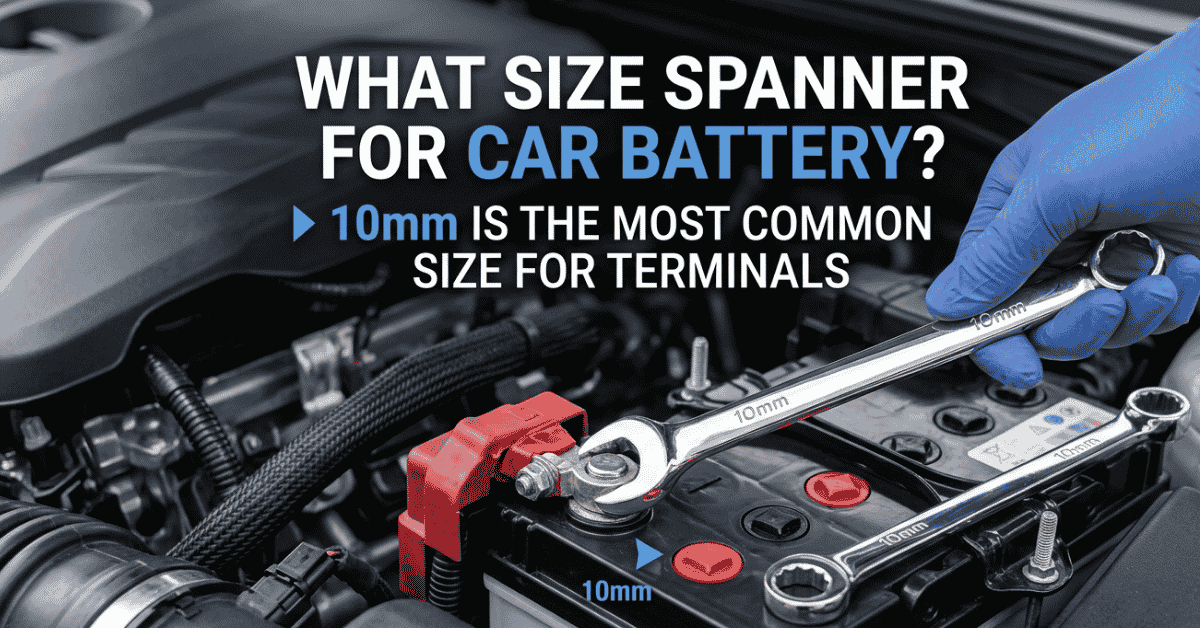
Wondering what size spanner for car battery terminals? Learn the common sizes, how to choose the right tool, and avoid mistakes.
I learned this lesson on a cold morning before work. My car would not start. The battery needed attention, but I had the wrong spanner. What should have taken five minutes turned into half an hour. Since then, I always keep the correct tools nearby. If you are asking what size spanner for car battery connections, this guide will help.
What Size Spanner for Car Battery Connections?
In most cases, a 10mm spanner is the most common size.
Many modern vehicles use 10mm nuts on battery terminals.
However, not every vehicle is the same.
Other common sizes include:
- 8mm
- 10mm
- 12mm
- 13mm
The exact size depends on the vehicle manufacturer and battery design.
When I work on batteries, I usually reach for a 10mm spanner first.
Why Does Spanner Size Matter?
Using the correct tool makes the job easier.
The wrong size can cause problems.
Prevents Damage
A loose-fitting spanner may:
- Slip
- Round off nuts
- Damage hardware
Battery terminals are not a place to take chances.
Improves Safety
A proper fit provides better control.
This helps reduce the risk of:
- Slipping tools
- Short circuits
- Accidental contact
Safety should always come first.
Makes Work Faster
The correct spanner saves time.
A simple battery task becomes much easier when the tool fits perfectly.
Common Car Battery Terminal Sizes
Different vehicles use different hardware.
Still, certain sizes appear frequently.
10mm Battery Terminal Nuts
This is by far the most common size.
I see 10mm terminals on many:
- Sedans
- SUVs
- Trucks
- Hatchbacks
Many mechanics automatically check with a 10mm spanner first.
8mm Battery Connections
Some smaller vehicles use 8mm hardware.
These often appear on:
- Compact cars
- Certain imports
Always verify before applying force.
12mm Battery Fasteners
Some battery hold-down brackets use 12mm hardware.
These brackets secure the battery itself.
The terminal connection may still be 10mm.
13mm Battery Hardware
Larger vehicles sometimes use 13mm fittings.
These may appear on:
- Commercial vehicles
- Larger battery systems
It varies by manufacturer.
How to Identify the Correct Spanner Size
Fortunately, this is simple.
Check the Owner’s Manual
The manual often provides useful details.
Look under:
- Battery maintenance
- Battery replacement
- Tool requirements
Many people overlook this resource.
Measure the Nut
A small measuring tool helps.
You can use:
- Calipers
- Socket gauges
- Spanner sizing guides
This removes guesswork.
Test Carefully
If unsure, test gently.
The correct spanner should:
- Fit snugly
- Have minimal movement
- Sit fully on the nut
Never force a poor fit.
Spanner Types for Car Battery Work
Several tool styles work well.
Open-End Spanner
This is a common choice.
Pros:
- Easy access
- Quick use
Cons:
- Slightly more slipping risk
I use these for quick adjustments.
Combination Spanner
A combination spanner includes:
- Open end
- Ring end
Pros:
- Versatility
- Better grip
Cons:
- Slightly larger tool
This is often my preferred option.
Socket Wrench
Sockets provide excellent contact.
Pros:
- Secure fit
- Less slipping
- Better leverage
Cons:
- Requires more space
For battery replacement, sockets work very well.
Adjustable Spanner
These tools fit multiple sizes.
Pros:
- Flexible
- Convenient
Cons:
- Less precise
I only use adjustable spanners when necessary.
Common Spanner Sizes for Battery Tasks
Different battery jobs may require different sizes.
| Task | Common Size |
|---|---|
| Battery Terminal Clamp | 10mm |
| Small Terminal Hardware | 8mm |
| Battery Hold-Down Bracket | 12mm |
| Larger Hold-Down Systems | 13mm |
| Adjustable Backup Tool | Variable |
This table reflects the sizes I encounter most often.
How to Disconnect a Car Battery Safely
Proper procedure matters.
Turn Off the Vehicle
Always begin with the engine off.
Remove:
- Keys
- Ignition power
- Accessories
This creates a safer work area.
Remove the Negative Terminal First
The negative terminal usually has a minus sign.
I always disconnect it first.
This reduces the risk of accidental short circuits.
Remove the Positive Terminal
Once the negative side is disconnected, remove the positive side.
Work slowly and carefully.
Secure Loose Cables
Prevent cables from touching battery posts during maintenance.
This helps avoid unexpected contact.
Common Mistakes When Choosing a Spanner
I made some of these mistakes myself.
Guessing the Size
Many people assume any spanner will work.
This often leads to:
- Slipping
- Frustration
- Damaged nuts
Measure first when possible.
Using Adjustable Tools Incorrectly
Poor adjustment creates a loose fit.
A loose tool increases the risk of damage.
Applying Excessive Force
Battery terminal nuts do not require extreme force.
If a nut feels stuck:
- Check the size
- Apply penetrating oil if needed
- Work carefully
Force is rarely the best answer.
Ignoring Corrosion
Corrosion can make hardware appear larger.
Clean the area first.
This often improves tool fit.
Tips From My Experience
After years of basic vehicle maintenance, I follow a few simple habits.
Keep a 10mm Spanner in the Car
This has saved me several times.
Many battery tasks can be handled with one tool.
Carry a Small Socket Set
A compact socket kit provides flexibility.
It helps with:
- Battery work
- Minor repairs
- Emergency situations
Check Tool Fit Before Turning
A few extra seconds can prevent damage.
I always double-check before applying pressure.
Clean Battery Terminals Regularly
Clean terminals make maintenance easier.
They also improve electrical performance.
What Tools Besides a Spanner Might Help?
Sometimes a spanner alone is not enough.
Useful additions include:
- Socket set
- Battery brush
- Safety gloves
- Safety glasses
- Terminal cleaner
These tools make maintenance safer and easier.
My Experience Finding the Right Battery Spanner
The first time my battery failed, I wasted time searching for tools.
The wrong spanner slipped repeatedly. The correct one solved the problem instantly.
Since then, I learned that most battery terminals use a 10mm spanner, but checking first is always smart.
A simple tool can make the difference between a quick repair and a frustrating morning.
FAQs
What size spanner for car battery terminals is most common?
The most common answer to what size spanner for car battery terminals is 10mm. Many modern vehicles use this size. Learn more about battery maintenance.
Can I use an adjustable spanner on a car battery?
Yes, but a fixed-size spanner usually provides a safer and more secure fit. Learn more about choosing the right battery tools.
What size spanner for car battery hold-down brackets?
Battery hold-down brackets often use 12mm or 13mm hardware, though sizes vary by vehicle. Learn more about battery replacement.
Should I disconnect the positive or negative battery terminal first?
Always disconnect the negative terminal first. This reduces the risk of accidental electrical shorts. Learn more about battery safety.
How do I know what size spanner for car battery hardware I need?
Check the owner’s manual, measure the nut, or test carefully with common sizes like 10mm. Learn more about vehicle maintenance tools.