
That sinking feeling when you see a flat tire can turn into genuine dread if you’re unsure about your car jack. This essential tool, often tucked away in your trunk, is your key to getting back on the road quickly and safely. Understanding its different types and how to use them is a fundamental part of car ownership.
Car jacks are designed to lift your vehicle just enough to allow for wheel removal, whether for a tire change or minor maintenance. Manufacturer specifications for automotive jacks typically confirm a minimum lifting capacity that aligns with the vehicle’s gross weight, ensuring it can handle at least a quarter of the car’s total load at any one time. Knowing your options can make all the difference when you’re in a tight spot.
Quick Answer
A car jack is a mechanical tool used to lift a vehicle, typically to change a flat tire or perform other undercarriage maintenance. Common types include scissor jacks, bottle jacks, and trolley jacks, each with varying lifting capacities and portability. Always consult your vehicle’s manual for specific jacking points and operating instructions to ensure safe use.
Common Types of Car Jacks: Scissor, Bottle, and Trolley Explained
When you’re looking to lift your car, you’ll encounter a few main styles of jacks. Each has its own way of working and is suited for different situations and vehicles. Think of them as different tools for different jobs in your automotive toolkit.
Scissor Jacks: Compact Convenience
Scissor jacks are the most common type you’ll find included as standard equipment with many passenger cars. As our research indicates, they’re favored for their space-saving design. They operate using a threaded screw mechanism that, when turned, causes the arms to spread apart, raising the vehicle.
This expanding and contracting action resembles scissors, hence the name. For many drivers, it’s the familiar crank-handle jack that comes with their car.
- How they work: A central threaded rod rotates, which pushes or pulls connecting linkage points, causing the jack’s frame to expand vertically.
- Typical use: Best for emergency roadside tire changes due to their compact size and ease of storage.
- Manufacturer specs: Often rated for 1 to 2 tons, suitable for most sedans and smaller SUVs.
Bottle Jacks: Lifting Power
Bottle jacks, often called hydraulic jacks, employ a chamber filled with hydraulic fluid and a piston. Pumping a lever forces fluid into a cylinder, which pushes a ram upwards, lifting the load. They’re known for their ability to lift heavier weights and often to greater heights than scissor jacks.
You’ll typically find these in truck toolboxes or as part of a mechanic’s essential gear.
- Mechanism: Utilizes hydraulic pressure, meaning less manual effort is required for lifting heavier loads compared to scissor jacks.
- Pros: Higher lifting capacity and greater lift height.
- Cons: Can be bulkier and heavier, making them less ideal for frequent carrying in a standard car. They also require a very stable, level surface to prevent tipping.
Trolley Jacks: Your Garage Workhorse
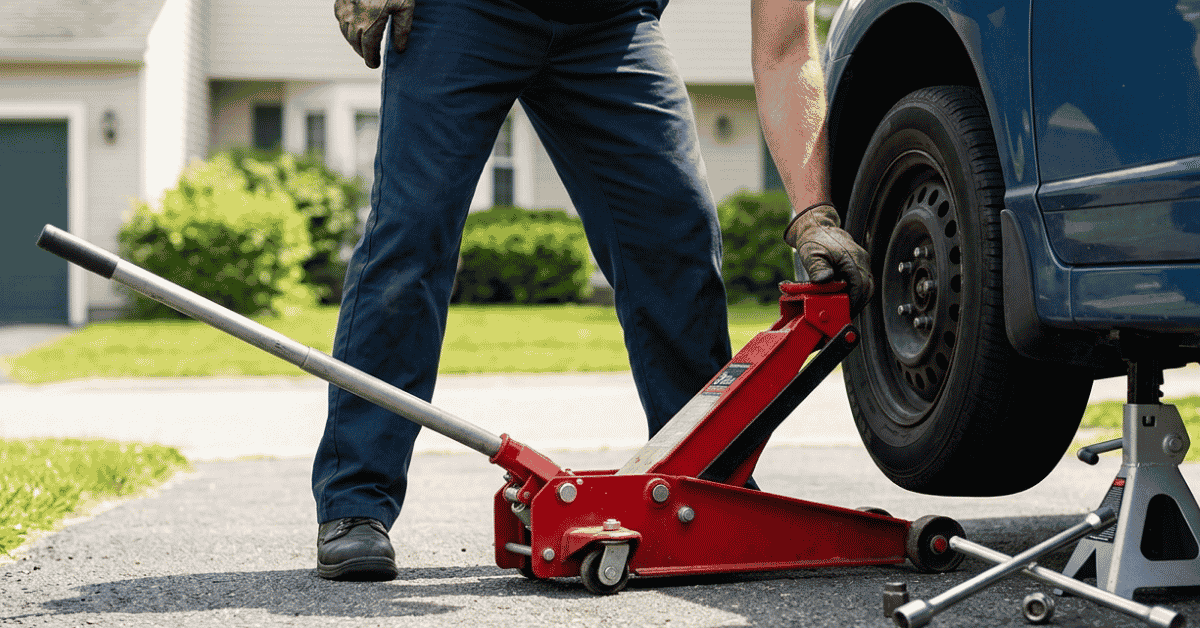
Trolley jacks, also known as floor jacks, are the heavy-duty option often seen in professional garages. They feature a wheeled base that allows for easy maneuvering under a vehicle, a long handle for leverage, and a hydraulic system for lifting. Trolley jacks offer the most stability and ease of use for extended periods of working on your car, making them a favorite for DIY mechanics.
If you’re planning any significant under-car work, like 9 Car Engine Oil Change Tools Worth Having, a trolley jack is a solid choice.
- Design: Low profile for getting under cars with limited clearance and a wheeled platform for easy positioning.
- Capacity: High lifting capacities, commonly ranging from 2 to 10 tons or more, suitable for larger vehicles like trucks and SUVs.
- Operation: Smooth and controlled lifting with a robust handle for pumping.
Key Features to Look For in a Car Jack
Choosing the right jack involves looking beyond just its type. Several key features determine its effectiveness, safety, and suitability for your specific needs. As of 2026, manufacturers continue to refine these attributes for better user experience and reliability.
Lifting Capacity: Matching Your Vehicle’s Weight
This is perhaps the most critical specification. The jack’s lifting capacity, usually measured in tons, must be greater than or equal to your vehicle’s weight. Remember, you’re lifting one corner or end of the car at a time, so the jack needs to safely handle at least a quarter of the vehicle’s gross weight.
For instance, a 4,000 lb sedan (2 tons) should be lifted by a jack rated for at least 2 tons, but ideally, a bit more for a safety margin. Always check your car’s owner’s manual for its exact weight. What Size Spanner For Car Battery Saved My Day touches on vehicle-specific needs, and jack capacity is just as crucial.
- Sedans/Coupes: Typically require 1.5-2 ton capacity.
- SUVs/Light Trucks: Often need 2-3 ton capacity or higher.
- Heavy-Duty Trucks/Work Vehicles: Demand 3+ ton capacity.
Lift Height: Getting the Job Done
Beyond just lifting weight, a jack needs to lift your vehicle high enough to remove the tire and perform the necessary work. Different jacks offer varying maximum lift heights. A standard scissor jack might only lift 12-14 inches, suitable for a tire change.
However, if you’re performing more involved maintenance, like suspension work, you might need a jack that can achieve 18-24 inches or more. This is where bottle jacks or trolley jacks often excel over basic scissor jacks. Always consider the diameter of your tires and the desired clearance for your work.
- Tire Clearance: Ensure the maximum lift height, minus the collapsed height of the jack, is sufficient to remove the tire completely.
- Working Space: Higher lift height provides more room to maneuver tools and hands underneath the vehicle.
- Consider Tire Size: Taller tires require a jack with a greater lift range.
When to Use Each Type of Car Jack
Understanding the differences between scissor, bottle, and trolley jacks helps you pick the right tool for the job. It’s not just about lifting; it’s about doing it safely and efficiently for the specific scenario.
Roadside Emergency: The Scissor Jack’s Time to Shine
For unexpected flat tires on the road, the compact and lightweight scissor jack is your go-to. It’s designed for exactly this purpose: quick, temporary lifting to swap out a damaged tire. Because it’s usually stored in your trunk, it’s always there when you need it.
Its relatively simple operation means you can deploy it even in less-than-ideal conditions. Remember, these are generally meant for short-duration lifts, so once the spare tire is on, always get the damaged tire repaired or replaced as soon as possible. This is why keeping a Car Maintenance Schedule A Simple Plan To Keep Your Car Running Smoothly is so important for knowing when to replace tires.
- Scenario: Flat tire on the side of the road, highway, or parking lot.
- Benefit: Compact, easy to store, and designed for quick tire swaps.
- Limitation: Not ideal for extensive work due to limited lift height and potentially more strenuous operation.
Home Garage: When a Trolley Jack Makes Sense
If you do your own basic maintenance, like oil changes, brake checks, or even suspension work, in your garage, a trolley jack is a far superior option. Its stability, ease of use, and greater lifting capacity make it ideal for extended periods under the car. Unlike a scissor jack that requires constant cranking, a trolley jack’s hydraulic system allows for smooth, controlled elevation with fewer effort.
If you’re looking to expand your DIY capabilities, investing in a good trolley jack is a significant step. For example, when working on brakes, stability is paramount. Peerless Shower Cartridge Replacement Fixed My Leak might seem unrelated, but it highlights how the right tool for a specific job makes maintenance manageable.
- Scenario: Performing regular maintenance or repairs in a controlled environment like a home garage.
- Benefit: Stable, easy to maneuver, offers higher lift and capacity, less physical strain.
- Consideration: Definitely not portable for roadside use due to size and weight.
Safety First: Critical Warnings for Using Car Jacks
Using a car jack isn’t as simple as just pumping it up. Safety is paramount, and overlooking critical steps can lead to serious injury or damage to your vehicle. Always prioritize a safe setup before attempting to lift your car.
Proper Positioning and Stability
The first rule for jack safety is ensuring it’s on a stable, level surface. Manufacturer specifications consistently highlight that hydraulic jacks, especially bottle jacks, can slip or even tip over on soft ground, gravel, or a slope. If you’re on the roadside, check the ground.
Paving stones or a solid piece of wood can be used to create a stable base if the surface is questionable. The jack’s saddle should also be placed directly under the designated jacking point on your vehicle’s frame, as indicated in your car’s owner’s manual. Improper placement can bend or damage the frame, or worse, cause the jack to slip.
- Surface: Hard, level ground is essential. Avoid soft soil or uneven driveways.
- Jacking Points: Always use the manufacturer-recommended jacking points. These are reinforced areas designed to support the vehicle’s weight.
- Visual Check: Before lifting, ensure the jack is perpendicular to the ground and the vehicle’s frame.
Safety First: Critical Warnings for Using Car Jacks
Using a car jack isn’t as simple as just pumping it up. Safety is paramount, and overlooking critical steps can lead to serious injury or damage to your vehicle. Always prioritize a safe setup before attempting to lift your car.
Proper Positioning and Stability
The first rule for jack safety is ensuring it’s on a stable, level surface. Manufacturer specifications consistently highlight that hydraulic jacks, especially bottle jacks, can slip or even tip over on soft ground, gravel, or a slope. If you’re on the roadside, check the ground.
Paving stones or a solid piece of wood can be used to create a stable base if the surface is questionable. The jack’s saddle should also be placed directly under the designated jacking point on your vehicle’s frame, as indicated in your car’s owner’s manual. Improper placement can bend or damage the frame, or worse, cause the jack to slip.
- Surface: Hard, level ground is essential. Avoid soft soil or uneven driveways.
- Jacking Points: Always use the manufacturer-recommended jacking points. These are reinforced areas designed to support the vehicle’s weight.
- Visual Check: Before lifting, ensure the jack is perpendicular to the ground and the vehicle’s frame.
Always Use Jack Stands for Extended Work
While the jack lifts your car, it is not designed to hold the vehicle up for any extended period or while you are working underneath it. A car jack is a lifting device, not a support device. Even with hydraulic jacks, there’s a risk of seal failure or gradual descent.
For any work beyond a quick tire change, you must use jack stands. These are purpose-built supports that bear the vehicle’s weight securely. Placing a car on jack stands provides a stable and safe working environment, preventing catastrophic failure that could occur if the jack alone were relied upon.
As detailed in Car Maintenance Schedule A Simple Plan To Keep Your Car Running Smoothly, safety is a core component of any maintenance.
- Why use jack stands? Jacks are for lifting, not supporting. Jack stands provide stable, safe support for extended work.
- Placement: Position jack stands under reinforced frame points, typically near the jacking points used for lifting.
- Never work under a vehicle supported only by a jack.
Making the Right Choice: Which Jack is Best for You?
Deciding which car jack to have on hand depends on your primary needs. If you’re primarily concerned about roadside emergencies and want something that takes up minimal space, a compact scissor jack is usually sufficient. These are lightweight and fit easily into most car trunks or spare tire compartments, making them excellent for quick tire changes.
They are the standard for a reason: they serve the basic, critical function of roadside repair.
However, if you envision doing more hands-on maintenance in your driveway or garage, a trolley jack offers significant advantages. Their greater lifting capacity and stable platform make them ideal for tasks beyond just tire rotation. For those who tackle tasks like oil changes or brake adjustments, and need to get under the car comfortably, a trolley jack is a worthwhile investment.
For heavier vehicles like SUVs or trucks, a bottle jack can also be a good option due to its higher lifting power, though it lacks the maneuverability and stability of a trolley jack for prolonged work. When considering your options, think about the weight of your vehicle and the types of maintenance you might perform.
Car Jack Maintenance for Longevity
To ensure your car jack remains a reliable tool, a bit of simple maintenance goes a long way. This is especially true for hydraulic jacks, like bottle and trolley jacks, which rely on fluid and seals. Keeping them in good working order means they’ll be ready when you need them.
- Cleanliness: After each use, wipe down the jack, especially the lifting mechanism and hydraulic cylinder, to remove dirt, debris, and salt. This prevents rust and ensures smooth operation.
- Lubrication: For scissor jacks, apply a grease to the threaded rod and pivot points periodically. For trolley jacks, consult the manufacturer’s manual for specific lubrication points, typically around the pivot and ram.
- Hydraulic Fluid (Bottle/Trolley Jacks): Check the hydraulic fluid level regularly. If it’s low, top it up with the appropriate hydraulic jack oil as per the manufacturer’s recommendations. Look for leaks around seals. If you notice a leak, the jack may need repair or replacement.
- Storage: Store jacks in a dry place, ideally in their original cases or protected from moisture and extreme temperatures. This prevents corrosion and damage to components.
Scissor Jacks: Compact Convenience
Scissor jacks are the most common type you’ll find included as standard equipment with many passenger cars. As our research indicates, they’re favored for their space-saving design. They operate using a threaded screw mechanism that, when turned, causes the arms to spread apart, raising the vehicle.
This expanding and contracting action resembles scissors, hence the name. For many drivers, it’s the familiar crank-handle jack that comes with their car.
- How they work: A central threaded rod rotates, which pushes or pulls connecting linkage points, causing the jack’s frame to expand vertically.
- Typical use: Best for emergency roadside tire changes due to their compact size and ease of storage.
- Manufacturer specs: Often rated for 1 to 2 tons, suitable for most sedans and smaller SUVs.
Bottle Jacks: Lifting Power
Bottle jacks, often called hydraulic jacks, employ a chamber filled with hydraulic fluid and a piston. Pumping a lever forces fluid into a cylinder, which pushes a ram upwards, lifting the load. They’re known for their ability to lift heavier weights and often to greater heights than scissor jacks.
You’ll typically find these in truck toolboxes or as part of a mechanic’s essential gear.
- Mechanism: Utilizes hydraulic pressure, meaning less manual effort is required for lifting heavier loads compared to scissor jacks.
- Pros: Higher lifting capacity and greater lift height.
- Cons: Can be bulkier and heavier, making them less ideal for frequent carrying in a standard car. They also require a very stable, level surface to prevent tipping.
Trolley Jacks: Your Garage Workhorse
Trolley jacks, also known as floor jacks, are the heavy-duty option often seen in professional garages. They feature a wheeled base that allows for easy maneuvering under a vehicle, a long handle for leverage, and a hydraulic system for lifting. Trolley jacks offer the most stability and ease of use for extended periods of working on your car, making them a favorite for DIY mechanics.
If you’re planning any significant under-car work, like 9 Car Engine Oil Change Tools Worth Having, a trolley jack is a solid choice.
- Design: Low profile for getting under cars with limited clearance and a wheeled platform for easy positioning.
- Capacity: High lifting capacities, commonly ranging from 2 to 10 tons or more, suitable for larger vehicles like trucks and SUVs.
- Operation: Smooth and controlled lifting with a robust handle for pumping.
Key Features to Look For in a Car Jack
Choosing the right jack involves looking beyond just its type. Several key features determine its effectiveness, safety, and suitability for your specific needs. As of 2026, manufacturers continue to refine these attributes for better user experience and reliability.
Lifting Capacity: Matching Your Vehicle’s Weight
This is perhaps the most critical specification. The jack’s lifting capacity, usually measured in tons, must be greater than or equal to your vehicle’s weight. Remember, you’re lifting one corner or end of the car at a time, so the jack needs to safely handle at least a quarter of the vehicle’s gross weight.
For instance, a 4,000 lb sedan (2 tons) should be lifted by a jack rated for at least 2 tons, but ideally, a bit more for a safety margin. Always check your car’s owner’s manual for its exact weight. What Size Spanner For Car Battery Saved My Day touches on vehicle-specific needs, and jack capacity is just as crucial.
- Sedans/Coupes: Typically require 1.5-2 ton capacity.
- SUVs/Light Trucks: Often need 2-3 ton capacity or higher.
- Heavy-Duty Trucks/Work Vehicles: Demand 3+ ton capacity.
Lift Height: Getting the Job Done
Beyond just lifting weight, a jack needs to lift your vehicle high enough to remove the tire and perform the necessary work. Different jacks offer varying maximum lift heights. A standard scissor jack might only lift 12-14 inches, suitable for a tire change.
However, if you’re performing more involved maintenance, like suspension work, you might need a jack that can achieve 18-24 inches or more. This is where bottle jacks or trolley jacks often excel over basic scissor jacks. Always consider the diameter of your tires and the desired clearance for your work.
- Tire Clearance: Ensure the maximum lift height, minus the collapsed height of the jack, is sufficient to remove the tire completely.
- Working Space: Higher lift height provides more room to maneuver tools and hands underneath the vehicle.
- Consider Tire Size: Taller tires require a jack with a greater lift range.
When to Use Each Type of Car Jack
Understanding the differences between scissor, bottle, and trolley jacks helps you pick the right tool for the job. It’s not just about lifting; it’s about doing it safely and efficiently for the specific scenario.
Roadside Emergency: The Scissor Jack’s Time to Shine
For unexpected flat tires on the road, the compact and lightweight scissor jack is your go-to. It’s designed for exactly this purpose: quick, temporary lifting to swap out a damaged tire. Because it’s usually stored in your trunk, it’s always there when you need it.
Its relatively simple operation means you can deploy it even in less-than-ideal conditions. Remember, these are generally meant for short-duration lifts, so once the spare tire is on, always get the damaged tire repaired or replaced as soon as possible. This is why keeping a Car Maintenance Schedule A Simple Plan To Keep Your Car Running Smoothly is so important for knowing when to replace tires.
- Scenario: Flat tire on the side of the road, highway, or parking lot.
- Benefit: Compact, easy to store, and designed for quick tire swaps.
- Limitation: Not ideal for extensive work due to limited lift height and potentially more strenuous operation.
Home Garage: When a Trolley Jack Makes Sense
If you do your own basic maintenance, like oil changes, brake checks, or even suspension work, in your garage, a trolley jack is a far superior option. Its stability, ease of use, and greater lifting capacity make it ideal for extended periods under the car. Unlike a scissor jack that requires constant cranking, a trolley jack’s hydraulic system allows for smooth, controlled elevation with fewer effort.
If you’re looking to expand your DIY capabilities, investing in a good trolley jack is a significant step. For example, when working on brakes, stability is paramount. Peerless Shower Cartridge Replacement Fixed My Leak might seem unrelated, but it highlights how the right tool for a specific job makes maintenance manageable.
- Scenario: Performing regular maintenance or repairs in a controlled environment like a home garage.
- Benefit: Stable, easy to maneuver, offers higher lift and capacity, less physical strain.
- Consideration: Definitely not portable for roadside use due to size and weight.
Safety First: Critical Warnings for Using Car Jacks
Using a car jack isn’t as simple as just pumping it up. Safety is paramount, and overlooking critical steps can lead to serious injury or damage to your vehicle. Always prioritize a safe setup before attempting to lift your car.
Proper Positioning and Stability
The first rule for jack safety is ensuring it’s on a stable, level surface. Manufacturer specifications consistently highlight that hydraulic jacks, especially bottle jacks, can slip or even tip over on soft ground, gravel, or a slope. If you’re on the roadside, check the ground.
Paving stones or a solid piece of wood can be used to create a stable base if the surface is questionable. The jack’s saddle should also be placed directly under the designated jacking point on your vehicle’s frame, as indicated in your car’s owner’s manual. Improper placement can bend or damage the frame, or worse, cause the jack to slip.
- Surface: Hard, level ground is essential. Avoid soft soil or uneven driveways.
- Jacking Points: Always use the manufacturer-recommended jacking points. These are reinforced areas designed to support the vehicle’s weight.
- Visual Check: Before lifting, ensure the jack is perpendicular to the ground and the vehicle’s frame.
Always Use Jack Stands for Extended Work
While the jack lifts your car, it is not designed to hold the vehicle up for any extended period or while you are working underneath it. A car jack is a lifting device, not a support device. Even with hydraulic jacks, there’s a risk of seal failure or gradual descent.
For any work beyond a quick tire change, you must use jack stands. These are purpose-built supports that bear the vehicle’s weight securely. Placing a car on jack stands provides a stable and safe working environment, preventing catastrophic failure that could occur if the jack alone were relied upon.
As detailed in Car Maintenance Schedule A Simple Plan To Keep Your Car Running Smoothly, safety is a core component of any maintenance.
- Why use jack stands? Jacks are for lifting, not supporting. Jack stands provide stable, safe support for extended work.
- Placement: Position jack stands under reinforced frame points, typically near the jacking points used for lifting.
- Never work under a vehicle supported only by a jack.
Making the Right Choice: Which Jack is Best for You?
Deciding which car jack to have on hand depends on your primary needs. If you’re primarily concerned about roadside emergencies and want something that takes up minimal space, a compact scissor jack is usually sufficient. These are lightweight and fit easily into most car trunks or spare tire compartments, making them excellent for quick tire changes.
They are the standard for a reason: they serve the basic, critical function of roadside repair.
However, if you envision doing more hands-on maintenance in your driveway or garage, a trolley jack offers significant advantages. Their greater lifting capacity and stable platform make them ideal for tasks beyond just tire rotation. For those who tackle tasks like oil changes or brake adjustments, and need to get under the car comfortably, a trolley jack is a worthwhile investment.
For heavier vehicles like SUVs or trucks, a bottle jack can also be a good option due to its higher lifting power, though it lacks the maneuverability and stability of a trolley jack for prolonged work. When considering your options, think about the weight of your vehicle and the types of maintenance you might perform.
Car Jack Maintenance for Longevity
To ensure your car jack remains a reliable tool, a bit of simple maintenance goes a long way. This is especially true for hydraulic jacks, like bottle and trolley jacks, which rely on fluid and seals. Keeping them in good working order means they’ll be ready when you need them.
- Cleanliness: After each use, wipe down the jack, especially the lifting mechanism and hydraulic cylinder, to remove dirt, debris, and salt. This prevents rust and ensures smooth operation.
- Lubrication: For scissor jacks, apply a grease to the threaded rod and pivot points periodically. For trolley jacks, consult the manufacturer’s manual for specific lubrication points, typically around the pivot and ram.
- Hydraulic Fluid (Bottle/Trolley Jacks): Check the hydraulic fluid level regularly. If it’s low, top it up with the appropriate hydraulic jack oil as per the manufacturer’s recommendations. Look for leaks around seals. If you notice a leak, the jack may need repair or replacement. Consider checking manufacturer sites like automotivepartsforsaleonline.com/blog/ for general advice on maintaining automotive tools.
- Storage: Store jacks in a dry place, ideally in their original cases or protected from moisture and extreme temperatures. This prevents corrosion and damage to components.