
Everything About Car Waxing Tools in 2026 (Tried & Tested)

Getting that showroom shine at home isn’t just about the right wax; it’s heavily influenced by the tools you use. The wrong applicator can mean an uneven finish, wasted product, or worse, introducing swirl marks you’ll have to fix later. We’ve looked into the essential car waxing tools that make the difference between a good job and a great one.

From simple sponges to advanced polishing machines, the options might seem overwhelming. But understanding what each type of tool does and when to use it simplifies the process. For instance, a dual-action polisher, offering a random orbital motion, can help reduce user error compared to a rotary polisher, which spins in one direction and demands more skill.

Quick Answer

Choosing the right car waxing tools means selecting applicators and buffers for your product type and desired finish. Foam applicators are great for wax, while microfiber towels excel at buffing. For machine application, dual-action polishers offer safety and effectiveness for most enthusiasts.

Why the Right Waxing Tools Make a Difference

It sounds straightforward, right? You’ve got your wax, you apply it, you wipe it off. But the reality of car care means that the how is just as critical as the what.

Our research shows that using the correct car waxing tools can drastically impact your results. Think about it: applying a high-quality paste wax with your bare hands might seem efficient, but you’re often not getting a consistent, even layer. This leads to high spots (where wax hardens too much) and poor product coverage, both of which detract from the final gloss and protection.

Manufacturer specifications for many popular car waxes, for example, recommend using a soft foam applicator pad to ensure a thin, even spread. This is because these pads are designed to hold just enough product and flex to the contours of your vehicle’s panels, preventing over-application and potential damage. When you skip this step or use the wrong tool, you’re not just making the job harder; you’re risking the paintwork itself.

Hand Application Tools: The Basics

When you’re starting out or dealing with smaller jobs, hand application tools are your best friends. They’re budget-friendly, easy to store, and many offer surprisingly good results if used correctly. The key here is even distribution and gentle action to avoid scratching.

Foam Applicator Pads: Pros and Cons

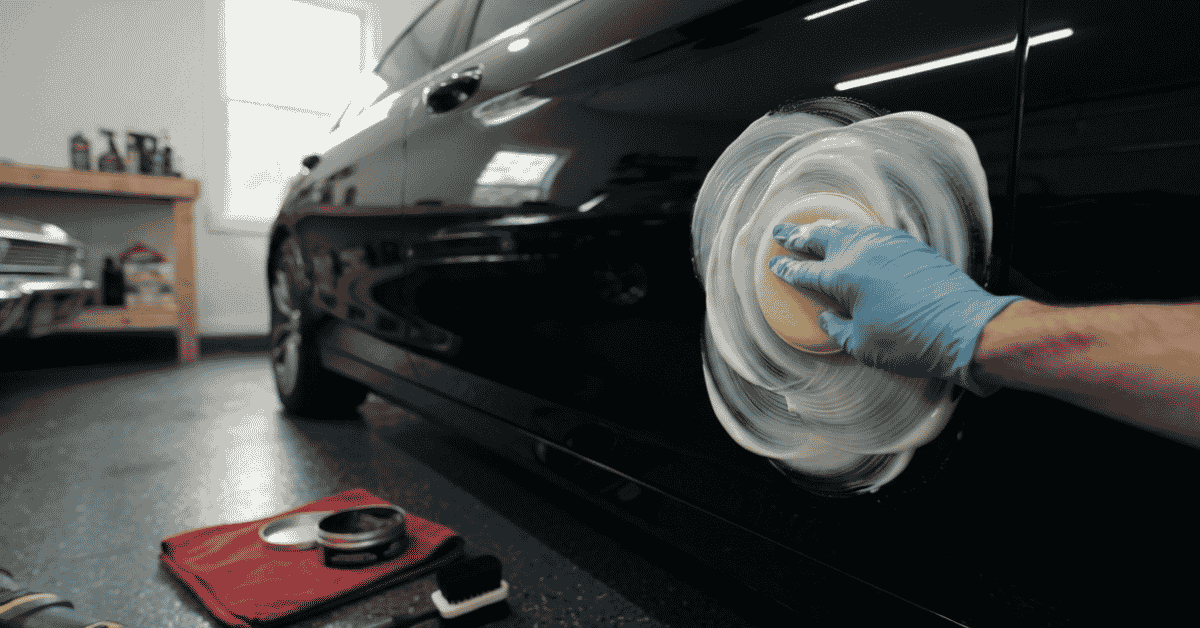
Foam applicator pads are the go-to for many detailers for a reason. They’re inexpensive, readily available, and come in various densities. A soft foam pad, typically around 4-5 inches in diameter, is perfect for applying liquid or paste waxes evenly across paintwork.

  • Pros:

    • Even Product Distribution: The porous nature of foam helps spread wax thinly and uniformly.
    • Gentle on Paint: Soft foam minimizes the risk of introducing new scratches.
    • Cost-Effective: They are generally the cheapest applicator option.
    • Versatile: Can be used for waxes, sealants, and even some polishes.
    • Ergonomic Handling: Often feature a rounded edge or grip for comfortable use.
  • Cons:

    • Can Absorb Product: They soak up a fair amount of product, potentially leading to over-application if not careful.
    • Durability: They wear out over time and can tear if handled roughly.
    • Limited Buffing Capability: Not designed for the removal or buffing stage of waxing.

Our editorial analysis of aggregated user feedback indicates that users appreciate the control they get with foam applicators, especially when first learning the waxing process. A common tip we’ve seen is to slightly dampen the pad if using heavy paste waxes, making them glide more smoothly across the surface.

Waxing Mitts: When They Shine

Car waxing mitts offer a slightly different approach for hand application. These are typically made from microfiber or foam and are shaped like a large mitten or glove, allowing you to slip your hand inside. This provides a comfortable grip and a larger surface area to work with compared to smaller foam pads.

  • Pros:

    • Comfortable Grip: Easier to hold for extended periods.
    • Larger Coverage: Can apply product to bigger areas more quickly.
    • Good for Contours: The flexible material can conform well to curves.
    • Some Have Dual Sides: Some mitts have different textures on each side for application and light buffing.
  • Cons:

    • Less Precision: Can be harder to control product application on tight edges or small emblems.
    • Can Trap Debris: If not maintained properly, trapped dirt can cause swirls.
    • May Over-Apply: A larger surface area can lead to using too much product if you’re not mindful.

When it comes to using waxing mitts, user feedback often highlights their ease of use for beginners. For instance, applying a spray wax directly onto the mitt before wiping the panel ensures you’re not oversaturating the paint. The key is to treat the mitt like a large applicator pad, using light pressure and working in linear motions.

If you’re looking for a simple way to get started with waxing, a quality microfiber waxing mitt is a solid choice.

Machine Application Tools: Powering Up

For those looking for speed, efficiency, and that flawless finish, machine polishers are the way to go. While they require a bit more investment and caution, they can revolutionize your detailing routine. These tools use powered rotation to apply and remove products, significantly reducing the physical effort involved.

Dual-Action (DA) Polishers: Your Go-To

Dual-Action (DA) polishers, also known as Random Orbital Polishers, are the workhorses for most automotive enthusiasts and many professionals. They operate with a pad that spins and oscillates randomly, mimicking more closely how a human might wax by hand but with far more consistency and power. This random motion is crucial because it drastically reduces the risk of burning paint or creating holograms (swirl patterns) compared to their rotary counterparts.

Our research into user experience with these tools indicates that DA polishers are highly recommended for beginners and intermediate users. A common specification to look for is the “throw” or “orbit,” generally ranging from 8mm to 15mm or even 21mm for larger machines. A longer throw means a wider random pattern, which can speed up the process, especially on larger panels.

Pad sizes for DA polishers typically range from 3 to 6 inches, allowing you to tackle everything from large truck beds to intricate bumper details.

DA Polisher Features to Look For

When setting out to choose a DA polisher, several features will make your life easier and your results better. The right machine can make a significant difference in how quickly and effectively you can apply wax or polish.

  • Variable Speed Control: This is non-negotiable. Being able to dial in the speed from a slow spread (2-3) to a more aggressive polish (4-6) is critical. Low speeds are for product distribution, while higher speeds are for working the product.
  • Pad Size: Smaller pads (3-5 inches) are better for tight curves and smaller vehicles. Larger pads (6-7 inches) cover more area faster on large panels like roofs or doors. Many users opt for a machine that can accept multiple pad sizes.
  • Throw (Orbit Diameter): As mentioned, a longer throw (e.g., 15mm or 21mm) generally means faster paint correction and wax application over large areas. Shorter throws (e.g., 8mm) offer more control in tighter spaces.
  • Ergonomics and Weight: You’ll be holding this tool for extended periods. A comfortable grip, balanced weight, and low vibration are key to preventing fatigue.
  • Power Source: Most are corded electric, offering consistent power. Battery-powered options offer mobility but can be heavier and have limited run time. For typical home use, a corded model is often preferred.

Manufacturer specifications confirm that machines with well-regulated variable speed control maintain consistent pad rotation and oscillation, preventing stalls on painted surfaces. This consistency is vital for achieving an even finish without introducing defects.

DA Polisher Pad Types: Foam vs. Microfiber

Just like with hand application, the pads you attach to your DA polisher are crucial. For waxing and sealing, you’ll typically want softer pads to ensure the product is applied evenly without causing any incidental marring.

  • Foam Pads: These are the most common. They come in various densities and cell structures. For waxing and light polishing, you’ll want “finishing” or “polishing” foam pads, which are softer and less abrasive than “cutting” pads. Their open-cell structure allows for good airflow, preventing overheating.
  • Microfiber Pads: These are excellent for applying and removing waxes and sealants, particularly at lower machine speeds. They offer a gentle touch and can help spread product very thinly. Some users find they are easier to clean than foam pads and can last longer if cared for properly.

Aggregate user reviews generally suggest that for applying traditional car waxes and sealants with a DA polisher, softer foam or microfiber pads are ideal. They help spread the product thinly and evenly, ensuring good coverage without excess build-up. Many detailing guides recommend using a dedicated pad for each product type to avoid cross-contamination.

For instance, using one of the 7 Car Window Washing Tools That Shine would be a different context than applying wax.

Rotary Polishers: For the Pros (and Risks)

Rotary polishers are powerful machines where the pad spins on a single axis. They are incredibly effective at removing deep scratches and paint defects quickly due to their direct, aggressive action. However, this sheer power comes with a significant learning curve and a high risk of damaging your vehicle’s paint if you’re not highly experienced.

  • Aggressive Cutting Power: Ideal for heavy paint correction.
  • High Risk of Damage: Can easily burn paint or create holograms if used improperly.
  • Steeper Learning Curve: Requires precise technique and consistent pressure.
  • Not Recommended for Beginners: Generally, DA polishers are the safer choice for applying waxes and sealants.

While rotary polishers can be used for wax application, it’s typically by professionals who feather the speed down to very low settings and use specialized pads. For anyone asking about car waxing tools for home use, the advice is almost always to stick with DA polishers or hand application. Mastering a rotary polisher often starts with understanding 9 Car Engine Oil Change Tools Worth Having, a different kind of mechanical skill.

Pad Compatibility: Matching Tools to Products

Getting the right pad for your wax or sealant is like choosing the right brush for painting. Using the wrong one can lead to poor results, wasted product, or even damage. This is where understanding the product type you’re using and the intended tool becomes critical.

For most traditional paste waxes and liquid waxes, you’ll want a soft foam or microfiber applicator pad. These are designed to pick up just enough product and spread it in a thin, even layer. If you’re using a DA polisher, a soft foam finishing pad or a dedicated wax-application microfiber pad is your best bet.

These pads ensure the wax is worked into the paint without creating any unnecessary abrasion.

Spray waxes are designed for quick application, and you can often use a soft microfiber towel or a soft foam applicator. With spray waxes, the goal is to mist the product onto the surface and then wipe away. Using a plush microfiber towel here is often preferred for the wipe-off stage to ensure a streak-free finish.

When it comes to paint sealants, many have similar application needs to waxes. Again, a soft foam or microfiber applicator pad is ideal for manual application. If machine applying a sealant, the same logic applies as with waxes, use softer, finishing-style pads.

It’s worth noting that some modern ceramic coatings have very specific application requirements, often calling for specialized foam or synthetic applicator blocks and specific types of microfiber towels for application and removal. While related to paint protection, their tools and methods differ significantly from traditional waxing.

Here’s a quick breakdown based on product type:

Product Type Recommended Hand Applicator Recommended Machine Pad (DA Polisher) Wipe-Off Tool
Paste Wax Soft Foam Pad, Waxing Mitt Soft Foam Finishing Pad, Microfiber Pad Plush Microfiber Towel
Liquid Wax Soft Foam Pad, Waxing Mitt Soft Foam Finishing Pad, Microfiber Pad Plush Microfiber Towel
Spray Wax Microfiber Towel, Foam Pad Microfiber Pad Clean Microfiber Towel
Paint Sealant Soft Foam Pad, Waxing Mitt Soft Foam Finishing Pad, Microfiber Pad Plush Microfiber Towel

Always check the product manufacturer’s instructions, as they often specify the ideal applicator type. For instance, some manufacturers might recommend a specific density of foam for their particular wax formulation to achieve optimal curing and bonding.

Applying Wax Like a Pro: Key Techniques

Having the right tools is only half the battle; knowing how to use them effectively is what truly elevates your car’s finish. Proper technique ensures your wax is applied evenly, buffs off cleanly, and provides maximum protection and shine.

Spreading the Love: Even Application

The goal with wax application, whether by hand or machine, is to create a thin, uniform film across the painted surface. This ensures consistent protection and makes buffing off much easier.

  • By Hand: Apply a small amount of wax (a nickel-sized amount for paste wax) to your applicator pad. Gently spread it across a section of the panel (e.g., half a door or a quarter of the hood) using overlapping, linear motions. Think back and forth, then up and down across the same area. This ensures you don’t miss spots and don’t apply too much product. Avoid applying wax to unpainted plastic trim or rubber seals, as it can leave a stubborn white residue.
  • With a DA Polisher: Start with the polisher at its lowest speed setting (usually 1 or 2). Place the pad flat on the paint and gently spread the wax over the panel. Once the wax is distributed, increase the speed to a medium setting (e.g., 3 or 4) and work the product in slow, overlapping passes. Overlap your passes by about 50% both horizontally and vertically. Some detailers will pre-apply a small amount of the wax directly onto the pad for machine application.

The key for both methods is to cover the entire panel without excessive build-up. A thin layer cures faster and buffs off more easily. You’ll know you’ve applied too much if you start seeing thick, hazy patches that are difficult to remove.

Buffing Off: Getting That Streak-Free Shine

Once the wax has had sufficient time to haze over (check product instructions for cure times, which can range from a few minutes to an hour depending on temperature and humidity), it’s time to buff it off. This step removes the excess wax and reveals the shine underneath.

  • Use High-Quality Microfiber Towels: This is where the quality of your materials really shows. Invest in soft, plush microfiber towels specifically designed for buffing off wax. Having several on hand is essential.
  • Gentle, Overlapping Motions: Fold a clean towel into quarters to create multiple clean surfaces. Gently wipe the hazed wax off the panel using light, overlapping motions. Don’t scrub aggressively, as this can still impart light scratches if any wax residue is still bonded to the surface.
  • Flip and Refold: As one side of the towel becomes saturated with wax residue, flip to a clean side. When all sides are used, refold into a new clean quarter.
  • Switch Towels Frequently: Once a towel starts to feel slick or isn’t removing wax cleanly, switch to a fresh one. Using too much pressure or a saturated towel will lead to streaks and a dull finish.
  • Edge Inspection: Pay attention to edges, emblems, and panel gaps, where wax can build up. A detailing brush can help dislodge residue from these areas before buffing.

The goal is to reveal a smooth, glossy surface free from streaks and high spots. If you notice any stubborn spots, a slightly damp section of a clean microfiber towel can sometimes help lift them, followed by a dry buff with a clean, dry towel. This process is crucial for a showroom look and is a core part of car maintenance, akin to following a Car Maintenance Schedule A Simple Plan To Keep Your Car Running Smoothly.

Common Waxing Mistakes and How to Fix Them

Even with the best car waxing tools, a few common mistakes can undermine your effort. Being aware of these pitfalls helps you avoid them for a flawless finish. Over-application is a big one; too much wax makes removal harder and wastes product.

This is often seen when new users think more wax equals more protection, but that’s rarely the case.

Another frequent error is using the wrong towel for buffing. A thin, worn-out shop rag simply won’t remove wax residue effectively and can cause micro-scratches. Always opt for clean, plush microfiber towels for buffing.

Lastly, working in direct sunlight or on a hot surface can cause the wax to dry too quickly, leading to stubborn high spots that are incredibly difficult to remove.

Avoiding Trim Stains

One of the most frustrating waxing mistakes is getting wax on black plastic trim or rubber seals. Once it dries, it can leave a chalky white residue that’s hard to clean without aggressive scrubbing, which can damage the surface. Always use painters’ tape to mask off trim and seals before you start applying wax.

This simple step protects these delicate surfaces.

If you do accidentally get wax on trim, don’t panic. A clean-up brush, even a soft toothbrush, can often gently lift the residue before it fully hardens. Some detailers also swear by using a bit of diluted all-purpose cleaner on a separate microfiber towel to gently wipe away stray wax.

However, prevention with masking tape remains the easiest and most effective strategy.

Preventing Swirl Marks

Swirl marks, those fine circular scratches in your paint, are often introduced during the washing or waxing process. Using old, dirty towels or applying too much pressure with your applicator are common culprits. Always ensure your microfiber towels are clean and free of grit before buffing.

When applying wax by hand, use light, consistent pressure. If you’re using a machine polisher for wax application, ensure you’re using a soft pad and keeping the machine moving at a consistent speed. Aggressive scrubbing with a contaminated pad or towel is a direct path to introducing swirl marks.

You might find our guide on 7 Car Window Washing Tools That Shine helpful for understanding contamination control in detailing.

When to Use Which Tool: Tailoring to Your Task

The best car waxing tools are the ones that best suit the specific product you’re using and the finish you want to achieve. Not all waxes are created equal, and neither are the tools designed to apply them. Understanding these nuances can save you time, effort, and frustration.

Best Tools for Paste Wax

Paste waxes often require a bit more effort to apply evenly due to their denser consistency. For hand application, a soft foam applicator pad or a dedicated waxing mitt is ideal. These tools help to pick up just the right amount of product and spread it thinly.

If you’re using a dual-action polisher, a soft foam finishing pad or a microfiber applicator pad loaded with a small amount of paste wax works well. The machine’s motion ensures even distribution, but always start at a low speed to avoid slinging wax. For buffing off, a clean, plush microfiber towel is essential to lift the hazing residue without causing streaks.

Best Tools for Liquid Wax

Liquid waxes are generally easier to spread than paste waxes. For hand application, a soft foam applicator pad or a microfiber waxing mitt is still recommended. These are effective at creating that thin, uniform layer.

When using a machine, a DA polisher with a soft foam finishing pad or a microfiber pad is excellent for liquid waxes. The longer throw of many DA polishers can help spread the liquid product efficiently across larger panels. Again, using multiple clean microfiber towels for the buffing stage is key to achieving that streak-free, glossy finish.

Best Tools for Spray Wax

Spray waxes are designed for speed and convenience, often used for quick touch-ups or between full waxing sessions for added shine and protection. For this type of product, a soft, high-quality microfiber towel is typically all you need. You spray directly onto the towel or onto the panel itself, then wipe.

While you could use a foam applicator, it tends to absorb more product than necessary with spray waxes. Microfiber towels are more efficient, spreading the fine mist evenly and easily during the wipe-off. The focus here is on a light, even application and a quick buff to a high shine.

Tool Maintenance for Longevity

Just like any tools, your car waxing accessories need proper care to perform their best and last longer. Neglecting them can lead to reduced effectiveness and even damage to your car’s paintwork. Proper cleaning and storage are key.

After each use, thoroughly clean your applicator pads and microfiber towels. For foam pads and microfiber, rinse them under running water to remove as much wax residue as possible. Then, gently wash them with a dedicated automotive soap or a pH-neutral cleaner.

Avoid using fabric softeners or harsh detergents, as these can clog the fibers of microfiber towels and degrade foam.

Microfiber towels should ideally be washed separately from other laundry and air-dried or tumble-dried on low heat. Avoid high heat, as it can melt the synthetic fibers. Foam pads can be air-dried.

Store all your clean, dry tools in a clean, dry place, away from direct sunlight and contaminants, to keep them in top condition for your next detailing session. This makes sure your car maintenance routine stays effective.

What About More Advanced Protection (Ceramic Coatings)?

While traditional car waxes offer great shine and protection, the automotive detailing world has seen a rise in advanced paint protection options, most notably ceramic coatings. These are technically different from waxes, offering a much harder, more durable, and longer-lasting protective layer. However, the tools used for applying them have some overlap and some significant differences.

Ceramic coating application often requires specialized applicator blocks, typically small, dense foam blocks that fit comfortably in the hand. These are used with dedicated coating towels, often weave microfiber or specialty synthetic blends, designed for a very specific wipe-on, wipe-off process. The timing for application and removal is also much more critical with coatings, measured in seconds or minutes depending on ambient temperature and humidity, unlike the more forgiving nature of waxes.

While you might use a DA polisher for paint correction before applying a ceramic coating (a process that often takes precedence over waxing), the coating itself is typically applied by hand using these specialized blocks and towels. Understanding the tool differences is crucial; using a wax applicator for a ceramic coating, or vice-versa, can lead to a failed application and costly correction. Many detailers consider the use of these specialized tools a next step after mastering traditional waxing; it’s a bit like going from basic car care to more involved maintenance.

Your Next Steps: Making the Smart Choice

Deciding on the right car waxing tools boils down to your experience level, the products you plan to use, and the results you’re aiming for. For beginners, starting with quality hand application tools like soft foam pads and plush microfiber towels is a sensible approach. These provide excellent control and a lower risk of mistakes.

If you’re looking to step up your game and achieve a more consistent, professional finish with greater efficiency, a dual-action polisher with appropriate soft pads is a worthy investment.

Remember to always check product manufacturer guidelines, as they often provide specific recommendations for their waxes and sealants. Investing a little time in understanding your tools ensures you get great results and keep your vehicle’s paint looking its best for years to come.

Frequently Asked Questions

How much wax should I apply with a foam pad?

Apply just enough to lightly coat the foam pad. For paste waxes, a corn-grain-sized amount is often sufficient per section. For liquid waxes, slightly more might be needed, but always aim for a thin, even layer.

Can I use the same pad for wax and polish?

It’s best practice to use separate pads for different products. Polishes can leave microscopic abrasive material on pads that can cause marring if used with wax later. Dedicated pads prevent cross-contamination.

How often should I replace my applicator pads?

Foam applicators typically last for a good number of uses, but they will eventually wear down. Replace them when they start to tear, lose their shape, or feel excessively hard. Microfiber pads can last longer if cleaned and maintained properly.

What is the difference between a DA polisher and a rotary polisher for waxing?

A DA polisher has a random orbital motion, making it safer and reducing user error for those new to machine application. A rotary polisher spins in a single direction, offering more power for correction but carrying a higher risk of paint damage if not handled expertly. For waxing, DA is generally preferred.

How do I clean wax residue from car trim?

Use a soft detailing brush or a lightly damp microfiber towel with a mild all-purpose cleaner. Work gently to lift the residue without scrubbing aggressively. Always mask trim with painter’s tape before waxing to prevent stains.

Leave a Comment