
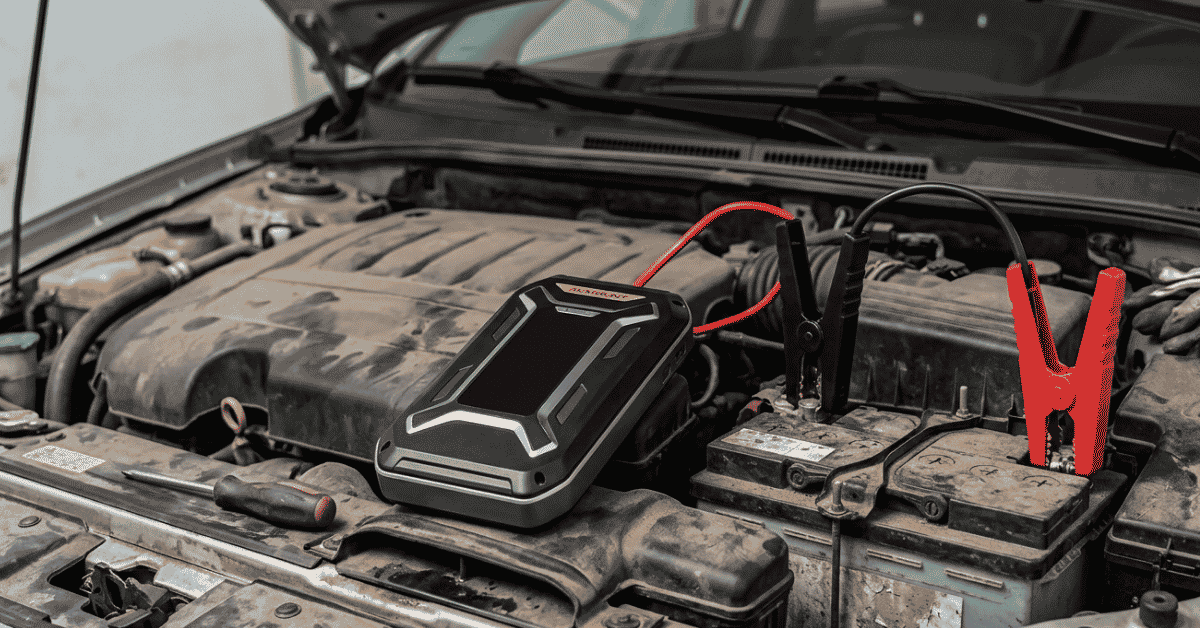
Acmount Car Jump Starter makes roadside battery trouble easier. Learn how to use it, compare key features, and find the right model for your car.
A dead car battery always seems to pick the worst time. I’ve had that quiet click happen when I was already late, and it is not fun. An Acmount car jump starter can give a weak battery the boost it needs without another car. Here’s how to use one safely and choose the right model.
What Is an Acmount Car Jump Starter?
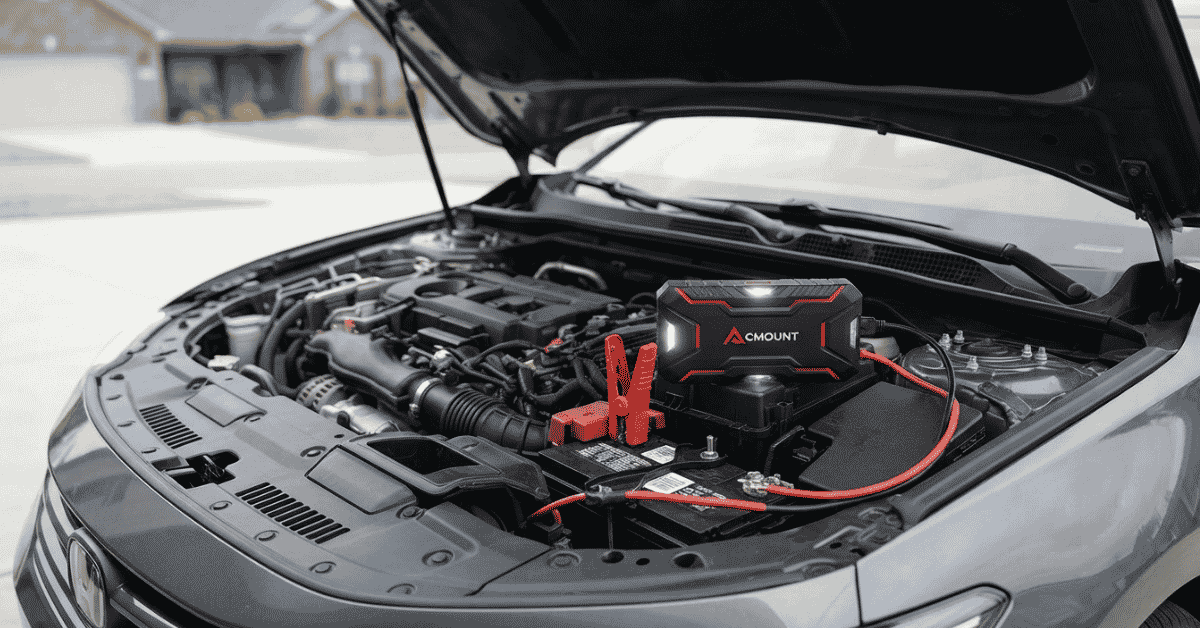
An ACMOUNT jump starter is a portable battery pack. It gives a weak 12V car battery the extra push it needs to crank the engine.
No second car. No waiting around for a friendly stranger. You keep it in the trunk, and when the engine only clicks, you use it.
What an ACMOUNT Jump Starter Does
- Supplies short bursts of starting power to a flat or weak battery
- Uses its own jumper clamps instead of another vehicle
- Several models double as a power bank, LED light, or air compressor
- Different models suit different engine sizes
Three numbers get thrown around, and they are not the same thing:
Peak amps is the brief surge the unit can deliver while cranking. It is the headline figure.
Battery capacity (in Wh or mAh) is how much energy it holds. That decides how many jumps you get and how well it works as a power bank.
Rated engine size is the practical one. It tells you the biggest engine the maker says the unit can handle.
ACMOUNT currently sells a few models, including the P100, P120, W160, W180, and W240. Features vary a lot between them, so the model number matters more than the brand name.
How to Use Acmount Car Jump Starter
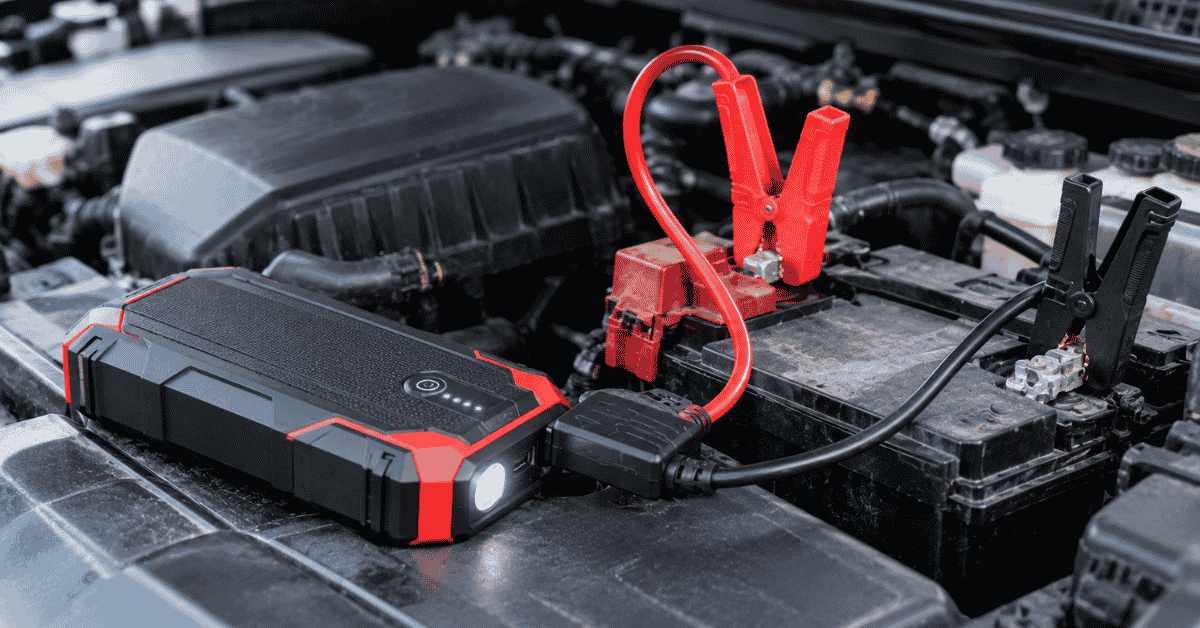
The process is simple. The clamp order is what you need to get right.
Prepare the ACMOUNT Jump Starter
Check the charge level first. ACMOUNT’s W160 guidance says to make sure the unit has enough charge before you try a jump. A half-dead jump starter helps nobody.
Then:
- Switch off headlights, radio, and air conditioning
- Confirm the car runs a 12V system. ACMOUNT states the W160 is for 12V only and must not be used on 24V
- Park somewhere safe and keep people clear of the engine bay
One more check. Do not jump a battery that is swollen, leaking, cracked, or frozen. ACMOUNT warns against this directly, and it is good advice with any brand. Call someone instead.
Connect the Smart Jumper Clamps
For compatible ACMOUNT models, the sequence goes like this:
- Plug the smart clamp cable into the jump starter
- Clip the red clamp to the positive (+) terminal
- Clip the black clamp to the negative (-) terminal
- Look at the smart-clamp indicator before doing anything else
- Start the engine
- Remove the clamps once it fires
That indicator is doing real work. ACMOUNT’s advice is that if it does not show a proper connection, stop and check your clamp placement rather than pushing on.
If the first attempt fails, ACMOUNT’s W160 instructions say to wait about 60 seconds before trying again.
What If the Car Does Not Start?
Resist the urge to crank repeatedly. That just heats the starter and drains everything.
Work through this instead:
- Wait a minute between attempts
- Wiggle each clamp. Corrosion on the terminal blocks the connection
- Check the jump starter still has charge
- Confirm red is on positive and black is on negative
- If it still will not go, the problem is probably not the battery
A car that cranks strongly but will not fire has a fuel or ignition issue. A car that does nothing at all, even with a good jump, may have a bad starter or a loose ground.
Safety: Never let the red and black clamps touch each other. ACMOUNT specifically warns against shorting the clamps, and it is the fastest way to ruin a good afternoon.
Which ACMOUNT Jump Starter Should You Buy?
There is no single best model. It depends on what you drive.
Specs below are as ACMOUNT lists them. Check the current product page before buying, because model specs do get revised.
ACMOUNT P100
ACMOUNT lists the P100 at 5000A peak, rated for engines up to 10.0L gas and 8.0L diesel, for 12V vehicles.
It comes as a small emergency kit rather than just a jump box. There are dual USB 3.0 ports so it works as a power bank, a 600-lumen LED flashlight with steady, strobe, and SOS modes, plus a safety hammer and compass. ACMOUNT rates it for use from -4°F to 140°F and says a full charge is good for up to 60 jump starts.
This is the one to look at if you want a dedicated jump starter that stays compact.
ACMOUNT P120
Bigger sibling. ACMOUNT lists 6000A peak and support for diesel engines up to 10.0L.
The battery is 99.16Wh (26800mAh), and it has an LCD display, USB and USB-C charging, and built-in safety protections. The larger pack means more jumps per charge and a more useful power bank.
ACMOUNT W160
This is the jump starter with a tire inflator built in.
ACMOUNT lists 5000A peak, support for up to 9.0L gas and 8.0L diesel, and a 150 PSI compressor. Their figure is that it takes a car tire from 29 PSI to 36 PSI in roughly one minute. The inflator has preset pressure with auto shut-off, five modes covering cars, motorcycles, bikes, and balls, and four nozzles.
It also works as a power bank and emergency light. For 12V vehicles only.
ACMOUNT W180 and W240
Both pair a jump starter with the same 150 PSI compressor. ACMOUNT positions the W180 at 6000A peak and the W240 at 5000A peak, aimed at larger vehicles and heavier roadside use.
Compare engine compatibility, battery capacity, and physical size before picking between them. The highest amp number is not automatically the right buy.
What Is the Best Car Battery Jump Starter to Buy?
Better question: which one matches your car? A huge peak-amp figure means nothing if the unit is not rated for your engine.
Match the Jump Starter to Your Vehicle
Check your engine type, its displacement in litres, and that your car is 12V. Diesels need more cranking power than petrol engines of the same size, which is why makers list them separately. Also be honest about your battery’s condition. A jump starter revives a weak battery. It does not fix a dead one.
Compare More Than Peak Amps
Look at peak current, battery capacity, rated engine size, clamp quality, safety protections, recharge time, the LED light, USB charging, whether there is a compressor, the storage case, and the warranty.
Safety protections matter more than most buyers realise. Reverse-polarity and spark-proof protection are what stop a moment of inattention from becoming an expensive mistake.
Think About How You Drive
City commuter: portability wins. A compact unit like the P100 lives in the door pocket.
SUV or pickup owner: go for higher rated engine capacity.
Road tripper: a model with a compressor cuts one more item from the trunk.
Camping or off-road: capacity, lighting, and durability carry more weight than raw amps.
ACMOUNT Jump Starter vs. Traditional Jumper Cables
Cables still work fine. They just need a second car.
Portable jump starter: one person can do the whole job, no donor vehicle needed, rechargeable, and some models throw in extra emergency tools. The catch is that it needs charge.
Jumper cables: cheaper, simpler, nothing to charge, and they last for years in a bag. The catch is that they are useless alone in an empty car park.
Picture a humid morning, an empty lot, and that sad little click from under the hood. A charged jump starter in the trunk beats flagging down strangers.
ACMOUNT Jump Starter Safety Tips
Before Jump Starting
Read the manual for your exact model. Inspect the cables and clamps for damage, keep the unit dry, and never use a damaged accessory.
During the Jump
Red to positive, black to negative. Never short the clamps together. Keep metal tools away from the terminals, and do not crank over and over.
After the Engine Starts
Remove the clamps as the manual directs, store the cables tidily, and recharge the unit soon. An emergency tool with a flat battery is just luggage.
How to Maintain an ACMOUNT Jump Starter
Keep It Charged
Check the level now and then, and recharge after every use. ACMOUNT’s W160 manual recommends a full charge every three months to help maintain battery health. Put a reminder in your phone, because nobody remembers this on their own.
Store It Properly
Keep it dry, out of extreme heat, with the clamps and cables together in the case. A trunk in summer gets hotter than most people think, so check your model’s rated storage range.
ACMOUNT Car Jump Starter FAQs
How do you use an ACMOUNT car jump starter?
Plug in the smart clamp, connect red to positive and black to negative, check the indicator, start the car, then remove the clamps.
Can an ACMOUNT jump starter start a completely dead battery?
Some models are built to help at very low voltage, but it depends on the model. Use any force-start or boost function only as the manual instructs.
How many amps should a car jump starter have?
Go by the rated engine compatibility, not the biggest peak-amp number on the box.
Does an ACMOUNT jump starter charge a car battery?
No. It gives temporary starting power. Recharging a battery properly needs a battery charger.
Can I leave an ACMOUNT jump starter in my car?
Yes, if you stay within the storage conditions in the manual. Avoid long spells of extreme heat.
How often should I charge an ACMOUNT jump starter?
Check your model’s manual. ACMOUNT’s W160 guidance says to fully charge it every three months.