
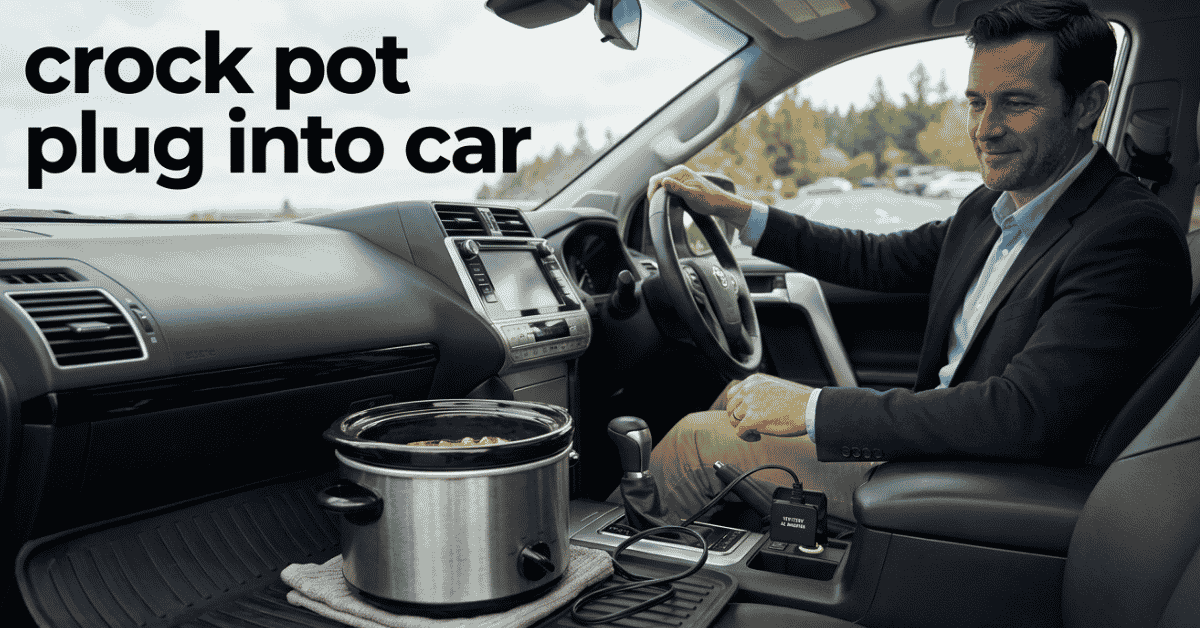
Crock Pot Plug Into Car use can make trips easier with the right power setup, safe heat use, and a few smart road tips for meals.
Crock Pot Plug Into Car setups once seemed odd to me. I pictured hot food riding in the back seat. The idea felt neat, yet a bit risky too. Then I learned the power side needs care. A slow cooker needs more power than many car ports give. A good plan starts with the crock pot specs. Then, the car power source must match its needs. That small step can make road meals much less hard.
Can You Plug a Crock Pot Into a Car?
I once thought a Crock Pot Plug Into Car setup was easy. The slow cooker sat on my cold kitchen floor. I felt the cord rub against my fingertips. It seemed odd that a car could run such heat. Most slow cookers use a wall AC plug at home. Many small models draw around 100 to 300 watts. A car USB port cannot power them with ease. A 12V port may also have a low watt limit. A power inverter can change car DC to AC power. Yet the inverter must handle the slow cooker’s load. I now check both watt needs and port limits first.
A car inverter can make this setup work. It takes 12V DC from the car battery system. Then it gives AC power to the crock pot. The key lies in the watt rating of both parts. A 300-watt cooker needs enough inverter headroom. A weak inverter may shut down or get too hot. I would also avoid long trips with loose cords. The setup should stay firm and clear of heat.
Life Before I Found This
I once thought road meals meant cold food and fast stops. The car smelled like coffee, bread, and old fries. Bags slid around each time I hit a turn. I heard cups shake in the side bin. My meal plan felt messy and hard to keep warm. Then I saw small slow cookers made for travel. Some use low watt draw and fit in small spaces. That made me rethink long trips. A warm meal could stay on track with less fuss. Still, the power side stayed my main concern. A crock pot is not the same as a phone charger.
I also learned that size can help a lot. A large home slow cooker may draw more power. A small one may need far less watt load. That can make a big gap on the road. Less power can mean less strain on the car system. I guess smaller can be better for this job. The goal is not to cook a feast. The goal is warm food with a safe setup.
Why This Matters Right Now
I once thought car power was the easy part. My phone showed many car power tips that day. The bright screen made the setup seem quite simple. Then I read the watt notes on my cooker. That changed my view in a few short mins. A car port may have a low fuse limit. An inverter may need more power than that port can give. Some inverters plug into the 12V socket. Others need a direct link to the car battery. I would not pick one by size alone. The specs need to match the full load.
This matters more on long road trips. A weak setup can cut power at a bad time. It may also heat the plug or cord. That is not a risk I would take for lunch. I check the car guide and inverter guide first. I also check the crock pot label for watts. Those three checks take just a few mins. They can save a lot of stress later.
The First Big Lesson
I once thought watts were just a dull tech term. The crock pot sat warm in my hands. I felt the cord press into my palm. Then came my small lightbulb moment. Power needs do not vanish inside a car. A 200-watt cooker still needs about 200 watts. The inverter must supply that load with room to spare. The car source must also feed the inverter well. That means the full chain needs a good match. I guess this was the main lesson for me.
The simple chain looks like this: car, inverter, cooker. Each part has its own power limit. The weakest part can stop the whole setup. A fuse can blow if the load gets too high. An inverter can shut down under a heavy load. A hot plug can also signal a bad match. So, I never judge a setup by one number. I look at every part in the chain.
Small Tactics That Actually Work
I once tried to plan a meal with no spare room. The slow cooker sat tight beside my travel bag. I heard the lid tap as the car moved. That small sound made me rethink the setup. Now I use a flat, firm spot for the cooker. I keep the lid locked or secured for travel. I use a model made for road use if possible. A travel crock pot can offer a better fit. Some are built with car use in mind. I also keep cords short and neat. Loose cords can snag or touch hot parts.
I would prep the food at home first. Then I would place it in the cooker. That cuts the need for long cook time. It also cuts the time spent near the car. I never place the cooker on a soft seat. A firm base gives it more grip. I also keep the unit far from loose bags. Simple steps can make the trip feel much more calm.
A Strange Detail I Noticed
I once thought the crock pot lid was the main issue. The small lid sat snug on the pot. I felt its cool glass edge in my hand. It felt odd that the cord got more thought. Yet the cord can cause real trip woes. It needs a safe path from power source to cooker. It should not hang near feet or hot parts. The plug should sit firm in its port. I guess the small parts often need more care. That is true for most road gear.
I also found that meal size can shape power use. A full pot may need more time to heat. A small meal may heat with less fuss. Time matters when the car is off too. A slow cooker can drain a car battery if left on. That risk gets worse with long idle time. I would keep the engine and power plan in mind.
Style Comparison & Data
I once thought every car crock pot worked the same. The small pots sat in a row on my shelf. I felt each cool shell under my fingertips. One had a wall plug, while one had 12V power. That small gap made a big change for road use. A home pot needs an inverter for car use. A 12V travel pot can skip that extra step. I now compare power, size, and cord type first.
| Setup | Power path | My take |
|---|---|---|
| Home crock pot | Car to inverter | Needs more care |
| 12V travel pot | Car 12V port | Simple road use |
| Small cooker | Low watt load | Better for trips |
| Large cooker | High watt load | More power strain |
The best pick depends on the trip plan. A short trip may suit a small 12V unit. A long trip may need a better power plan. A home crock pot can still work with an inverter. Yet the inverter needs enough rated power. I would leave extra room above the cooker’s watt need. That gives the inverter some breathing room. I also check the car outlet fuse rating. A good match is worth more than a cheap deal.
Non-Obvious Gains
I once thought warm food was the only gain. The crock pot sat still as the road noise grew. I heard the tires hum under the car floor. A warm meal gave the trip a calm feel. It also cut the need for fast food stops. That can save both time and stress. I guess the best gain was less rush. A meal plan can make a long trip feel more set. These small wins stood out to me:
- Less stop time.
- Warm meals on long trips.
- Fewer food runs.
- Better meal prep.
- More control over food time.
A slow cooker can also help with group trips. One pot can serve more than one meal need. Yet the pot still needs firm support. Food should stay in a safe temp range. I would not leave cooked food warm for too long. Road heat and food safety still matter.
Myths vs. My Reality
I used to think any crock pot could run in a car. But then I checked its watt rating. The car port did not have the same power as home. I also thought a tiny inverter solved every issue. But then I learned the load must match. The inverter needs enough rated output for the pot. The car port also has its own limit. I used to think the car battery could run it all day. But then I learned battery drain can be real. That made me far more careful with road power.
My reality is now much more plain. I pick the cooker first. Then I check its watt needs. Next, I check the car power source. Last, I choose the right inverter if needed. Maybe that sounds slow, but it feels worth it. Safe power beats a rushed meal plan every time.
Essential Principles for Mastery
I once thought road cooking meant just packing food. The long grind taught me a better frame. I call it Power, Place, Prep, Check. Power means the load fits the car source. Place means the cooker stays firm and clear. Prep means food starts ready for the trip. Check means I watch heat, cords, and power.
The next rule is simple: keep the setup small. Small pots often make road use much easier. A low watt unit can also cut power strain. I still check the maker’s guide each time. I do not trust a random online watt chart. The same rule applies to inverters. Their size must fit the real load. I guess safe road cooking is more about care. The food is the fun part. The power plan keeps that fun from turning sour.
FAQs about Crock Pot Plug Into Car
Can a crock pot run from a car?
I remember first seeing a crock pot near my car. A home model needs AC power from an outlet. A car can supply DC power from its 12V system. An inverter can change that power to AC. The inverter must match the crock pot’s watt load.
Can I use a 12V crock pot?
I remember seeing a small 12V pot on a trip. That type can plug into a matching car port. It may need less gear than a home pot. I still check its fuse and watt specs first. The car port must support the load.
Can a car battery power a crock pot?
I remember hearing the engine hum near my first setup. A cooker can draw power for a long time. That can drain a battery if the car stays off. I would avoid long use with the engine off. A safe power plan should come first.
Is an inverter needed for a crock pot?
I remember checking the plug on my home cooker. A home crock pot uses AC power from a wall. A car gives DC power through its 12V system. An inverter can bridge that gap. The inverter must have enough rated watt output.
Can I cook food while driving?
I remember seeing the lid shake on a rough road. A hot pot can spill if it lacks firm support. I would use a travel-safe cooker made for this use. I would also secure the unit in place. Safe driving should always come before meal prep.
My Final Takeaway
I once saw Crock Pot Plug Into Car use as a neat trick. Now, I see it as a power task first. The fading light falls across my desk tonight. My keyboard makes a soft tap as I write. I guess the best plan stays quite simple. Match the watt load to the power source. Keep the cooker firm, cool, and well placed. Then enjoy the warm meal without road fuss.