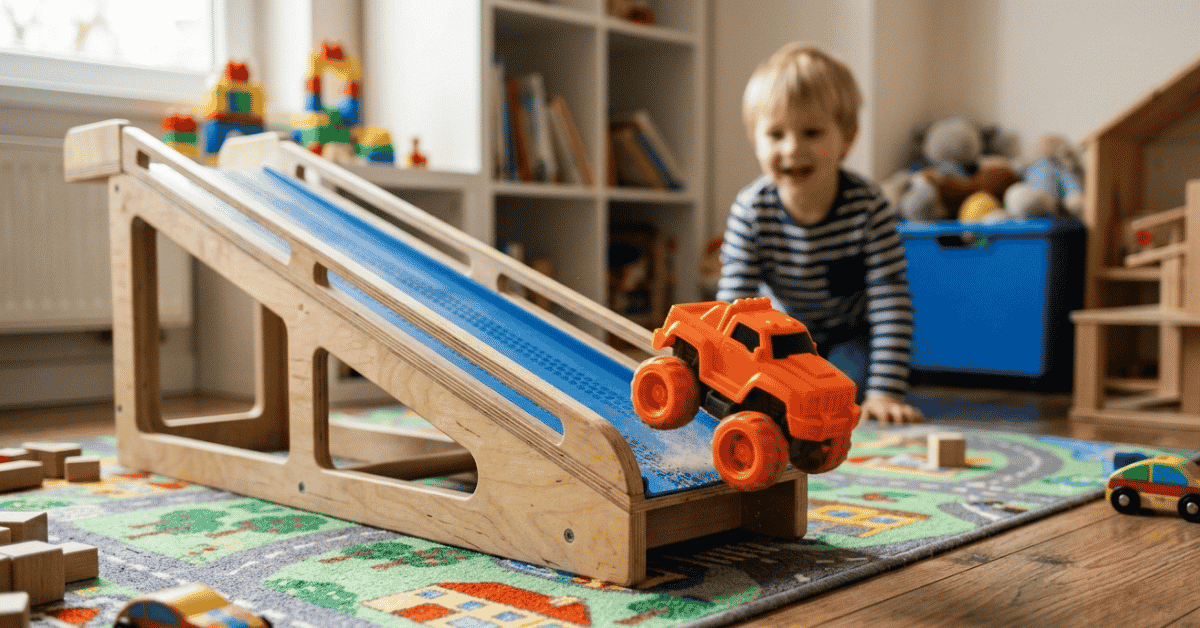
Car With Ramp Toy fun starts with tiny cars, simple ramps, and exciting races. Learn about pullback cars, mini vehicles, play ideas, and safety.
I still enjoy watching a tiny car fly down a ramp, even when the setup is just on my living room floor. A good car with ramp toy is simple, fun, and easy to use. Some cars roll by gravity, while pullback cars zip forward after one quick tug.
What Is a Car With Ramp Toy?
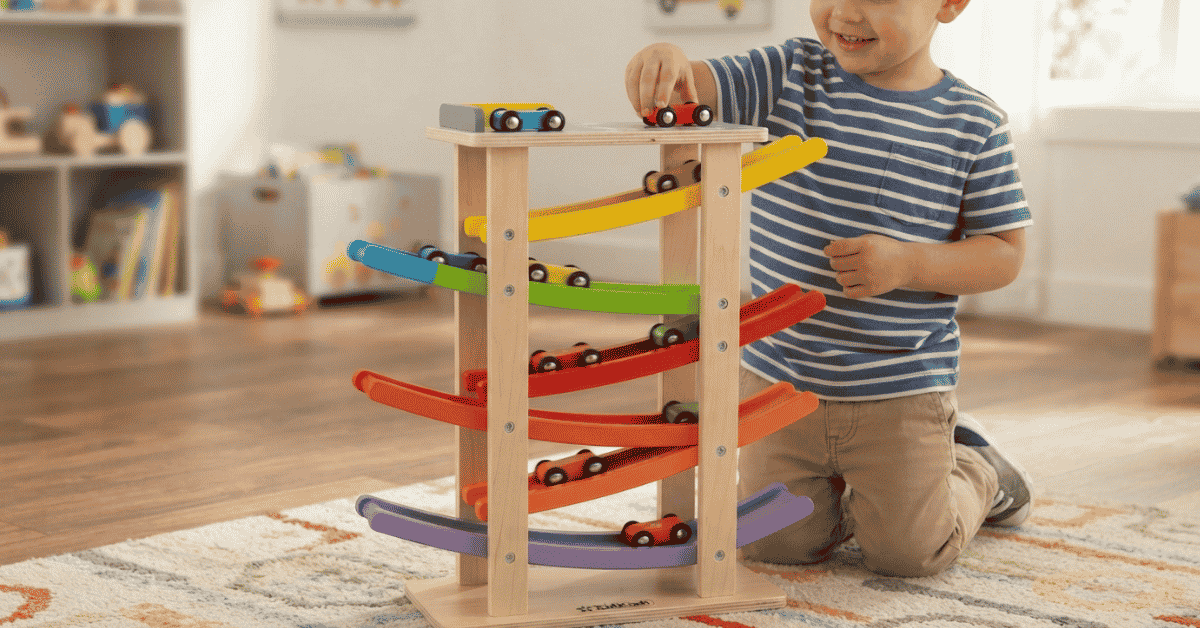 A car with ramp toy is simple. You get a small car and a slope for it to roll down. That’s it. The child puts the car at the top, lets go, and watches it shoot across the floor.
Then they do it again. And again. That repeat button in a kid’s brain is the whole magic of this toy.
How a Car With Ramp Toy Works
Most sets share the same basic parts:
- A small toy vehicle
- A plastic or wooden ramp
- A launch point or starting gate
- Wheels and axles that spin freely
- Gravity, or a pullback motor, to create the motion
Some ramps are one straight slope. Others zigzag, so the car drops from level to level with a soft click-clack sound. Either way, the child sees the result of their own action right away. Push, release, watch. Pure cause and effect.
Why Kids Like Ramp Car Toys
Kids love these toys because they work every single time. There is no screen, no app, and no waiting.
Ramp cars also help in quiet ways:
- They build fine motor skills through grabbing and releasing
- They teach early ideas about speed and distance
- They give kids practice with turn-taking during races
- They work fine for one child alone or for siblings together
And there is the sound. Tiny plastic wheels buzzing across a wood floor is one of those small noises that makes a house feel lived in.
Try this at home: Run the same car down the same ramp twice. Once on a hard floor, once on carpet. On tile it might travel eight or ten feet. On carpet it may stop dead in two. Kids find that difference fascinating, and it makes friction feel real instead of abstract.
What Are Those Little Toy Cars Called?
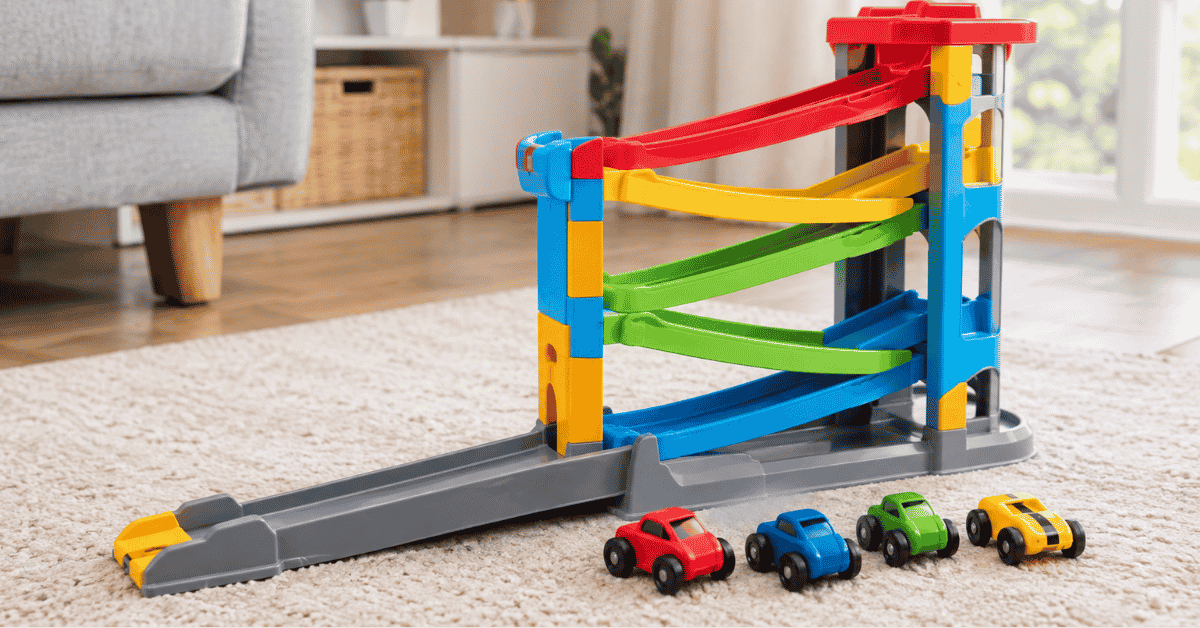 People ask this all the time. The honest answer is that there is no single name. The right word depends on how the car moves and what set it came from.
Common Names for Little Toy Cars
- Die-cast toy cars
- Mini toy cars
- Miniature cars
- Toy race cars
- Small model cars
- Pullback cars
- Friction-powered cars
- Push-and-go cars
Die-Cast Cars vs. Plastic Toy Cars
The difference is mostly about what the body is made of.
Die-cast cars have a metal body, usually with plastic wheels and windows. They feel heavy for their size. That extra weight often helps them roll faster and farther down a ramp.
Plastic toy cars are lighter and cheaper. They are easier for very small hands to hold, and they hurt less when they hit a shin.
Miniature cars is just a general term. It can mean either one.
Toy race cars points more at the play style than the material. These are built for tracks and speed.
Are Hot Wheels Cars Considered Little Toy Cars?
Hot Wheels is a brand, not a category. Many Hot Wheels vehicles are small die-cast cars, and most of them run well on compatible ramps and track systems.
But not every little car is a Hot Wheels car. Matchbox, Battat, Green Toys, and dozens of others make similar sizes. If a ramp set says it fits standard 1:64 scale cars, a Hot Wheels car will usually work. Check the track width before you assume.
What Is a Pullback Toy Car?
A pullback car has a small motor inside. You drag it backward across the floor, let go, and it drives forward on its own.
How Pullback Cars Work
Inside the car is a flat spiral spring. Rolling the car backward winds that spring up. When you release the car, the spring unwinds and pushes power to the wheels.
Once the spring runs out, a small clutch disconnects the motor so the car keeps coasting. No batteries are needed at all. The design is old, too — the keyless clockwork version was patented back in 1952.
Pullback cars work best on flat, smooth ground. Thick carpet eats their energy fast.
Pullback vs. Push Cars
| Feature | Pullback Car | Push Car |
|---|---|---|
| Power | Internal spring | Child’s push |
| Battery | Usually none | None |
| Movement | Drives after release | Stops when the push ends |
| Ramp use | Often suitable | Great for gravity play |
| Repeated play | Very easy | Very simple |
Can a Pullback Car Use a Ramp?
Yes, in most cases. A few things help:
- The ramp should be wide and stable
- The launch surface should be smooth
- A steep ramp will speed the car up fast, so watch where it lands
- Very young children do better with low ramps
One warning. Some cheap pullback cars have wheels that drag slightly, because the motor is always half-engaged. Those cars roll poorly down a gravity ramp. Test one before buying a set of six.
How to Choose a Good Car With Ramp Toy
Ramp sets look great in the box. The floor test is what matters.
Check the Ramp Design
Look for a wide launch area, a base that does not tip, smooth edges, and track pieces that clip together firmly. Ramp height should suit the child’s age. Taller is not better for a two-year-old.
Check the Toy Car
Spin each wheel with your finger. It should keep turning for a moment. Axles should be straight, the body should feel solid, and there should be no loose bits. The car also needs to be easy to grip.
Match the Toy to the Child
Think about age range, floor space, and whether play happens indoors or outside. Check how many cars come in the set, since one car per child prevents a lot of tears. Then think about what the child actually enjoys: racing, building, or pretend play.
Quick tip: Test the wheels before you commit to a big set. A ramp can look thrilling on the packaging, but bad wheels turn the race into a sad little crawl.
Best Ways to Play With a Ramp Car Toy
One ramp can fill a whole afternoon if you change the game now and then.
Race Two Cars
Line up two cars at the same starting point and release them together. Compare how fast they go and how far they travel. Swap in a heavier die-cast car and see what changes.
Test Different Surfaces
Run the same car on hardwood, tile, short carpet, and a play mat. Ask the child to guess which one wins before each run. Kids get surprisingly good at predicting it.
Build a Simple Ramp Challenge
Household stuff works fine. Books, cardboard, a baking tray, a length of pool noodle. Build low ramps, long ramps, a finish line, parking spots, and a garage out of a shoe box.
On a rainy afternoon, a cardboard ramp and three small cars can hold a child’s attention longer than anything with a battery in it.
Car With Ramp Toy Safety Tips
Fun toy, small parts. A little care goes a long way.
Watch for Small Parts
Follow the maker’s age label. Keep small cars away from children who still put toys in their mouths, and check wheels and axles for anything loose.
Use the Ramp on a Safe Surface
Keep the ramp on a flat floor. Skip stairs and tall furniture. Keep cars out of walkways and away from pets, and never let kids launch cars at people.
Inspect the Toy Over Time
Every so often, check for cracked plastic, loose wheels, sharp edges, broken ramp pieces, and bent axles. Toys that live on the floor take a beating.
Car With Ramp Toy FAQs
What are those little toy cars called?
They are usually called mini toy cars, miniature cars, die-cast cars, toy race cars, or pullback cars. The name depends on the design and the mechanism.
What is a pullback toy car?
It is a car with a small spring motor inside. Pull it backward, release it, and it drives forward with no batteries.
Can Hot Wheels cars go on ramps?
Yes. Most Hot Wheels cars are built for track play. Just check that your ramp matches standard track width.
Do ramp toys need batteries?
Usually not. Basic ramps run on gravity and pullback cars run on a spring. Only motorized launchers need batteries.
What age is a car with ramp toy for?
It varies. Many wooden ramp racers start at 18 months, while small die-cast sets are often 3+. Always check the label, especially with loose parts.
Are pullback cars better than regular toy cars?
Not better, just different. Pullback cars create their own motion after release. Push cars rely on the child’s hand or on gravity.