
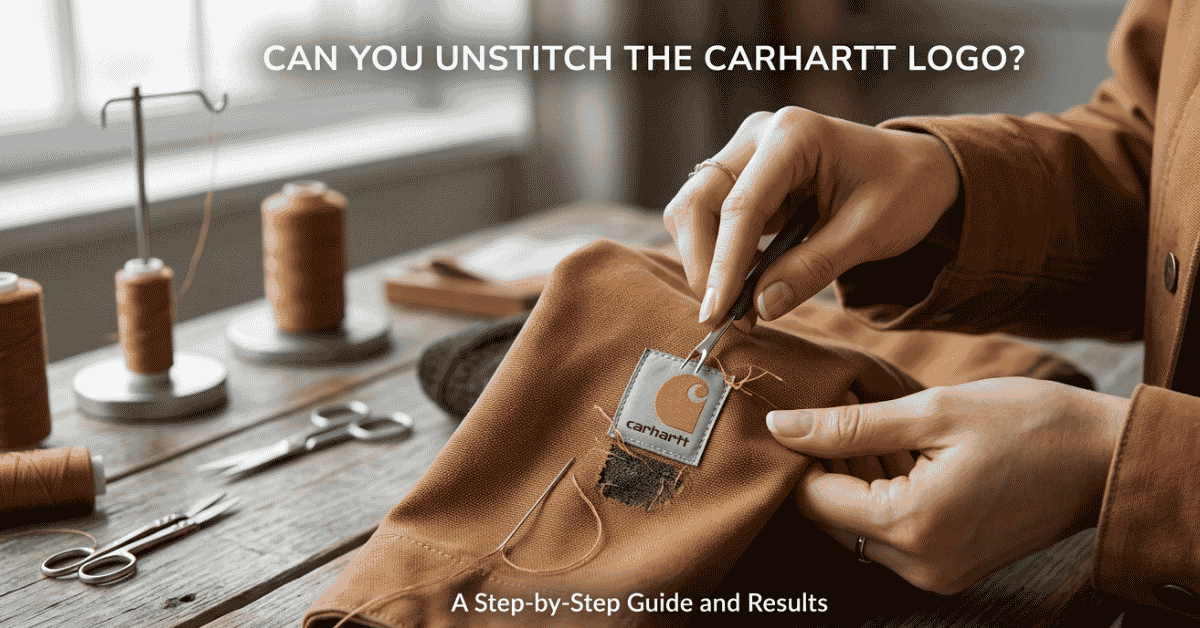
Can you unstitch the Carhartt logo without ruining your clothing? Learn what happens, what tools help, and what results to expect.
I first tried removing a Carhartt logo from a thrifted jacket on a rainy Sunday afternoon. The jacket fit perfectly. The logo patch was not my style. I grabbed a seam ripper and hoped for the best. The process went better than expected, but it taught me a few lessons. If you are wondering whether you can unstitch the Carhartt logo, the short answer is yes. The longer answer depends on the garment and the patch style.
Can You Unstitch the Carhartt Logo?
Yes, in most cases, you can unstitch the Carhartt logo.
Many Carhartt logos are sewn onto garments using stitching around a fabric patch. With patience and the right tools, the stitching can usually be removed.
However, the result depends on:
- Garment age
- Fabric type
- Patch style
- Stitch density
- Sun fading
I have removed logos from jackets, shirts, and work vests. Some looked nearly perfect afterward. Others showed faint outlines.
Why Do People Remove the Carhartt Logo?
Everyone has different reasons.
A Cleaner Look
Some people prefer plain clothing.
Without a logo, garments often look:
- Simpler
- More versatile
- Less branded
I understand the appeal.
A plain jacket works with almost any outfit.
Custom Clothing Projects
Many people customize workwear.
They may add:
- Company logos
- Team patches
- Personal branding
Removing the original patch is often the first step.
Repairing Damaged Patches
Sometimes the logo itself becomes worn.
Common issues include:
- Frayed edges
- Loose stitching
- Fading
Removing the patch can improve appearance.
Upcycling and Restoration
I enjoy restoring older garments.
Removing unwanted patches often helps give clothing a second life.
How Are Carhartt Logos Attached?
Not every logo is attached the same way.
This affects how easy removal becomes.
Sewn-On Fabric Patches
This is one of the most common methods.
The patch is attached using perimeter stitching.
Benefits include:
- Easy identification
- Durable attachment
- Cleaner removal process
These are usually the easiest to remove.
Embroidered Logos
Some garments feature direct embroidery.
These logos are stitched directly into the fabric.
Removal becomes more difficult because:
- Threads enter the garment itself
- Stitch density is higher
- Fabric damage risk increases
I approach embroidered logos much more carefully.
Adhesive and Stitch Combination
Some patches use both methods.
The patch may be:
- Sewn
- Glued
- Heat bonded
These can leave residue after removal.
What Tools Work Best?
The right tools make a huge difference.
Seam Ripper
This is my favorite tool.
Benefits include:
- Precision
- Safety
- Control
Most fabric stores sell inexpensive seam rippers.
Small Scissors
Fine-point scissors help remove loose threads.
Use them carefully.
Tweezers
Tweezers help pull:
- Loose thread pieces
- Small fibers
- Remaining stitching
I use them constantly during removal.
Bright Lighting
Good lighting is surprisingly important.
It helps reveal:
- Hidden stitches
- Tiny thread loops
- Fabric damage
A well-lit workspace makes everything easier.
How to Unstitch the Carhartt Logo Step by Step
The process is simple when done carefully.
Step 1: Inspect the Logo
Look closely first.
Check for:
- Stitch locations
- Adhesive signs
- Embroidery
This helps plan the removal.
Step 2: Turn the Garment Inside Out
I often start from the back side.
This provides better access to thread ends.
Step 3: Cut Small Sections
Use the seam ripper carefully.
Remove only a few stitches at a time.
Slow progress reduces mistakes.
Step 4: Pull Loose Threads
After cutting stitches, gently pull threads free.
Avoid aggressive tugging.
Step 5: Remove the Patch
Once all stitches are released, lift the patch carefully.
If resistance remains, look for missed stitches.
Step 6: Clean the Area
After removal:
- Remove thread fragments
- Brush fibers gently
- Inspect the fabric
The garment will immediately look different.
What Happens After Removal?
Many people expect a perfect result.
Reality is usually a bit different.
Stitch Holes May Remain
Small holes often appear initially.
These usually become less noticeable over time.
Factors include:
- Fabric thickness
- Garment age
- Stitch size
Heavy fabrics recover best.
Patch Outlines May Appear
This surprised me the first time.
The patch area often looks newer.
Sunlight fades exposed fabric over time.
The patch protects the covered section.
Fabric Compression
Patches can flatten fabric underneath.
After removal, the area may feel slightly different.
Washing often improves this.
Adhesive Marks
If glue was used, residue may remain.
Fortunately, this can often be cleaned.
Common Results by Fabric Type
Different materials respond differently.
| Fabric Type | Removal Ease | Visible Holes | Outline Risk |
|---|---|---|---|
| Duck Canvas | High | Low | Medium |
| Heavy Cotton | High | Low | Medium |
| Work Jacket Fabric | High | Low | Medium |
| Soft Cotton Shirt | Medium | Medium | High |
| Lightweight Fabric | Medium | High | High |
Heavy workwear fabrics usually produce the best results.
Common Mistakes to Avoid
I made several of these mistakes early on.
Rushing the Process
Fast removal often creates:
- Snags
- Holes
- Fabric damage
Take your time.
Pulling Too Hard
A patch should not require force.
Resistance usually means stitches remain.
Using Large Scissors
Large scissors reduce precision.
Small tools provide better control.
Ignoring Adhesive
Many people focus only on thread.
Always check for hidden glue beneath the patch.
How to Reduce Visible Stitch Marks
Perfect removal is not always possible.
Still, several tricks help.
Wash the Garment
A normal wash cycle often improves appearance.
Fabric fibers relax naturally.
Use Steam
Steam helps restore fabric shape.
I often use a garment steamer after removal.
Brush the Fabric
A soft brush can lift compressed fibers.
This reduces patch outlines.
Give It Time
Many stitch marks fade gradually.
After several washes, the garment often looks much better.
Pros and Cons of Removing the Carhartt Logo
Every project has trade-offs.
Pros
- Cleaner appearance
- More customization options
- Better personal style
- Easy with basic tools
Cons
- Possible stitch holes
- Potential fading differences
- Time-consuming process
- Small risk of fabric damage
Understanding both sides helps set realistic expectations.
My Experience Unstitching Carhartt Logos
The first logo I removed took nearly an hour.
Today, I can usually complete the process much faster.
The biggest lesson I learned is this: patience matters more than skill. Most problems happen when people rush.
In many cases, you can unstitch the Carhartt logo successfully. Just remember that removing the patch does not always erase every sign it was there.
The goal is improvement, not perfection.
FAQs
Can you unstitch the Carhartt logo without damaging the fabric?
Yes. Careful use of a seam ripper and slow removal can help prevent damage to most Carhartt garments. Learn more about safe logo removal.
Can you unstitch the Carhartt logo from a jacket?
Yes. Many Carhartt jacket patches are sewn on and can be removed by carefully cutting the surrounding stitches. Learn more about patch removal.
Will unstitching the Carhartt logo leave holes?
Small stitch holes may remain at first. These often become less visible after washing and normal wear. Learn more about fabric recovery.
Can you unstitch the Carhartt logo if it is embroidered?
Yes, but embroidered logos are harder to remove because the threads are stitched directly into the fabric. Learn more about embroidery removal.
What tool is best if you want to unstitch the Carhartt logo?
A seam ripper is usually the safest and most effective tool for removing stitched Carhartt logo patches. Learn more about removal tools.