
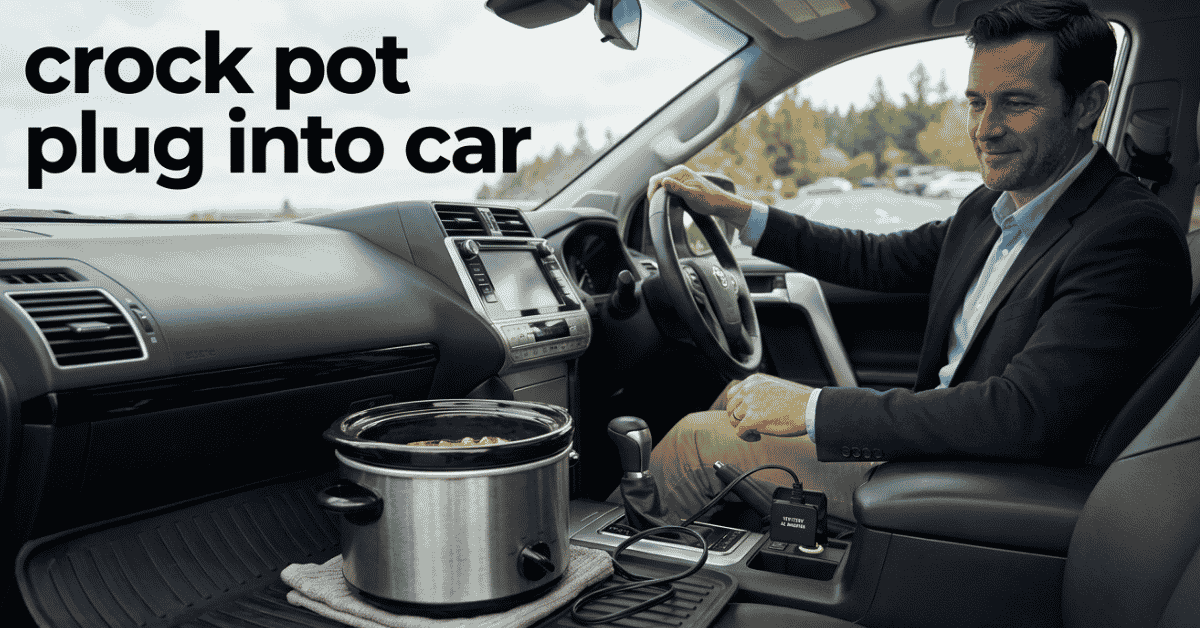
Crock pot plug into car lets you enjoy hot meals on the road with less hassle. Skip costly fast food stops and keep food warm during long drives. I first tried this on a rainy highway trip and was shocked by how simple it felt. This guide covers power needs, safety tips, setup steps, and smart travel meal ideas. Read on before your next drive and avoid common mistakes.
Can a Crock Pot Plug Into Car Work Safely?
Many drivers ask this after seeing travel cooking videos online. The short answer is yes, but only with the right setup. A standard crock pot needs household-style power. Most cars supply 12-volt DC power through a socket.
That difference matters.
A typical slow cooker often pulls between 150 and 300 watts. Some larger units draw even more. Direct connection usually will not work. Most people use a power inverter that converts vehicle power into usable AC power.
Safety comes first. A poor inverter choice can cause blown fuses or battery drain. Heat also builds during long use. Smart planning helps avoid those issues.
Understanding Power Requirements
Before plugging anything in, check the label on your crock pot.
Look for:
| Item | Typical Range |
|---|---|
| Small crock pot | 75-150 watts |
| Medium crock pot | 150-250 watts |
| Large crock pot | 250-350 watts |
| Car outlet voltage | 12 volts |
| Common inverter size | 300-500 watts |
Choose an inverter rated above your cooker’s watt demand. Extra capacity helps reduce stress on the system.
Why People Use Crock Pots in Vehicles
Road travelers enjoy several benefits:
- Warm meals during long trips
- Less spending on restaurants
- Better control over ingredients
- Useful for camping trips
- Helpful for truck drivers
A warm stew can feel amazing after hours behind the wheel.
Common Mistakes
Avoid these errors:
- Using an undersized inverter
- Running equipment with the engine off
- Ignoring manufacturer instructions
- Blocking ventilation around the cooker
- Leaving hot food unsecured
Small mistakes often create big headaches.
Choosing the Right Equipment for a Crock Pot Setup
A successful setup depends on matching each part correctly. Many online complaints trace back to poor equipment choices. Spending a little time on planning saves money and frustration later.
The goal stays simple. Deliver enough power safely while protecting both the vehicle and appliance. Every component should support that goal. Cheap gear often creates reliability issues.
A complete setup includes more than a crock pot alone. The inverter, wiring quality, mounting location, and food container security all play important roles. Good preparation makes the entire process smoother.
Pick a Quality Power Inverter
A power inverter acts as the bridge between your vehicle and appliance.
Look for:
- Pure sine wave output when possible
- Built-in overload protection
- Cooling fan
- Low voltage shutoff
- Clear watt rating
Reliable brands often cost more but reduce risk.
Consider a Travel Slow Cooker
Some portable slow cookers are designed for travel. These models may use lower power and fit more securely inside vehicles.
Popular features include:
- Locking lids
- Spill-resistant design
- Compact size
- Carry handles
Travel-focused models often work better than large family-size units.
Secure Everything Properly
Movement creates problems.
Use:
- Non-slip mats
- Cargo straps
- Stable flat surfaces
Food should never slide during turns or sudden stops.
Check Your Vehicle’s Limits
Not every vehicle handles extended appliance use equally well.
Review:
- Alternator capacity
- Fuse ratings
- Owner’s manual guidance
A quick check prevents electrical surprises later.
Best Ways to Use a Crock Pot During Travel
Road cooking sounds easy, yet a few habits make a huge difference. The safest approach involves preparing ingredients ahead of time. Less handling means fewer distractions while driving.
My first attempt involved chopping vegetables at a rest stop. Bad idea. Wind, traffic noise, and limited space made everything harder. Prep work at home changed the experience completely.
Consistency matters. Treat the setup like any other travel system. Follow the same routine every trip and problems become less likely.
Prepare Ingredients Before Leaving
Complete all food prep at home.
Good options include:
- Chili
- Pulled chicken
- Beef stew
- Vegetable soup
- Meatballs
Place ingredients into sealed containers before departure.
Start Cooking at the Right Time
Cooking duration varies by recipe.
Examples:
| Meal | Approximate Time |
|---|---|
| Chili | 4-6 hours |
| Chicken stew | 5-7 hours |
| Pulled pork | 6-8 hours |
| Meatballs | 3-5 hours |
Plan meals around travel schedules.
Monitor Temperature
Food safety remains important.
Keep hot foods above safe serving temperatures. A food thermometer provides peace of mind during longer trips.
Use Rest Stops Wisely
During breaks:
- Check cords
- Inspect connections
- Verify food temperature
- Confirm stable placement
Two minutes of inspection can prevent bigger issues later.
Practical Safety Tips and Alternatives
Drivers often focus on convenience and forget about safety. That balance matters. A crock pot setup should never distract from driving responsibilities. Food can wait. Safe travel cannot.
Heat-producing appliances deserve attention. Electrical systems work hard already. Adding extra load requires awareness and planning. Following a few practical habits keeps everything manageable.
Alternative solutions also exist. In some situations, they may work better than a traditional slow cooker. Flexibility helps match equipment to travel needs.
Protect Your Vehicle Battery
Battery drain ranks among the most common problems.
Follow these guidelines:
- Run the engine during operation
- Avoid overnight use
- Disconnect equipment when finished
- Watch voltage readings
A dead battery ruins any trip quickly.
Keep Ventilation Open
Inverters generate heat.
Never:
- Cover cooling vents
- Place gear under blankets
- Trap equipment in tight spaces
Airflow supports safe operation.
Consider Alternative Options
Several alternatives may suit travelers better.
Examples include:
- 12-volt food warmers
- Portable lunch ovens
- Heated travel containers
- Thermal food carriers
Each option serves slightly different needs.
Know Local Rules
Certain locations restrict cooking equipment use while driving. Check local regulations before relying on any appliance during travel.
A few minutes of research may prevent unwanted issues.
Final Thoughts
A crock pot can work in a vehicle when paired with the proper inverter, safe setup, and realistic expectations. The process is not difficult, yet attention to power requirements matters. Start with a quality inverter, prepare meals ahead of time, and secure everything properly. Hot meals on long trips become much easier when the system is planned correctly.
FAQs
Can I plug a crock pot directly into a car outlet?
Most standard crock pots cannot run directly from a 12-volt outlet. A properly sized power inverter is usually needed for safe operation.
How many watts does a crock pot use in a car?
Many crock pots use between 150 and 300 watts. Always check the appliance label before choosing an inverter.
Will a crock pot drain my vehicle battery?
Yes, battery drain can happen if the engine is off for long periods. Running the engine helps maintain power safely.
Is a power inverter safe for road trips?
A quality inverter with overload and heat protection can work safely when used according to manufacturer instructions.
Are travel slow cookers better than standard crock pots?
Travel models often offer locking lids, compact designs, and lower power needs, making them more practical for vehicle use.