
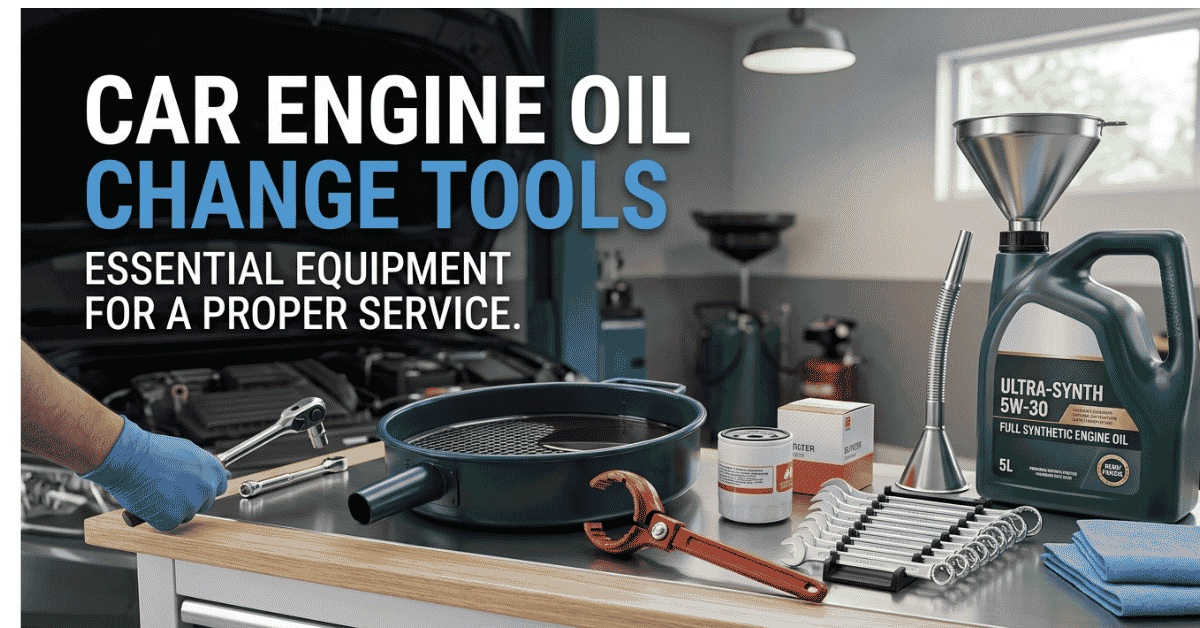
Need the right car engine oil change tools? Learn which tools matter most, which ones save time, and how they make oil changes easier.
I still remember my first oil change. Oil dripped everywhere. I had the wrong wrench. The drain pan was too small. What should have taken thirty minutes turned into a messy afternoon. Since then, I have changed oil on several vehicles. The biggest lesson was simple. The right car engine oil change tools make the job faster, cleaner, and far less stressful.
Are Car Engine Oil Change Tools Really Necessary?
Yes, absolutely.
You can attempt an oil change with minimal equipment. However, the proper tools make a huge difference.
Good car engine oil change tools help:
- Prevent spills
- Save time
- Improve safety
- Reduce frustration
- Protect your vehicle
From my experience, investing in basic tools pays for itself quickly.
Why Changing Engine Oil Matters
Fresh oil keeps an engine healthy.
It reduces wear and helps engine parts move smoothly.
Protects Engine Parts
Oil creates a protective layer.
This reduces friction between moving components.
Without proper lubrication, damage can happen quickly.
Helps Control Heat
Engines create heat during operation.
Fresh oil helps remove excess heat.
This supports long-term engine health.
Improves Performance
Clean oil often helps engines run more smoothly.
You may notice:
- Better response
- Quieter operation
- Improved efficiency
Routine maintenance matters.
Essential Car Engine Oil Change Tools
These are the tools I use most often.
Socket Wrench Set
This tool removes the drain plug.
Benefits include:
- Better leverage
- Faster work
- Secure fit
Most vehicles require a socket wrench.
Oil Filter Wrench
Some oil filters become extremely tight.
An oil filter wrench helps remove them safely.
I rarely perform an oil change without one.
Oil Drain Pan
This catches used oil.
Look for features such as:
- Large capacity
- Pour spout
- Stable design
A good drain pan prevents messy accidents.
Funnel
A funnel helps guide new oil into the engine.
Without one, spills become more likely.
This simple tool saves cleanup time.
Nitrile Gloves
Oil can be messy.
Gloves help keep hands clean while protecting skin.
I always keep a box nearby.
Shop Towels
You will use more towels than expected.
They help clean:
- Dipsticks
- Spills
- Tools
Never start without them.
Additional Tools That Make Life Easier
These are not always required, but they help.
Creeper
A creeper allows you to slide under the vehicle comfortably.
Benefits include:
- Better mobility
- Reduced strain
- Improved comfort
My back appreciates this tool.
Vehicle Ramps
Ramps provide access underneath the car.
They are often easier than jack stands for oil changes.
Always use them on level ground.
Torque Wrench
A torque wrench ensures proper tightening.
This helps prevent:
- Loose drain plugs
- Overtightening
- Thread damage
Accuracy matters.
Work Light
Good lighting improves visibility.
A bright work light helps locate:
- Drain plugs
- Oil filters
- Leaks
I consider this a worthwhile addition.
Car Engine Oil Change Tools Comparison
Not every tool serves the same purpose.
| Tool | Required | Main Purpose | Difficulty Level |
|---|---|---|---|
| Socket Wrench | Yes | Remove drain plug | Easy |
| Oil Filter Wrench | Usually | Remove oil filter | Easy |
| Drain Pan | Yes | Catch used oil | Easy |
| Funnel | Yes | Add new oil | Easy |
| Gloves | Recommended | Hand protection | Easy |
| Torque Wrench | Optional | Correct tightening | Medium |
| Ramps | Optional | Vehicle access | Easy |
| Work Light | Optional | Better visibility | Easy |
This combination handles most home oil changes.
How I Perform an Oil Change
The process becomes straightforward with proper tools.
Step 1: Gather Everything First
Before starting, I collect:
- New oil
- New filter
- Drain pan
- Wrenches
- Funnel
Preparation prevents interruptions.
Step 2: Warm the Engine Slightly
A warm engine allows oil to flow more easily.
Do not make it too hot.
Warm is enough.
Step 3: Position the Drain Pan
Place the pan beneath the drain plug.
Double-check alignment.
Oil can travel farther than expected.
Step 4: Remove the Drain Plug
Use the correct socket.
Allow oil to drain completely.
Patience helps here.
Step 5: Remove the Oil Filter
Use the filter wrench if necessary.
Some filters loosen easily.
Others fight back.
Step 6: Install the New Filter
Lubricate the filter gasket lightly with fresh oil.
Hand-tighten according to manufacturer guidance.
Step 7: Reinstall the Drain Plug
Use proper torque specifications when available.
Avoid excessive force.
Step 8: Add Fresh Oil
Use a funnel.
Pour slowly.
Check the oil level afterward.
Step 9: Inspect for Leaks
Start the engine briefly.
Look underneath for leaks.
Everything should remain dry.
Common Oil Change Mistakes
I made many of these mistakes early on.
Using the Wrong Socket Size
A poor fit can damage the drain plug.
Always confirm the correct size first.
Forgetting the Drain Pan
This sounds obvious.
Yet distractions happen.
Preparation prevents messes.
Overtightening the Drain Plug
Too much force can strip threads.
Tight does not mean extremely tight.
Installing the Filter Incorrectly
A crooked filter may leak.
Take a moment to confirm alignment.
Forgetting to Check Oil Level
Always verify the final level.
This step takes less than a minute.
Benefits of Owning Your Own Oil Change Tools
The advantages grow over time.
Cost Savings
Routine maintenance costs less when performed at home.
The tools often pay for themselves.
Convenience
You control the schedule.
No appointments are needed.
Better Understanding of Your Vehicle
Working on your car teaches valuable skills.
You become more aware of:
- Leaks
- Wear
- Maintenance needs
This knowledge is useful.
Satisfaction
There is something rewarding about completing the job yourself.
I still enjoy that feeling today.
Choosing Quality Car Engine Oil Change Tools
Not every tool is equal.
Look for Durable Materials
Strong materials often last longer.
Examples include:
- Steel construction
- Reinforced handles
- Quality fasteners
Durability saves money.
Read Reviews
Real-world experiences reveal useful details.
Pay attention to:
- Reliability
- Ease of use
- Longevity
Patterns usually emerge.
Avoid Extremely Cheap Tools
Bargain tools sometimes create frustration.
A slightly higher investment often delivers better value.
Buy Only What You Need
Start with essentials.
You can expand your tool collection later.
My Favorite Starter Oil Change Tool Kit
If I were starting today, I would buy:
- Socket wrench set
- Oil filter wrench
- Drain pan
- Funnel
- Gloves
- Shop towels
This simple setup handles most vehicles.
It keeps costs reasonable while covering the basics.
My Experience With Car Engine Oil Change Tools
The biggest improvement in my oil change routine came from better tools.
A quality drain pan stopped spills. A proper filter wrench saved time. A good socket set prevented stripped bolts.
The job became faster, cleaner, and more enjoyable.
That is why I always recommend investing in reliable car engine oil change tools before starting your first oil change.
FAQs
What are the most important car engine oil change tools?
The most important car engine oil change tools include a socket wrench, drain pan, oil filter wrench, and funnel. Learn more about oil change basics.
Can I change engine oil without special tools?
You can, but proper car engine oil change tools make the process safer, cleaner, and much easier. Learn more about DIY maintenance.
Do I need an oil filter wrench for every oil change?
Not always. Some filters remove by hand, but an oil filter wrench is often helpful for tight filters. Learn more about oil filter removal.
Are vehicle ramps useful for oil changes?
Yes. Ramps provide easier access underneath the vehicle and can simplify oil changes significantly. Learn more about maintenance safety.
How often should I replace my oil change tools?
Quality car engine oil change tools can last many years with proper care and storage. Learn more about tool maintenance.