
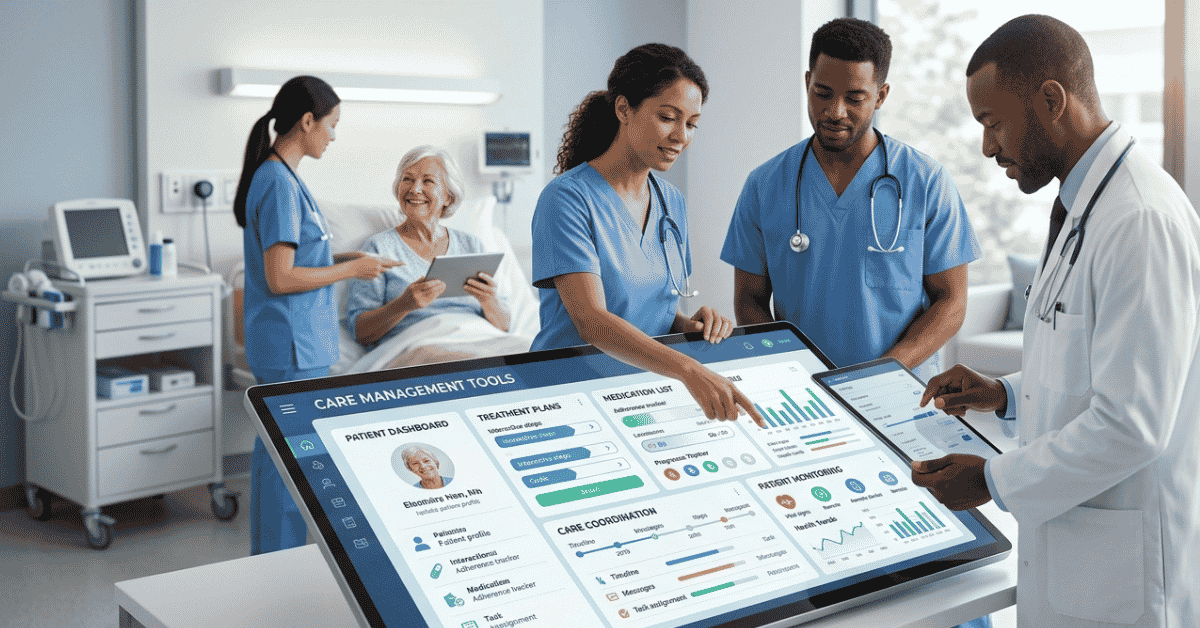
Discover the best ways care management tools organize care plans, patient data, tasks, communication, and follow-ups for smoother healthcare workflows.
A busy care team can juggle patient notes, calls, referrals, appointments, and follow-ups all day. I have seen how fast small tasks can pile up when records sit in different places. Care management tools bring these tasks together, helping teams plan care, track progress, share updates, and keep patients from slipping through the cracks.
What Are Care Management Systems?
At their core, care management systems bring patient information, care plans, tasks, communication, and follow-ups into one organized workflow. Instead of hunting through five different tools, a care team can see what’s happening in one spot.
A Simple Definition
In plain English, a care management system is a digital platform that helps healthcare or care teams plan, track, coordinate, and review patient care. It’s different from a basic patient database, which mostly just stores information. A care management tool does more. It helps teams act on that information, assign tasks, and follow up over time.
Many of these systems connect with electronic health records (EHR) and other healthcare platforms, so teams aren’t stuck re-entering the same data twice.
How Care Management Tools Work
The basic workflow usually looks like this:
Patient → Assessment → Care Plan → Tasks → Follow-Up → Progress Tracking
Here’s how it plays out step by step:
- Patient information enters the system.
- A care manager or provider creates a care plan.
- Tasks and appointments get assigned to team members.
- The team updates progress as things happen.
- The patient’s changing needs get tracked over time.
Who Uses These Systems?
Care management tools show up across a wide range of settings. Common users include care managers, nurses, doctors, social workers, home health teams, behavioral health providers, hospitals, clinics, senior care organizations, community care teams, and even patients and caregivers themselves.
Think about a busy morning for a care manager. She checks in on several patients, reviews a list of overdue tasks, makes a follow-up call to someone recovering at home, and updates a care plan, all without digging through a stack of paper notes. That’s the difference a good system makes.
What Do Care Management Tools Help With?
The real value isn’t just storing data. It’s turning scattered care tasks into a clear, manageable daily workflow.
Care Plans and Patient Goals
Good tools let teams create individualized care plans, set health goals, and record needs, risks, and interventions. They also make it easy to track whether goals are being met and update plans as a patient’s situation changes.
Care Coordination
Care coordination features help teams share information among authorized members, track referrals, coordinate appointments, and manage transitions between hospital, home, and other care settings. This reduces the number of follow-ups that quietly slip through the cracks.
Tasks, Alerts, and Reminders
Most systems handle reminders for things like medication follow-ups, appointment check-ins, patient calls, referral checks, assessment deadlines, and care-plan reviews.
Anyone who’s worked in care knows the sound of phone alerts stacking up during a busy afternoon. A solid task list doesn’t remove the workload, but it does clear the mental clutter of trying to remember everything at once.
Key Features to Look for in Care Management Tools
Not every platform does the same job, so the feature list matters when you’re comparing tools.
Patient records and health data: Look for patient profiles, medical history, care notes, medication information, assessment records, document storage, and EHR integration.
Communication and collaboration: Useful features include secure messaging, team notes, shared care plans, internal notifications, and communication tools for both patients and caregivers.
Reporting and analytics: Dashboards can help teams spot missed tasks, high-risk patients, care gaps, readmission risks, unfinished referrals, and overall patient progress.
Security and compliance: This one matters a lot. Look for HIPAA compliance where applicable, role-based access, data encryption, audit logs, secure authentication, and privacy controls.
Don’t judge a tool only by how nice its dashboard looks. Check how it handles access permissions, patient data protection, integrations, backups, and user roles before you commit.
Types of Care Management Tools
Different care settings need different tools, even though the underlying goal is the same: better coordination and follow-up.
- Healthcare care management software — used in hospitals, clinics, primary care, and chronic disease programs.
- Case management software — common in social services, behavioral health, community programs, and complex patient cases.
- Home health and senior care tools — built around home visits, caregiver schedules, visit notes, and family communication.
- Patient engagement and remote care tools — includes patient portals, telehealth, remote patient monitoring, and digital check-ins.
Care Management Tools vs. EHR Systems
These two terms get mixed up often, but they’re not the same thing.
An EHR stores and manages core clinical records. It supports documentation and clinical workflows and holds information like diagnoses, medications, and test results.
Care management software adds something different. It focuses on coordination and ongoing care, helping teams organize care plans, tasks, referrals, outreach, and patient goals. It often integrates with an EHR rather than replacing it.
Simply put: an EHR is the main clinical record. A care management tool helps the team manage the work happening around that patient’s care.
Benefits of Using Care Management Tools
When the right system fits the workflow, small improvements add up fast across a care team.
- Better care coordination — keeps team members aligned and reduces information gaps.
- Less manual work — automates reminders and cuts down on duplicate data entry.
- Better patient engagement — keeps patients informed through reminders and easier communication.
- More consistent care — standardizes parts of the workflow and makes care gaps easier to spot.
A sticky note can save a morning. It shouldn’t have to run the whole care team.
How to Choose the Right Care Management Tool
The best tool is the one your team will actually use every day without fighting the software.
Start with the workflow. Ask which care tasks take the most time, where missed follow-ups tend to happen, how many people need access, and which systems already hold your patient data.
Check integrations. Look for compatibility with EHR platforms, patient portals, scheduling systems, billing systems, telehealth tools, and communication platforms.
Test ease of use. Request a demo, test common tasks, ask staff to try it out, check mobile access, and review what kind of training it’ll take to get everyone up to speed.
Review cost and scalability. Consider per-user pricing, setup fees, training costs, integration fees, ongoing support, and room for future growth.
Common Challenges With Care Management Software
Even a good tool can create new headaches if it doesn’t fit the team’s real workflow.
Too many features can slow things down instead of helping. Complex screens frustrate busy staff who just need to get through their day. Poor data integration creates duplicate records and extra work, especially when EHR integration is weak. Staff adoption is another big one. Training matters, and involving actual users before choosing software beats picking flashy features nobody ends up using. And privacy and security risks are always worth watching. Limit access based on job roles, use strong authentication, review vendor security practices, and keep compliance requirements front and center.
Frequently Asked Questions About Care Management Tools
What are care management systems?
Care management systems are software platforms that help care teams organize patient information, care plans, tasks, communication, referrals, and follow-ups in one place.
Are care management tools the same as EHRs?
Not quite. An EHR stores clinical records, while care management tools focus on coordinating the work around a patient’s care. Many teams use both together.
Who uses care management software?
Healthcare providers, nurses, care managers, social workers, home health teams, and other care professionals all rely on these tools daily.
What features should care management software have?
Look for care plans, patient records, task management, communication tools, reporting, integrations, security, and compliance features.
Can care management tools improve patient care?
Yes. When implemented well, they support better coordination, timely follow-up, clearer documentation, and stronger patient engagement.