
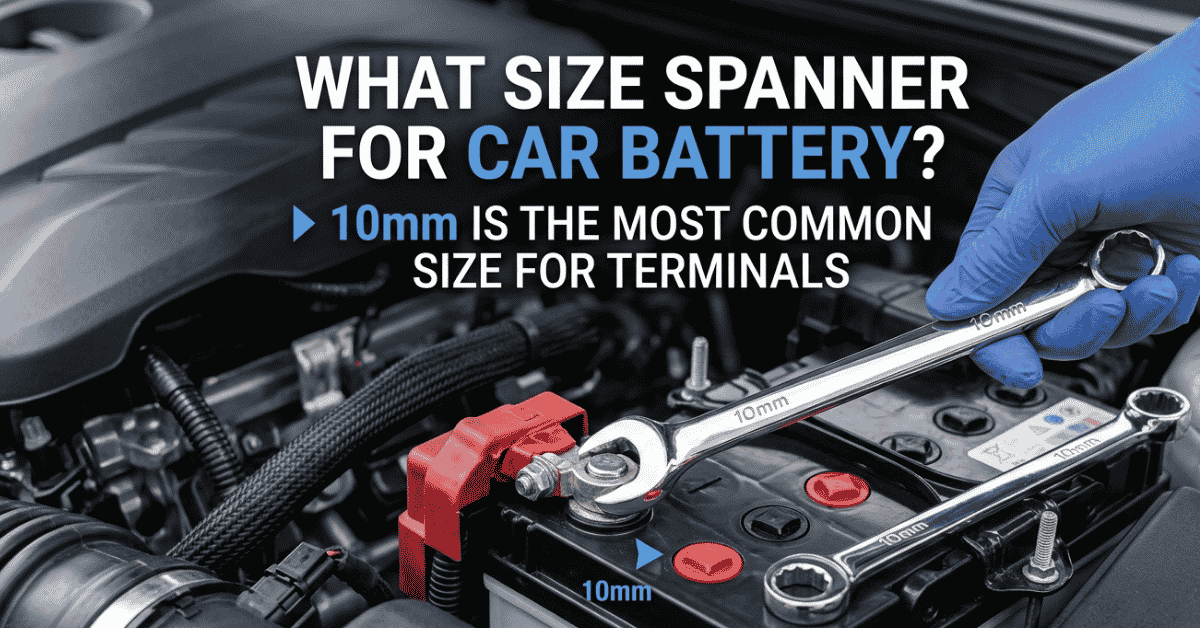
What Size Spanner for Car Battery? Learn the common 10 mm size, battery terminal nut sizes, useful tools, and safe ways to disconnect your battery.
The first time I reached for a car battery, I grabbed a handful of spanners and hoped one would fit. Thankfully, the guesswork was short. A 10 mm spanner fits many battery terminal nuts, but sizes can vary by car. Here’s how to check the right size and remove the battery safely.
What Size Spanner for Car Battery?
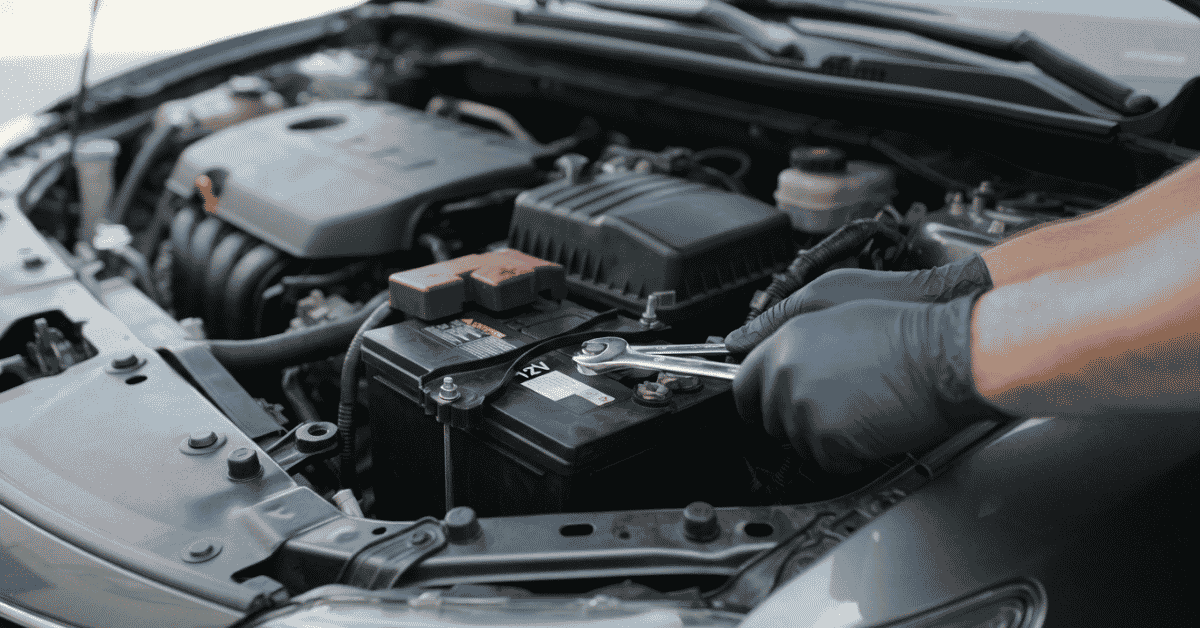
Short answer: grab a 10 mm spanner first. It fits the terminal clamp nut on most cars you will meet.
But it is not a rule. The size depends on your vehicle, the terminal design, and whether anyone has fitted aftermarket clamps over the years.
Common Spanner Sizes for Car Battery Terminals
- 10 mm — by far the most common size for battery terminal nuts
- 8 mm — turns up on smaller clamps and on side-post batteries
- 12 mm or 13 mm — often used on hold-down brackets, sometimes on terminals
- SAE sizes — found on older or imported vehicles, with 5/16 inch and 1/2 inch being the usual ones
Checking the nut takes five seconds. Guessing can cost you a rounded nut and an hour of misery. Check.
What Size Nut Is Usually on a Car Battery?
A 10 mm nut is standard on most modern cars. There is a real engineering reason for that, not just habit. Terminal clamp bolts are usually M6 metric fasteners, and an M6 bolt is designed to take a 10 mm hex head. Carmakers settled on metric sizing years ago, so the same nut shows up across European, Japanese, and most American vehicles.
Two things to keep straight:
- The terminal clamp and the hold-down bracket are separate fasteners. They may need different spanners.
- “10 mm” describes the distance across the flats of the nut. It is not the thread size. An M6 bolt is 6 mm thick but takes a 10 mm spanner.
In practice: Pop the hood on a cold morning, find the battery, and rest the 10 mm over the nut before you pull anything. If it drops on and sits flat with no wobble, you are done thinking. If it rocks side to side, stop and try another size.
Why Car Battery Terminal Nuts Have Different Sizes
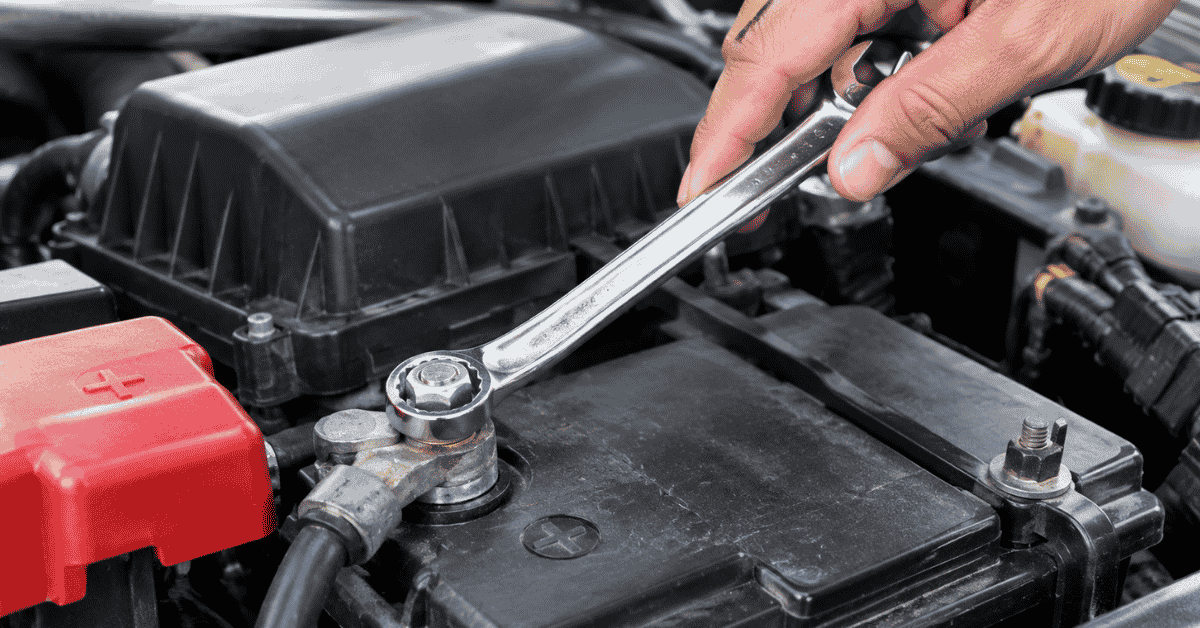
There is no universal battery fastener. Carmakers, battery makers, and parts suppliers all use their own hardware, and terminal designs vary too.
Metric vs. SAE Battery Hardware
Metric sizes are measured in millimetres. SAE sizes are measured in inches. Most modern cars are metric.
Common metric sizes: 8 mm, 10 mm, 12 mm, 13 mm. Common SAE sizes: 5/16 inch and 1/2 inch.
Here is the trap. Some metric and SAE sizes are almost identical. A 5/16 inch spanner is roughly 7.9 mm, so it feels close to an 8 mm. Close is not the same. A wrench that is a fraction too big grips only the corners of the nut, and corners shear off. Once a nut is rounded, you are into pliers, and that is not a fun place to be next to a live battery.
Battery Terminal Nut vs. Hold-Down Nut
These are two different jobs and often two different sizes.
Terminal nut — squeezes the cable clamp onto the battery post. Usually 10 mm on top-post batteries.
Hold-down nut — clamps the battery down into its tray so it cannot shift. Often 10, 12, or 13 mm, and sometimes 1/2 inch on older American cars.
Never assume the hold-down matches the terminal. Follow the bracket or strap down to its bolt and test-fit that one separately.
Top-Post vs. Side-Post Terminals
Worth knowing, because it explains most of the size confusion.
Top-post batteries have two posts sticking up with split clamps around them. The pinch bolt is usually 10 mm.
Side-post batteries, common on GM vehicles, have bolts that thread into the side of the battery case. These typically take 8 mm or 5/16 inch, which are near enough the same thing. Use whichever fits snugly.
What Tools Do You Need to Remove a Car Battery?
Not much. This is one of the few car jobs where a small kit really is enough.
Basic Battery Removal Tools
- 10 mm spanner or wrench
- Small socket set with a ratchet
- Adjustable wrench as a backup
- Battery terminal cleaner or a wire brush
- Gloves
- Safety glasses
- A flashlight, because engine bays are dark caves
Is a Spanner or Socket Better?
Spanner — simple, cheap, easy to keep in the glovebox.
Combination spanner — open end at one side, ring end at the other. The ring end grips all six flats, so it is far less likely to slip.
Socket — usually the best grip and the best access in tight corners.
Ratchet — much faster when the nut needs many turns.
Deep socket — the one you want when the nut sits high on a long threaded stud, which is common on hold-down bolts.
Tip: Keep a 10 mm combination spanner in your car kit. It is tiny, and 10 mm shows up all over a modern engine bay, not just on the battery.
How to Choose the Right Spanner Size
The way to avoid a stuck nut is simple. Test the fit before you apply any force.
Check the Nut Head
Slide the spanner fully over the nut. It should sit flat and square. If you can rock it back and forth, it is too big. Take it off and try the next size down. A loose wrench is how nuts get ruined.
Measure the Nut if Needed
Measure straight across two flat sides of the nut, not corner to corner. A ruler works. A caliper works better. Then match that number to a metric spanner, or convert it if the reading lands on an odd figure like 7.9 mm, which points to 5/16 inch.
Buy or borrow the exact size. Do not settle for near enough.
What If the Nut Is Stuck?
- Do not yank the wrench. Steady pressure wins
- Brush off dirt and white corrosion first
- Apply a suitable penetrating product and give it a few minutes
- Make sure the wrench is fully seated before you pull
- Keep force moderate near the terminal, since the post itself is soft lead and can break
How to Disconnect a Car Battery Safely
The steps are easy. The order matters more than the technique.
Disconnect the Negative Terminal First
Turn the engine off and take the key out. Switch off the lights, radio, and anything else electrical. Find the negative terminal, marked with a minus sign and usually a black cable.
Loosen the nut, lift the clamp off the post, and tuck the cable to one side so it cannot spring back.
Negative comes off first for a reason. With the earth already disconnected, your spanner cannot complete a circuit if it touches the bodywork later.
Then Remove the Positive Terminal
Loosen the positive terminal, marked with a plus sign and usually a red cable or a red cover. Keep the metal spanner away from any other metal while you work. Move the cable clear and keep it there.
Reconnecting the Battery
Reverse the order. Positive goes on first, negative second. Tighten both clamps so they do not twist by hand, then stop.
Common Mistakes When Using a Battery Spanner
A battery nut looks harmless right up until a loose wrench slips and throws a spark.
Using the Wrong Size
A loose wrench chews the corners off the nut. An oversized one slips under load. An undersized one simply will not go on, which is at least honest.
Confusing Terminal and Hold-Down Hardware
Always know which fastener you are turning. The terminal size tells you nothing about the bracket size.
Overtightening the Terminal Nut
Snug is the target. Battery posts are lead and clamps are soft metal, so hard cranking cracks clamps and deforms posts. If your battery or vehicle lists a torque figure, use it.
Car Battery Spanner Size by Common Hardware
| Battery Hardware | Common Sizes | What It Does |
|---|---|---|
| Top-post terminal clamp nut | 10 mm | Secures cable to terminal |
| Side-post terminal bolt | 8 mm or 5/16 in | Bolts cable into battery case |
| Alternative terminal nut | 12–13 mm | Less common clamp designs |
| Battery hold-down | 10–13 mm, or 1/2 in | Secures battery in tray |
These are common examples, not universal specs. Your manual and the actual fastener are the final word.
FAQs About Car Battery Spanner Size
What size spanner do I need for a car battery?
A 10 mm spanner fits most car battery terminal nuts. The correct size still depends on your vehicle and its hardware.
What size nut is usually on a car battery?
A 10 mm nut is the most common on terminal clamps, because the bolt underneath is usually an M6 fastener.
Is a 10 mm spanner enough to remove a car battery?
Often it handles the terminals, but the hold-down bracket may need 12 mm or 13 mm.
Can I use an adjustable wrench on a car battery?
You can, but it is a last resort. Adjustable jaws flex and slip, and a correctly sized spanner or socket grips far better.
Which battery terminal do I disconnect first?
Negative first, then positive. Reconnect in reverse.
What size socket is commonly used for car battery terminals?
A 10 mm socket suits most metric terminal clamps. Side-post batteries usually need 8 mm.