
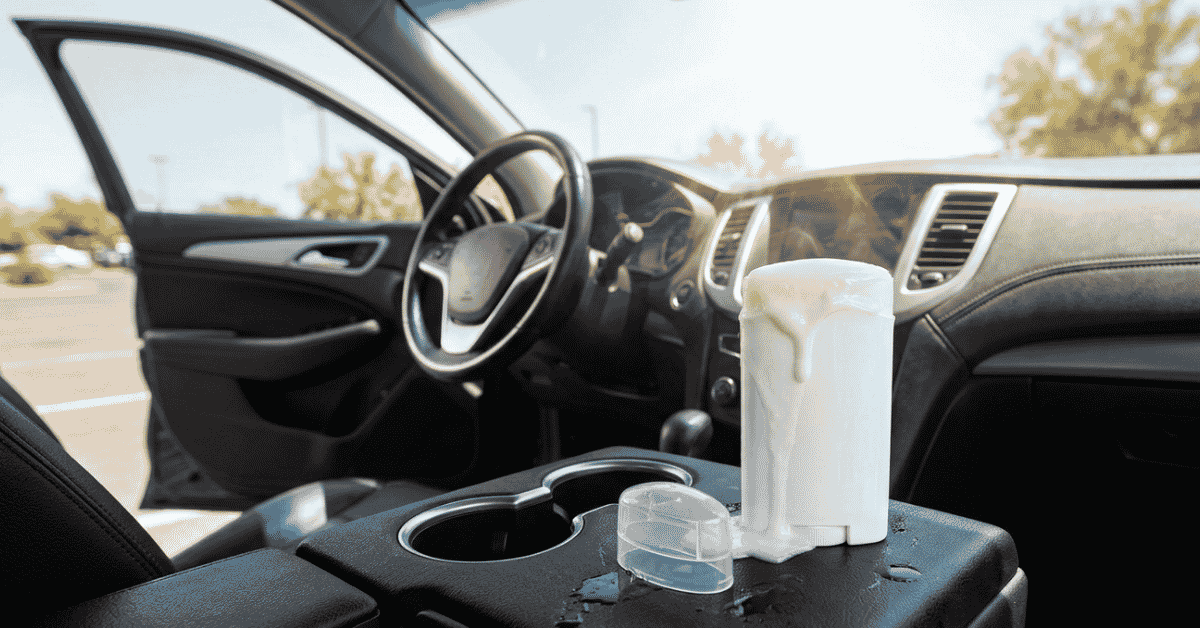
Will deodorant melt in the car during hot weather? Learn what happens, which types melt fastest, and how to keep deodorant safe.
Last July, I left deodorant in my car during a heat wave. By noon, the cabin felt like an oven. When I opened the deodorant later, I got quite a surprise. Since then, I have tested different types and learned what really happens. If you keep personal care items in your vehicle, this guide can save you a mess.
Will Deodorant Melt in the Car?
Yes, deodorant can melt in the car.
How much it melts depends on:
- The type of deodorant
- Outside temperature
- Time spent in the car
- Sun exposure
I have seen stick deodorants become soft after only a few hours. During very hot days, some products can partially liquefy.
Cars heat up much faster than many people realize.
Even when it feels pleasant outside, the inside of a parked vehicle can become extremely hot.
Why Does Deodorant Melt in a Car?
Heat is the main reason.
Most deodorants contain ingredients that soften when temperatures rise.
Cars Become Very Hot
Many people underestimate interior temperatures.
On a sunny day:
- Seats become hot
- Dashboards heat up
- Storage bins trap heat
I once measured a dashboard surface that felt almost too hot to touch.
That same heat affects deodorant.
Deodorants Are Made to Soften
Most stick deodorants are not completely solid.
They are designed to glide onto skin.
That means they naturally soften under warmth.
Common ingredients include:
- Waxes
- Oils
- Moisturizers
- Fragrance compounds
Heat can change their texture quickly.
Direct Sunlight Makes Things Worse
Location matters.
A deodorant stored on a dashboard may heat much faster than one stored under a seat.
Direct sunlight increases temperatures dramatically.
Which Types of Deodorant Melt Most Easily?
Not all products react the same way.
Some hold up better than others.
Stick Deodorants
These are most likely to soften.
Pros:
- Easy application
- Widely available
Cons:
- Can become mushy
- May lose shape
I have had stick deodorants lean sideways inside the container after sitting in a hot vehicle.
Gel Deodorants
Gel products can handle some heat but still face issues.
Problems may include:
- Leakage
- Separation
- Texture changes
Heat often affects consistency.
Cream Deodorants
Cream formulas usually soften quickly.
Pros:
- Smooth application
Cons:
- Sensitive to heat
- Potential leakage
These often require extra care.
Spray Deodorants
Sprays do not melt like sticks.
However, heat creates other concerns.
High temperatures can increase pressure inside aerosol containers.
Always follow storage guidelines.
How Hot Does a Car Need to Be?
The answer may surprise you.
A deodorant does not need extreme heat to soften.
Mild Summer Days
Even moderate weather can create problems.
When parked:
- Heat accumulates
- Air circulation stops
- Interior temperatures rise quickly
The car often becomes much hotter than the outdoor temperature.
Peak Summer Heat
This is where trouble starts.
During heat waves, vehicles can become extremely hot.
Items stored inside may experience:
- Softening
- Warping
- Leakage
I avoid leaving deodorant in my vehicle during peak summer months.
Sun Exposure Matters
Two cars can experience different results.
Factors include:
- Shade
- Window tint
- Parking direction
A shaded vehicle usually stays cooler.
What Happens When Deodorant Melts?
The outcome depends on the product.
Texture Changes
This is the most common issue.
The deodorant may become:
- Soft
- Uneven
- Sticky
Application often becomes messy afterward.
Shape Distortion
Stick deodorants may lose their form.
The product can shift inside the container.
I once opened a stick and found it leaning at an angle.
Leakage
Creams and gels may leak.
This creates:
- Messy storage compartments
- Difficult cleanup
- Product waste
Nobody enjoys cleaning deodorant from a center console.
Reduced Performance
Sometimes the deodorant still works.
Other times, performance changes.
Extreme heat may affect:
- Texture
- Fragrance
- Application quality
Deodorant Types Compared for Car Storage
Different products respond differently to heat.
| Deodorant Type | Heat Resistance | Leakage Risk | Shape Stability |
|---|---|---|---|
| Stick | Low | Medium | Low |
| Gel | Medium | High | Medium |
| Cream | Low | High | Medium |
| Spray | High | Low | High |
| Solid Mineral | Medium | Low | Medium |
This table reflects what I have observed through personal use.
How to Prevent Deodorant From Melting
Fortunately, prevention is simple.
Store It Out of Sunlight
Location matters.
Good places include:
- Glove compartments
- Center consoles
- Under-seat storage
Avoid dashboards whenever possible.
Use an Insulated Bag
This works surprisingly well.
A small insulated pouch can reduce heat exposure.
I use one during road trips.
Take It With You
The safest option is simple.
Bring it indoors when you leave the vehicle.
This eliminates most heat-related risks.
Choose Heat-Resistant Products
Some products tolerate heat better.
Spray deodorants often perform better than soft sticks.
Always check product recommendations.
Signs Your Deodorant Has Been Damaged
Heat damage is not always obvious.
Look for:
- Unusual texture
- Oil separation
- Leaking product
- Strange smell
- Uneven application
If the product seems unusual, consider replacing it.
Personal care products work best when stored properly.
Can Melted Deodorant Be Used Again?
Usually, yes.
Many products remain usable after cooling.
Let It Cool First
Do not use it while soft.
Place it in:
- A cool room
- An air-conditioned space
Allow it to regain its normal texture.
Inspect the Product
Check for:
- Separation
- Leakage
- Contamination
If it looks normal, it is often safe to continue using.
Refrigeration Can Help
I have used this trick before.
A short time in the refrigerator can help restore shape.
Do not freeze it.
Extreme cold can create other issues.
My Experience Leaving Deodorant in the Car
I have forgotten deodorant in my vehicle more than once.
Most of the time, the result was a softer stick. On one especially hot day, the product partially collapsed inside the tube. It still worked, but it became messy.
Since then, I avoid leaving personal care products in parked cars during warm weather. A little prevention saves money and frustration.
FAQs
Will deodorant melt in the car during summer?
Yes. High interior temperatures can soften or melt deodorant, especially stick and cream types left in direct sunlight. Learn more about heat protection.
Will deodorant melt in the car if stored in the glove box?
A glove box helps reduce heat exposure, but deodorant can still soften during very hot weather. Learn more about safe storage practices.
Can melted deodorant be used again?
In many cases, yes. Allow the deodorant to cool and inspect it for leakage or separation before use. Learn more about product care.
Which deodorant type handles car heat best?
Spray deodorants often tolerate heat better than stick or cream products because they do not soften the same way. Learn more about deodorant types.
How can I stop deodorant from melting in my car?
Store it out of direct sunlight, use an insulated pouch, or take it indoors when possible. Learn more about preventing heat damage.