
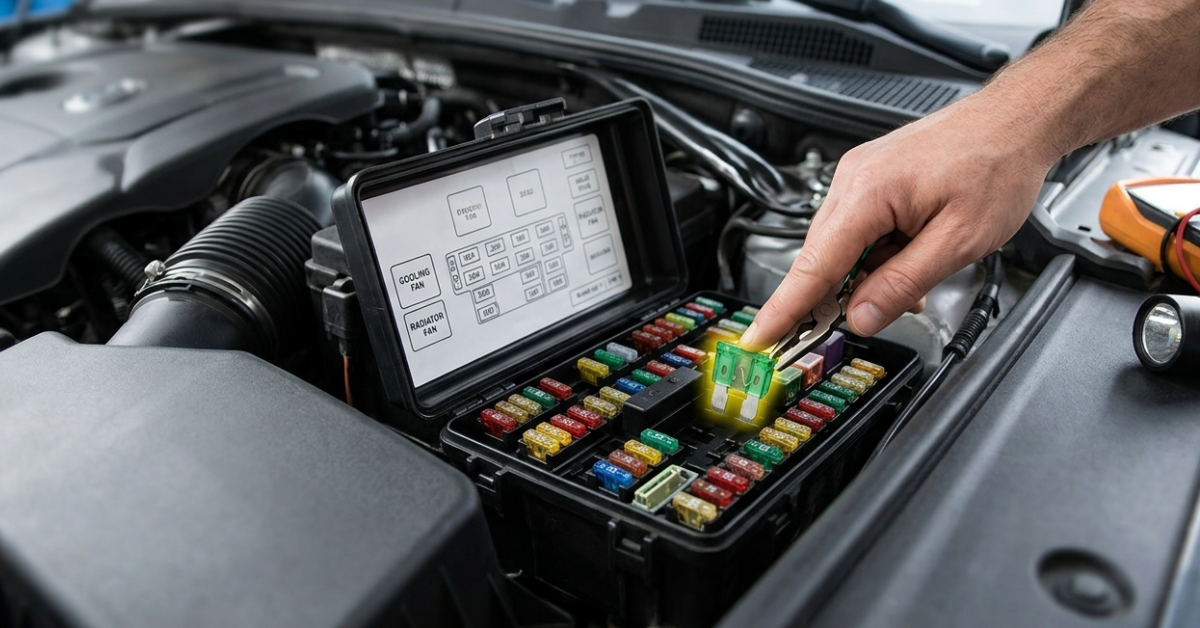
fuse for fan in car issues can leave you sweating in traffic or worried about engine heat. Learn how to identify, test, and replace the right fuse safely.
A few summers ago, I sat in traffic on a humid afternoon with no air moving through the vents. The cabin felt like an oven. My first thought was a failed blower motor. The real problem turned out to be much simpler. A blown fuse. That small component had completely stopped the fan from working. Many drivers face the same situation every year. The good news is that checking a fuse for fan in car systems is often quick, inexpensive, and surprisingly easy. This guide explains how the process works and how to avoid common mistakes.
Can a fuse for fan in car systems really stop airflow completely?
Yes, it absolutely can. Many people assume major components fail first. In reality, a small fuse often causes the problem. Fuses protect electrical circuits from damage. They act as safety devices. Excess current flows through the circuit, the fuse blows, and power stops.
A failed fuse can prevent the blower fan from operating. That means no air from the vents. Air conditioning may seem broken even when the AC system itself works perfectly. In some vehicles, cooling fan circuits also rely on dedicated fuses. Engine temperatures can rise if those systems lose power.
The challenge comes from symptoms. A blown fuse often mimics larger failures. Drivers may suspect expensive repairs when a simple fuse replacement solves the issue. Proper diagnosis saves time and money.
Common Signs of a Blown Fan Fuse
Watch for these symptoms:
- No air from vents
- Fan stops suddenly
- Fan works intermittently
- AC seems inactive
- Cabin airflow disappears
Several symptoms can appear at once.
Typical Fan-Related Fuses
| System | Possible Fuse Function |
|---|---|
| Blower motor | Cabin airflow |
| Cooling fan | Engine cooling |
| HVAC control | Climate controls |
| AC circuit | Air conditioning support |
Vehicle design varies by manufacturer.
How to Find the Correct Fuse for Fan in Car Circuits
Locating the correct fuse requires patience. Modern vehicles often contain dozens of fuses spread across multiple fuse boxes. Most owners begin with the owner’s manual. That remains the best starting point.
Many cars have one fuse box beneath the dashboard and another inside the engine compartment. Fuse diagrams usually identify each circuit clearly. Labels may include blower motor, HVAC, cooling fan, condenser fan, or radiator fan.
I once helped a friend troubleshoot a fan issue on an older sedan. We initially checked three incorrect fuses. Five minutes with the owner’s manual pointed us directly to the correct circuit. The lesson was simple. Documentation saves time.
Never guess when locating electrical components. Verify the correct fuse location before removing anything.
Places to Check
Most vehicles place fuse boxes in:
- Driver-side dashboard
- Engine bay
- Passenger-side footwell
- Under rear seats
Locations differ between models.
Tools That Help
Basic tools include:
- Fuse puller
- Flashlight
- Owner’s manual
- Multimeter
- Replacement fuses
Simple equipment makes diagnosis easier.
Understanding Fuse Ratings
Common ratings include:
- 10 amp
- 15 amp
- 20 amp
- 25 amp
- 30 amp
Always match the original rating exactly.
How to Test a Fuse for Fan in Car Electrical Systems
Testing a fuse takes only a few minutes. Many drivers can complete the process without advanced mechanical skills.
Start by turning the vehicle off. Locate the suspected fuse. Remove it carefully using a fuse puller. Most blade fuses contain a visible metal strip inside. A broken strip often indicates failure.
Visual inspection works well in many cases. Yet appearances can be misleading. A multimeter provides greater accuracy. Set the meter to continuity mode. Touch both fuse terminals. A working fuse allows continuity. A failed fuse does not.
Testing becomes important because replacing random fuses rarely solves electrical issues. Confirming the problem first helps identify the true cause.
Visual Inspection Steps
Follow these steps:
- Remove fuse
- Hold under light
- Inspect metal strip
- Look for breaks
- Check discoloration
A damaged strip usually signals failure.
Multimeter Testing Process
| Step | Action |
|---|---|
| 1 | Set continuity mode |
| 2 | Touch both terminals |
| 3 | Listen for beep |
| 4 | Confirm continuity |
| 5 | Replace if necessary |
Accurate testing improves diagnosis.
Common Causes of Blown Fuses
Several factors may trigger failure:
- Electrical shorts
- Worn wiring
- Faulty blower motors
- Corroded connections
- Overloaded circuits
Repeated failures usually indicate another problem.
Replacing a Fuse for Fan in Car Systems Safely
Replacement remains straightforward when performed correctly. The key rule involves matching the fuse rating. Never install a higher-rated fuse. That shortcut creates serious risks.
Remove the failed fuse. Install a replacement with the same amp rating. Push it firmly into place. Start the vehicle and test the fan system. Many issues resolve immediately after replacement.
A fuse that blows again quickly deserves further investigation. Repeated failures often indicate underlying electrical problems. Wiring damage, motor failure, or short circuits may be present.
One mechanic once told me something simple yet useful. A fuse rarely fails without a reason. That advice proved accurate many times. Replacing the fuse fixes the symptom. Finding the cause prevents future failures.
Safe Replacement Tips
Keep these points in mind:
- Match fuse rating
- Turn vehicle off
- Use quality replacements
- Check surrounding wiring
- Test operation afterward
Safety always comes first.
Signs of Larger Problems
Seek further diagnosis if:
- New fuse blows instantly
- Burning smell appears
- Wiring looks damaged
- Fan operates inconsistently
- Multiple circuits fail
Those symptoms may indicate deeper electrical issues.
Maintenance Suggestions
Prevent future issues by:
- Inspecting fuse boxes periodically
- Addressing corrosion early
- Avoiding aftermarket wiring shortcuts
- Repairing damaged harnesses promptly
- Following manufacturer guidelines
Simple maintenance helps reduce electrical problems.
Frequently Asked Questions
Can a fuse for fan in car systems affect air conditioning performance?
Yes. A blown blower motor fuse can stop airflow from the vents, making the air conditioning appear broken even when the AC system functions normally.
How do I know if my car fan fuse is blown?
Check for no airflow, inspect the fuse visually, or test it with a multimeter. A broken internal metal strip often indicates fuse failure.
Can I replace a fan fuse myself at home?
Most drivers can replace a fan fuse using a fuse puller and the correct replacement. Always match the original fuse rating exactly.
Why does my replacement fan fuse keep blowing?
Repeated fuse failures often point to wiring issues, a faulty blower motor, electrical shorts, or another problem within the circuit.
Which fuse controls the fan in a car?
The exact fuse depends on the vehicle. Consult the owner’s manual or fuse box diagram to identify the correct blower or cooling fan fuse.