
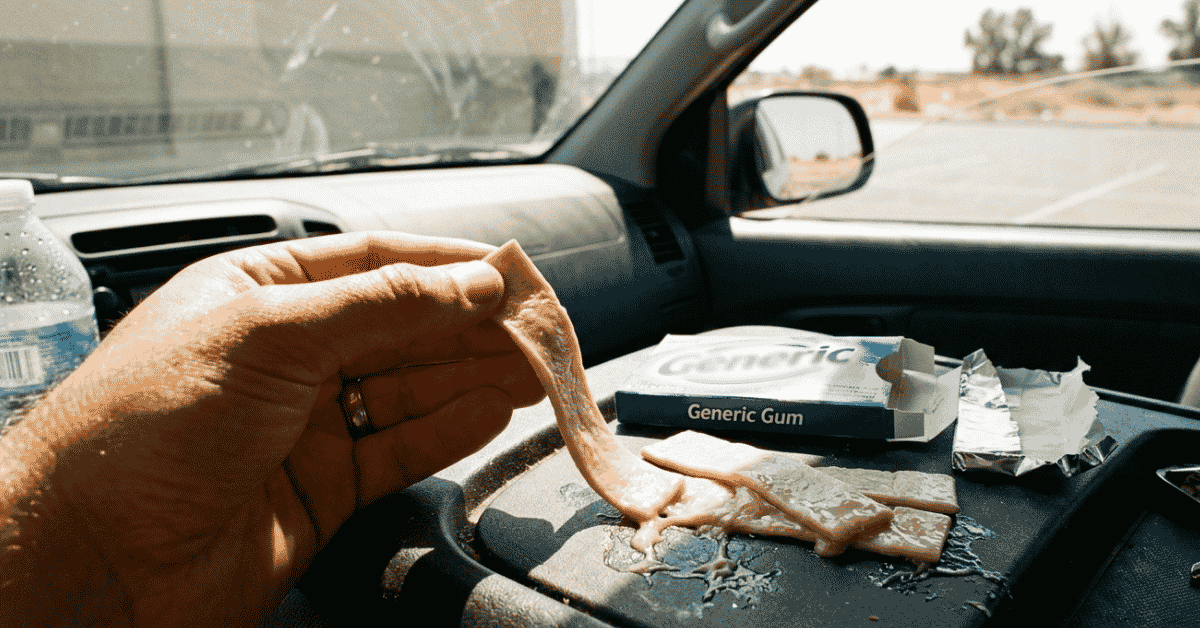
does gum go bad in hot car is a question many drivers ask after finding a forgotten pack tucked inside a cup holder for weeks. Learn how heat affects gum and whether it remains safe to chew.
One summer afternoon in Texas, I found a pack of chewing gum wedged between my car seats. The wrapper looked fine. The gum inside looked less promising. It felt soft, oddly shaped, and slightly stuck to the foil. That small discovery sparked a simple question. Does heat actually ruin chewing gum, or does it only change its texture? The answer sits somewhere in between. Let’s break it down.
Does Gum Go Bad in Hot Car?
Usually, gum does not spoil quickly in a hot car.
Still, heat can affect its quality.
Most chewing gum contains ingredients that remain stable for long periods. Unlike fresh food, gum does not support rapid bacterial growth when stored in a sealed package.
That said, hot conditions can create other problems.
Heat Changes Texture First
The earliest effect is often softness.
Gum exposed to high temperatures may become:
- Sticky
- Misshapen
- Difficult to unwrap
- Less pleasant to chew
The flavor may also change.
Ingredients React Differently
Modern chewing gum contains several components:
- Gum base
- Sweeteners
- Flavoring agents
- Softeners
- Coatings
Some ingredients tolerate heat better than others.
Flavor compounds often degrade before the gum itself becomes unusable.
Temperature Matters
A mild warm day differs greatly from a severe heat wave.
A parked vehicle can become extremely hot.
Interior temperatures may rise far beyond outdoor readings.
Typical Effects of Heat
| Condition | Likely Result |
|---|---|
| Mild Warmth | Minimal Change |
| Hot Summer Day | Softening |
| Extended Heat Exposure | Flavor Loss |
| Extreme Vehicle Heat | Texture Damage |
| Direct Sunlight | Greater Softening |
The gum may still be safe.
The chewing experience often suffers.
Why Hot Cars Affect Gum So Much
People often underestimate vehicle temperatures.
That mistake happens frequently.
The inside of a parked car can feel dramatically hotter than the air outside.
Sunlight Creates a Greenhouse Effect
Light enters through windows.
Heat becomes trapped.
Temperatures climb quickly.
Even a sealed package of gum cannot completely avoid those conditions.
Flavor Ingredients Are Sensitive
Many flavor compounds break down gradually when exposed to heat.
This may cause gum to:
- Taste weaker
- Lose freshness
- Develop a dull flavor
The gum remains chewable but less enjoyable.
Coatings Can Become Problematic
Some gums feature outer coatings.
Heat may cause these coatings to:
- Stick together
- Crack
- Lose texture
Appearance often changes before safety becomes an issue.
Storage Location Matters
The dashboard creates one of the hottest spots inside a vehicle.
Better locations include:
- Center console
- Glove box
- Shaded compartments
Even then, heat exposure remains possible.
Heat Risk Comparison
| Storage Spot | Heat Exposure |
|---|---|
| Dashboard | Very High |
| Front Seat | High |
| Cup Holder | Moderate |
| Center Console | Lower |
| Indoors | Lowest |
Location can influence product quality significantly.
Is Gum From a Hot Car Still Safe to Chew?
Most of the time, yes.
Safety and quality are different issues.
Safety Concerns Remain Low
Sealed chewing gum generally has a long shelf life.
Its low moisture content helps prevent rapid spoilage.
That reduces many food safety concerns.
Check Before Chewing
Inspect the product first.
Look for:
- Damaged packaging
- Unusual odor
- Visible contamination
- Strange discoloration
Any of these signs deserve caution.
Texture Problems Are More Common
Many people notice:
- Excessive softness
- Stickiness
- Uneven consistency
These issues affect comfort more than safety.
Expiration Dates Still Matter
Gum often carries a best-by date.
Past that point, quality may decline.
Flavor tends to fade first.
Heat can accelerate that process.
Quick Inspection Guide
Before chewing, review:
- Packaging condition
- Smell
- Appearance
- Texture
- Expiration information
A brief check helps avoid disappointment.
How to Store Gum Properly During Hot Weather
Prevention works better than guessing later.
Simple storage habits protect freshness.
Avoid Long-Term Vehicle Storage
A car should not become your gum warehouse.
Short-term storage is usually less problematic.
Weeks or months create greater risk.
Keep Gum Out of Direct Sunlight
Sunlight increases heat exposure.
Choose shaded locations whenever possible.
Small changes help.
Rotate Fresh Supplies
Replace older packs periodically.
Fresh gum delivers better flavor and texture.
This habit also prevents forgotten products from lingering for months.
Carry Smaller Quantities
Large multipacks often sit unused.
A smaller amount reduces waste.
You can replenish as needed.
My Personal Experience
After several summers of finding melted or flavorless gum in my car, I changed one habit.
I stopped leaving extra packs in the vehicle.
The difference was immediate.
Fresh gum tastes better, unwraps more easily, and avoids the strange texture that comes from weeks of extreme heat.
Practical Summer Storage Tips
- Store indoors when possible
- Avoid dashboards
- Use shaded compartments
- Check expiration dates
- Replace old packs regularly
Small habits protect quality.
FAQs
Does gum go bad in hot car conditions?
Heat usually affects texture and flavor more than safety. Most sealed gum remains usable, though quality may decline after prolonged exposure.
Can chewing gum melt inside a parked vehicle?
Many gums soften significantly in extreme heat. Complete melting is uncommon, but stickiness and shape changes often occur.
Is gum from a hot car safe to chew?
If the package remains sealed and the gum shows no contamination, it is often safe, though flavor and texture may be reduced.
Does heat make gum lose its flavor faster?
Yes. High temperatures can speed up flavor degradation, causing gum to taste weaker and less fresh over time.
How should I store gum during summer?
Keep gum indoors or in cool shaded areas. Avoid dashboards and prolonged vehicle storage to maintain freshness and texture.