
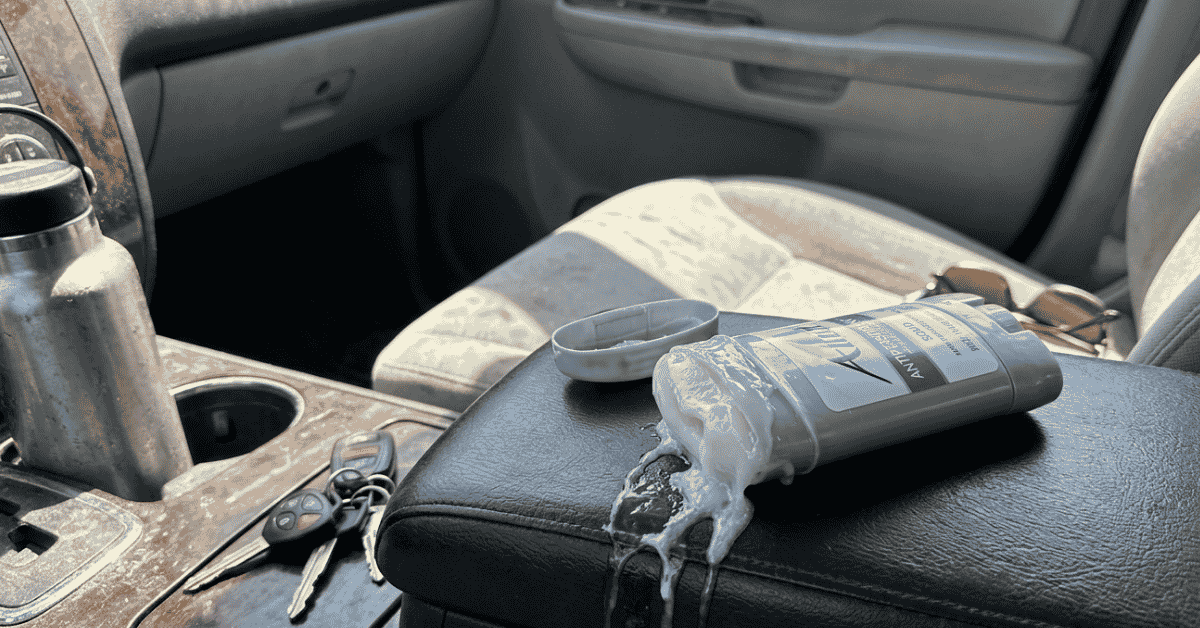
does deodorant melt in a hot car is a question many people ask after finding a forgotten stick rolling around the vehicle on a scorching day. Learn what really happens and how to protect it.
Last July, I left a stick of deodorant in my car during a long afternoon meeting. The parking lot felt like an oven. When I opened the door hours later, a wave of heat hit my face. The deodorant looked different. Softer. Slightly misshapen. That experience made me curious about how heat affects personal care products. The answer depends on the type of deodorant, the temperature, and how long it stays inside the vehicle.
Does Deodorant Melt in a Hot Car?
Yes, deodorant can melt in a hot car.
The likelihood increases as temperatures rise.
Cars heat up quickly.
Even on a warm day, interior temperatures often climb far above outdoor conditions.
Heat Builds Fast Inside Vehicles
Sunlight enters through windows.
Heat becomes trapped.
The temperature inside a parked vehicle can become surprisingly high within a short time.
A deodorant stick sitting in direct sunlight faces even greater exposure.
Different Formulas React Differently
Not all deodorants behave the same way.
Common types include:
- Solid stick deodorants
- Gel deodorants
- Cream deodorants
- Roll-ons
- Natural deodorants
Each formula contains different ingredients.
Some soften quickly.
Others maintain their shape longer.
Natural Products Often Soften Faster
Many natural deodorants contain:
- Coconut oil
- Shea butter
- Plant-based waxes
These ingredients may become soft when exposed to heat.
That does not always mean the product is ruined.
It simply changes texture.
Typical Heat Response
| Deodorant Type | Heat Sensitivity |
|---|---|
| Gel | Moderate |
| Solid Stick | Moderate |
| Cream | High |
| Natural Formula | Higher |
| Roll-On Liquid | Lower Shape Impact |
The exact outcome depends on the formula.
Temperature remains the biggest factor.
Why Hot Cars Become a Problem for Deodorant
Many people underestimate vehicle temperatures.
The inside of a parked car can become much hotter than expected.
Direct Sunlight Creates Extra Stress
A deodorant stored on the dashboard experiences far more heat than one tucked inside a shaded compartment.
Location matters.
Small differences can affect product condition.
Packaging Has Limits
Manufacturers design containers for normal use.
Extreme heat places stress on:
- Plastic components
- Twist mechanisms
- Caps
- Internal product structure
Sometimes the packaging suffers before the deodorant does.
Texture Changes First
The earliest sign often appears as softening.
The product may:
- Feel mushy
- Lose shape
- Lean sideways
- Become difficult to apply
These changes happen before complete melting.
Long Exposure Creates Greater Risk
A brief stop at the grocery store usually causes fewer issues than leaving deodorant in a vehicle all day.
Time matters.
Heat plus time creates the biggest challenge.
Common Summer Conditions
| Situation | Risk Level |
|---|---|
| One Hour in Shade | Lower |
| Several Hours in Sun | Moderate |
| Full Day in Sun | High |
| Heat Wave Conditions | Very High |
| Dashboard Storage | High |
Simple storage choices can reduce risk significantly.
Is Melted Deodorant Still Safe to Use?
This question comes up often.
The answer depends on the condition of the product.
Soft Does Not Always Mean Unsafe
A softened deodorant may still function normally.
Many products regain firmness after cooling.
Texture changes alone do not automatically make the product unusable.
Watch for Visible Problems
Inspect the deodorant carefully.
Look for:
- Leakage
- Separation
- Odd texture
- Discoloration
- Unusual odor
These signs deserve attention.
Fragrance Changes Can Happen
Heat sometimes affects scent compounds.
The deodorant may smell weaker or slightly different after prolonged exposure.
Performance can also change.
Packaging Damage Matters
A cracked container introduces additional concerns.
Contamination becomes possible.
A damaged package often justifies replacement.
Quick Evaluation Checklist
Before using heat-exposed deodorant, check:
- Appearance
- Smell
- Consistency
- Packaging condition
- Ease of application
A quick inspection takes only a few seconds.
How to Keep Deodorant Safe During Hot Weather
Prevention is easier than replacement.
A few habits can help.
Store It Out of Direct Sunlight
This simple step makes a huge difference.
Avoid:
- Dashboards
- Window ledges
- Front seats exposed to sun
Choose shaded locations instead.
Use Interior Compartments
Better storage spots include:
- Center consoles
- Glove compartments
- Covered storage bins
These areas often experience less direct heat.
Bring It Inside
The safest option is simple.
Take it with you.
Many people already carry small travel-size products for this reason.
Consider Heat-Resistant Packaging
Some products handle temperature changes better than others.
Travel-focused packaging may offer added convenience.
My Personal Rule
I no longer leave deodorant in the car during summer.
The inconvenience of carrying it indoors is minor.
Replacing a ruined product costs more time and money.
That small habit has saved me several headaches over the years.
Practical Summer Tips
- Store in shade
- Avoid dashboards
- Check packaging regularly
- Replace damaged products
- Carry travel-size options
Small actions often prevent larger problems.
FAQs
Does deodorant melt in a hot car during summer?
Yes. High vehicle temperatures can soften or melt deodorant, especially when products remain in direct sunlight for extended periods.
Can melted deodorant become solid again?
Many deodorants regain firmness after cooling, though texture and application quality may change depending on heat exposure.
Are natural deodorants more likely to melt in a car?
Yes. Natural formulas often contain oils and butters that soften more quickly under high temperatures than some conventional products.
Can heat damage deodorant packaging?
Yes. Extreme temperatures may warp plastic containers, weaken caps, or affect twist mechanisms used in stick deodorants.
Should I throw away deodorant that melted in my car?
Not always. Inspect it for leakage, odor changes, separation, or packaging damage before deciding whether replacement is necessary.