
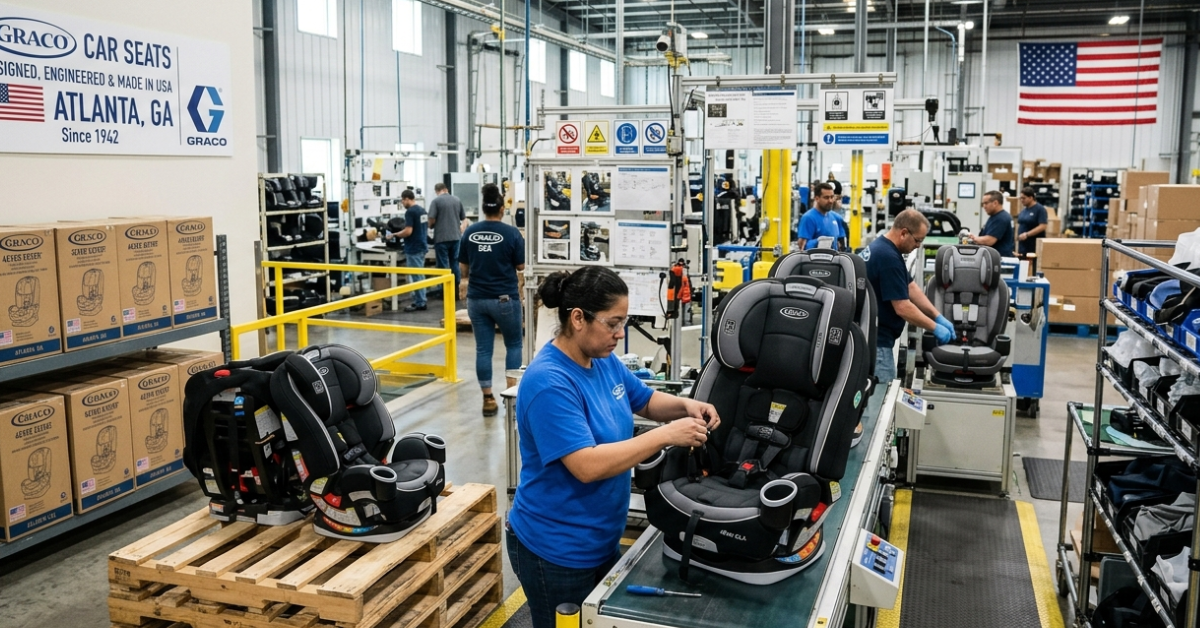
where are graco car seats made is a question many parents ask before buying a child safety seat. Understanding the manufacturing process helps buyers make informed decisions.
Few purchases feel more important than a car seat. Parents spend hours comparing safety ratings, comfort features, and customer reviews. During one of those searches, a friend asked me a simple question. “Where are Graco car seats actually made?” The answer turned out to be more detailed than expected. Many shoppers assume all products come from one factory in one country. Modern manufacturing rarely works that way. Large brands often use multiple facilities and global supply chains. This guide explains where Graco car seats are made, how they are tested, and what parents should know before buying.
Where are Graco car seats made today?
Most Graco car seats are manufactured in China and other international production facilities that support the company’s global operations. While Graco remains a well-known American brand, many of its products are assembled outside the United States.
This manufacturing approach is common throughout the juvenile products industry. Many leading child safety brands use international factories to produce car seats, strollers, and related products. Production locations can vary depending on the specific model and manufacturing period.
Parents sometimes worry when they hear products are made overseas. The manufacturing location alone does not determine quality or safety. Compliance with testing standards matters far more. Graco designs its products to meet strict regulations before they reach consumers.
Every car seat sold in the United States must satisfy federal safety requirements regardless of where manufacturing takes place.
Key Manufacturing Facts
Important points include:
- Graco is an American brand
- Many seats are produced overseas
- Manufacturing locations vary
- Safety testing remains mandatory
- Federal regulations apply
The production country does not change safety requirements.
Brand Overview
| Category | Information |
|---|---|
| Brand Origin | United States |
| Product Type | Child safety products |
| Major Markets | Global |
| Manufacturing | International facilities |
| Safety Standards | Required by law |
Modern manufacturing often spans multiple countries.
Why Graco Uses International Manufacturing Facilities
Large consumer brands frequently rely on international production for practical reasons. Manufacturing costs, supply chain efficiency, and production capacity all influence these decisions.
Producing millions of car seats requires extensive infrastructure. International factories often provide the scale necessary to support global demand. This allows companies to maintain product availability while controlling costs.
I once spoke with a supply chain manager who explained the process in simple terms. Modern products rarely come from a single location. Materials may originate in one country, assembly may occur in another, and distribution may happen elsewhere. Car seats follow a similar pattern.
The important factor for parents remains quality control. Reputable manufacturers maintain strict production standards regardless of factory location.
Reasons Companies Manufacture Overseas
Common reasons include:
- Production capacity
- Cost efficiency
- Global distribution
- Supply chain access
- Manufacturing expertise
These factors influence many industries.
Benefits of Large-Scale Production
International manufacturing can support:
- Consistent product availability
- Competitive pricing
- Faster distribution
- Higher production volumes
Consumers often benefit indirectly.
Common Misconceptions
Many buyers assume:
- Domestic production always means better quality
- Overseas production means lower safety
- Manufacturing location determines reliability
Those assumptions are not always accurate.
How Graco Car Seats Are Tested for Safety
Safety remains the most important consideration when evaluating a car seat. Parents should focus on testing standards and certification requirements rather than manufacturing location alone.
In the United States, child restraints must comply with Federal Motor Vehicle Safety Standard 213, commonly called FMVSS 213. This regulation establishes performance requirements for child safety seats sold in the American market.
Graco subjects its products to testing before they reach store shelves. Many models undergo crash testing, structural evaluations, and durability assessments. Additional testing may exceed minimum legal requirements.
A manufacturing facility can produce a safe product when proper quality control systems exist. Likewise, poor quality control can create problems regardless of production location. Safety standards and oversight remain the critical factors.
Areas Commonly Evaluated
Testing often examines:
- Crash performance
- Structural integrity
- Harness strength
- Material durability
- Label compliance
Multiple factors contribute to overall safety.
Typical Evaluation Process
| Stage | Purpose |
|---|---|
| Design review | Product development |
| Prototype testing | Early validation |
| Compliance testing | Regulation verification |
| Production inspection | Quality control |
| Market release | Consumer availability |
Each stage supports product reliability.
What Parents Should Prioritize
Focus on:
- Proper installation
- Correct fit
- Safety certifications
- Weight limits
- Age recommendations
Usage matters as much as design.
Should Manufacturing Location Affect Your Buying Decision?
The answer depends on your priorities. Some consumers prefer products manufactured in specific countries. Others focus primarily on performance, safety ratings, and value.
For most parents, the more practical questions involve safety, ease of installation, comfort, and long-term usability. Those factors directly affect everyday use. Manufacturing location provides useful information, but it should not be the only consideration.
Graco remains one of the most recognized child safety brands because many families trust its products. That trust developed through years of market presence, testing, and product performance.
When evaluating any car seat, review official specifications, safety information, and compatibility with your vehicle. A seat that fits properly and meets current standards usually provides the best outcome for your child.
Factors Worth Comparing
Consider:
- Safety features
- Installation system
- Weight limits
- Child comfort
- Vehicle compatibility
These factors influence daily use.
Questions Before Purchasing
Ask yourself:
- Does it fit my vehicle?
- Is installation simple?
- Does it meet my child’s needs?
- Is it easy to clean?
- Does it match my budget?
Practical considerations often matter most.
Smart Buying Advice
Before making a final choice:
- Read product manuals
- Verify safety certifications
- Check expiration dates
- Review installation videos
- Register the product after purchase
Preparation improves safety and confidence.
Frequently Asked Questions
Where are Graco car seats made today?
Most Graco car seats are manufactured in China and other international facilities that support the company’s global production network.
Is Graco an American company?
Yes. Graco is an American brand with a long history in juvenile products, although many products are manufactured overseas.
Are Graco car seats tested for safety?
Yes. Graco car seats must meet applicable safety regulations and undergo testing before being sold in the United States and other markets.
Does the country of manufacture affect car seat safety?
Safety depends more on design, testing, compliance standards, and quality control than the physical location of manufacturing.
How can I find where my Graco car seat was made?
Check the product label attached to the car seat. Manufacturing information is typically printed on the identification label.