
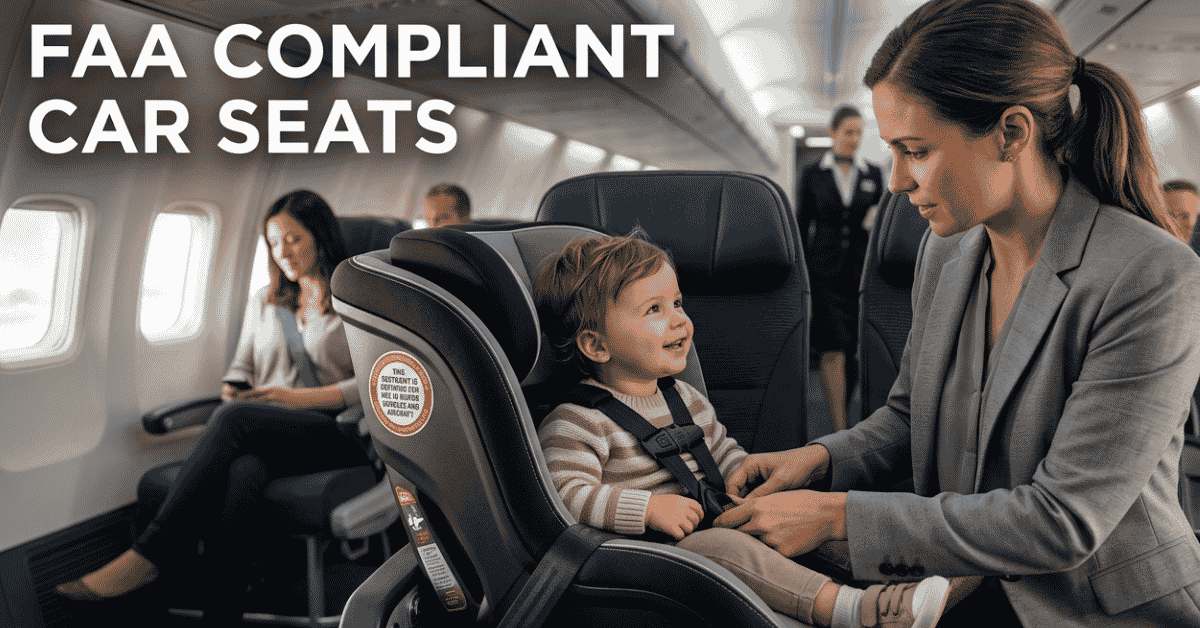
FAA Compliant Car Seats help keep kids safe in flight, but fit, labels, age, and use rules still matter on each trip.
FAA Compliant Car Seats once felt like a maze to me. I knew kids need safe gear on a plane. Yet seat tags, age rules, and plane seats felt hard. A few checks made the task much less scary. Now I look for the right label first. Then I check the seat fit and use guide.
Are FAA Compliant Car Seats Safe?
I once thought FAA Compliant Car Seats were hard to spot. The small seat looked plain under the plane lights. I felt cold air brush my hands. It seemed odd that one small tag mattered so much. The FAA says most child seats may be used onboard. Yet the seat must have the right approval label. The label must say it is made for use in aircraft. That tiny mark gave me peace. I now check the label well before flight day. I also check the seat guide for fit rules.
Life Before I Found This
I once thought any car seat could work on planes. The old seat sat by my door with dust. I heard its buckles click on the hard floor. The room smelled like soap, cloth, and old bags. I felt sure the seat would pass each check. Then I learned plane seats have size limits. The FAA says some child seats may not fit well. That made me check the seat width first. I also read the seat guide with fresh eyes. My old plan had too much guess work in it.
Why This Matters Right Now
I once thought flight seat rules could wait. My phone showed a long list of travel tips. I heard keys click as I read each note. The task felt less small than I had guessed. FAA rules can change, so I check the source. The FAA says approved child seats can help kids fly safer. The agency also urges parents to use child seats. That advice made me rethink lap use on flights. I now plan the seat before the trip starts. That step cuts stress near the gate.
The First Big Lesson
I once thought the FAA label was just fine print. The seat felt cool when I picked it up. My fingers found the tag near the seat edge. Then came my lightbulb moment. That label can decide plane use at once. The FAA says the seat must show aircraft approval. A seat may work in cars but not planes. That small fact changed my whole prep list. I now check both car use and plane use. I never treat one approval as both approvals. Maybe that sounds basic, but it saved me doubt.
Small Tactics That Actually Work
I once tried a seat check the night before. The buckle gave a sharp click in my room. I found the label, then read the seat guide. That simple test took less time than I feared. My best tip is to check the label first. Next, check the seat width and plane seat fit. The FAA says some seats may not fit certain seats. I also pack the seat guide in my bag. A phone photo can help too. I mark the seat model in my trip notes. These small steps make airport days feel less wild.
A Strange Detail I Noticed
I once thought all plane seats had the same shape. The seat belt sat low across the plane seat. I felt the cold buckle press against my palm. It felt odd at first, almost like a toy part. Yet that belt can change the whole seat fit. Some child seats need a lap belt to stay snug. Many plane seats have a lap belt only. I guess that is why fit checks matter so much. The FAA also says child seats must not block exits. A seat may fit one row but fail in another. So I ask the crew if I feel unsure.
Style Comparison & Data
I once thought all FAA Compliant Car Seats worked alike. The seats sat side by side near my hall. I heard each buckle click as I checked them. One looked slim, while one felt wide. The key was not just size or style. The FAA focuses on approval for aircraft use. The seat also needs a good fit in the plane. I now compare the key points before each trip.
| Seat point | My check | My next step |
|---|---|---|
| FAA label | Read the tag | Keep seat ready |
| Seat width | Check plane fit | Ask crew if unsure |
| Child fit | Read seat guide | Use right mode |
| Belt path | Check guide | Buckle with care |
These checks help me avoid rushed choices. I do not pick a seat by looks. I check the label and model first. Then I check the plane seat size. The FAA says parents should use approved child seats. That rule is easy to act on. It gives me a clear first step. From there, the seat guide fills in the rest.
Non-Obvious Gains
I once thought plane car seats would add more stress. The seat felt bulky near my front door. I heard the wheels roll as I moved my bags. Yet the seat gave me one nice gain. My child had a known seat space for the flight. That felt far less odd than lap travel. The FAA says a child seat can help keep kids safe. I also found a few small gains:
- Less guess work at the gate.
- A known seat for the child.
- Better trip prep at home.
- One clear seat check.
- Less rush near boarding time.
Myths vs. My Reality
I used to think a car seat was plane ready. But then I learned the FAA label matters. A seat can work well in a car. That does not mean it can go on planes. I used to think any child could use any seat. But then I read the seat guide more close. Each seat has age, size, and fit rules. I also thought flight staff would solve each seat issue. Yet I learned that my own prep still counts. The FAA says parents should use approved child seats. Maybe the best lesson is quite plain. Check the seat before you reach the gate.
Essential Principles for Mastery
I once thought safe flight prep meant one quick check. The long grind taught me to use a short frame. I call it Tag, Fit, Child, Crew. Tag means I check the FAA approval label. Fit means I check the seat size and belt path. Child means I check the seat guide for use. Crew means I ask if the setup feels unclear.
My next rule is simple: prep early and check twice. I check the seat at home first. Then I check it again before boarding. The FAA says child seats should be used by the maker’s guide. That keeps me from making fast guesses. Maybe I still feel a bit tense before takeoff. Yet my plan gives that stress less room to grow.
FAQs about FAA Compliant Car Seats
Do FAA Compliant Car Seats need a label?
I remember finding the tiny label first. The FAA says an approved seat must show aircraft use. I always check that tag before flight day. It gives me a clear start point.
Can I use my car seat on a plane?
I remember asking this before my first flight. A car seat may work on a plane if approved. The FAA says check for the aircraft approval label. I never assume car use means plane use.
Can every plane seat fit a car seat?
I remember seeing a wide seat block one row. Plane seat size can vary by aircraft and row. The FAA notes that some seats may not fit well. I check the seat fit before each trip.
Should I ask flight staff for help?
I remember feeling unsure near the gate once. Asking crew can help if the seat setup feels unclear. The FAA notes that crew members can help with child seat use. I would ask early instead of waiting.
Is a child safer in a seat?
I remember feeling calm once my child had one. The FAA urges parents to use approved child seats. A proper seat can give better restraint than lap use. I still follow every seat and flight rule.
My Final Takeaway
I once saw FAA Compliant Car Seats as a chore. Now, I see them as part of flight prep. The fading light falls across my desk now. My keyboard makes a soft tap with each word. I guess the best rule is quite simple. Check the label, fit, child, and seat guide. Then ask the crew if doubt still stays. That small plan can make flight day feel calm.