
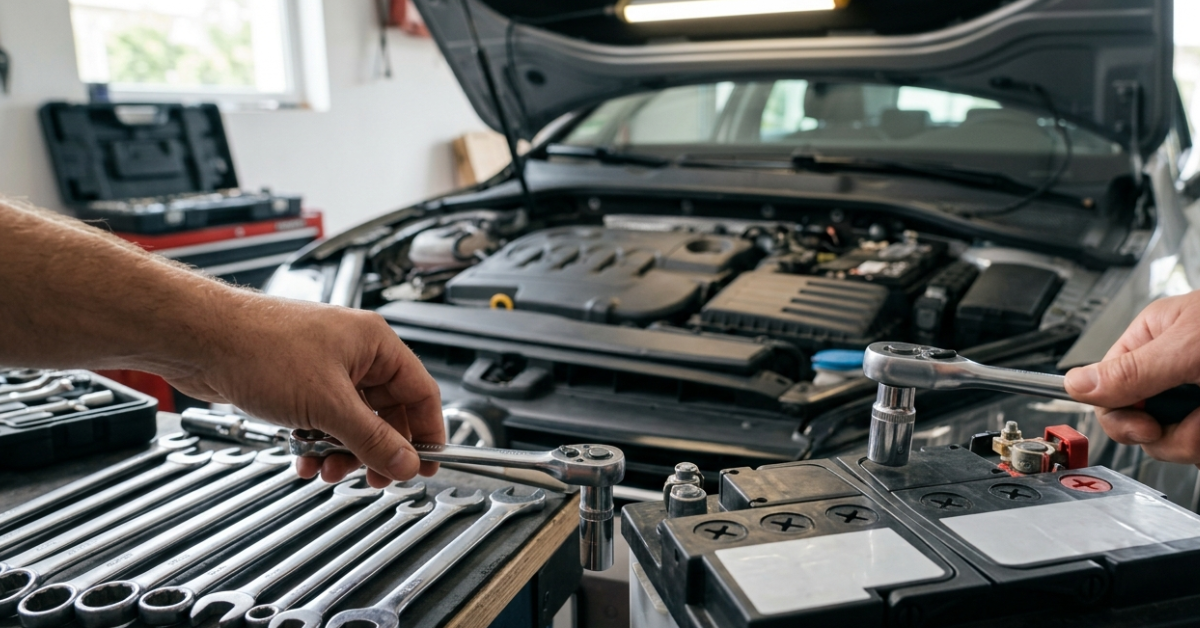
what wrench size for car battery is one of the most common questions drivers ask before replacing a battery. The right tool makes the job faster and safer.
The first time I changed a car battery, I grabbed three different wrenches before finding the correct one. None seemed to fit perfectly. Ten minutes later, I finally loosened the battery terminal and realized a little preparation would have saved a lot of frustration. Many drivers face the same problem. Battery replacement sounds simple until you discover different vehicles use different hardware sizes. The good news is that most cars follow a few common standards. This guide explains the wrench sizes you may need and how to safely disconnect and replace a battery.
What wrench size for car battery terminals is most common?
Most car battery terminals use either a 10mm wrench, 8mm wrench, or 13mm wrench. Among those options, the 10mm size remains the most common across modern vehicles.
Manufacturers frequently use 10mm nuts on battery cable terminals because the size provides a secure connection while remaining easy to service. However, not every vehicle follows the same standard. Some older vehicles and certain truck models use different hardware.
The best approach involves inspecting the battery terminal before starting work. Looking closely at the terminal clamp usually provides a good indication of the required wrench size. Vehicle manuals can also confirm the correct specifications.
Many mechanics keep a small metric socket set nearby because battery hardware varies between makes and models. That simple habit prevents delays and unnecessary trips back to the toolbox.
Common Battery Terminal Sizes
The most frequently used sizes include:
- 10mm
- 8mm
- 11mm
- 12mm
- 13mm
The 10mm wrench remains the most common choice.
Typical Applications
| Wrench Size | Common Use |
|---|---|
| 8mm | Small terminal clamps |
| 10mm | Standard battery terminals |
| 11mm | Some imported vehicles |
| 12mm | Larger connections |
| 13mm | Battery hold-down hardware |
Vehicle design determines actual requirements.
Why Different Cars Use Different Battery Hardware
Battery systems may seem simple, but manufacturers often design mounting systems differently. Terminal sizes, hold-down brackets, battery trays, and cable clamps vary between brands.
A compact sedan may use a simple 10mm terminal clamp and lightweight hold-down bracket. A heavy-duty truck may use larger hardware designed to handle vibration and demanding conditions. European, Asian, and American vehicles sometimes follow different engineering standards.
I once helped replace a battery in a pickup truck that required both a 10mm wrench and a 13mm socket. The terminal connections loosened with the smaller wrench, but the battery would not move until the larger hold-down bracket was removed. Situations like that explain why carrying multiple sizes is helpful.
Understanding the full battery assembly helps avoid surprises during installation or replacement.
Parts That May Require Different Tools
Several components may use separate fasteners:
- Terminal clamps
- Hold-down brackets
- Battery trays
- Cable retainers
- Protective covers
One wrench size rarely fits every component.
Metric vs Standard Tools
Most modern vehicles use metric hardware.
Common metric tools include:
- 8mm
- 10mm
- 12mm
- 13mm
Standard sizes appear less frequently today.
Helpful Tool Kit
Consider keeping these tools nearby:
| Tool | Purpose |
|---|---|
| 10mm wrench | Terminal removal |
| Socket set | Battery brackets |
| Ratchet | Faster removal |
| Gloves | Hand protection |
| Safety glasses | Eye protection |
Basic preparation makes the process easier.
How to Safely Remove a Car Battery
Safety should always come first when working around vehicle batteries. Although car batteries appear harmless, they store significant electrical energy and contain corrosive chemicals.
Begin by turning the vehicle off completely. Remove the key from the ignition. Locate the battery and identify the positive and negative terminals.
The negative terminal should always come off first. This reduces the risk of accidental electrical shorts. After disconnecting the negative side, remove the positive terminal. Then loosen the hold-down bracket and carefully lift the battery out.
Car batteries are heavier than many people expect. Some weigh more than forty pounds. Lift carefully to avoid injury.
Basic Removal Steps
Follow this sequence:
- Turn vehicle off
- Locate battery
- Disconnect negative terminal
- Disconnect positive terminal
- Remove hold-down bracket
- Lift battery out
The order matters for safety.
Safety Tips
Always remember to:
- Wear gloves
- Use eye protection
- Avoid metal jewelry
- Keep sparks away
- Work in a ventilated area
Small precautions prevent larger problems.
Common Mistakes
Avoid these errors:
- Removing positive terminal first
- Using incorrect tools
- Touching both terminals simultaneously
- Dropping metal tools on battery
- Ignoring corrosion
Careful work reduces risk significantly.
Choosing the Right Wrench and Battery Maintenance Tips
Many battery-related frustrations stem from poor tool selection. Using the correct wrench prevents stripped hardware and damaged terminals.
A quality 10mm combination wrench handles most battery terminal jobs effectively. Socket sets often make hold-down bracket removal easier. Adjustable wrenches can work in emergencies, but exact-size tools provide better results.
Battery maintenance also deserves attention. Clean terminals improve electrical performance. Corrosion buildup increases resistance and can contribute to starting problems.
Routine inspections help identify issues before they leave you stranded. Spending a few minutes checking connections every few months can prevent unexpected failures.
Recommended Tools
Useful battery service tools include:
- 10mm wrench
- Metric socket set
- Battery terminal cleaner
- Wire brush
- Protective gloves
Simple tools cover most situations.
Signs Your Battery Needs Attention
Watch for:
- Slow engine cranking
- Corroded terminals
- Dim headlights
- Electrical issues
- Battery warning light
Early action prevents breakdowns.
Battery Maintenance Checklist
Perform these tasks regularly:
- Inspect terminals
- Remove corrosion
- Check cable tightness
- Test battery voltage
- Verify hold-down security
Routine maintenance extends battery life.
Frequently Asked Questions
What wrench size for car battery terminals is used most often?
A 10mm wrench is the most common size used for battery terminal connections on many modern cars, trucks, and SUVs.
Can I use an adjustable wrench on a car battery?
Yes, but a properly sized wrench provides a better fit and reduces the risk of slipping or damaging terminal hardware.
Do all car batteries use the same wrench size?
No. Many use 10mm hardware, but some vehicles require 8mm, 11mm, 12mm, or 13mm tools depending on the design.
Should I disconnect the positive or negative battery terminal first?
Always disconnect the negative terminal first to reduce the risk of accidental electrical shorts during battery service.
What size wrench removes battery hold-down brackets?
Many battery hold-down brackets use 10mm or 13mm hardware, though the exact size varies by manufacturer and vehicle model.