
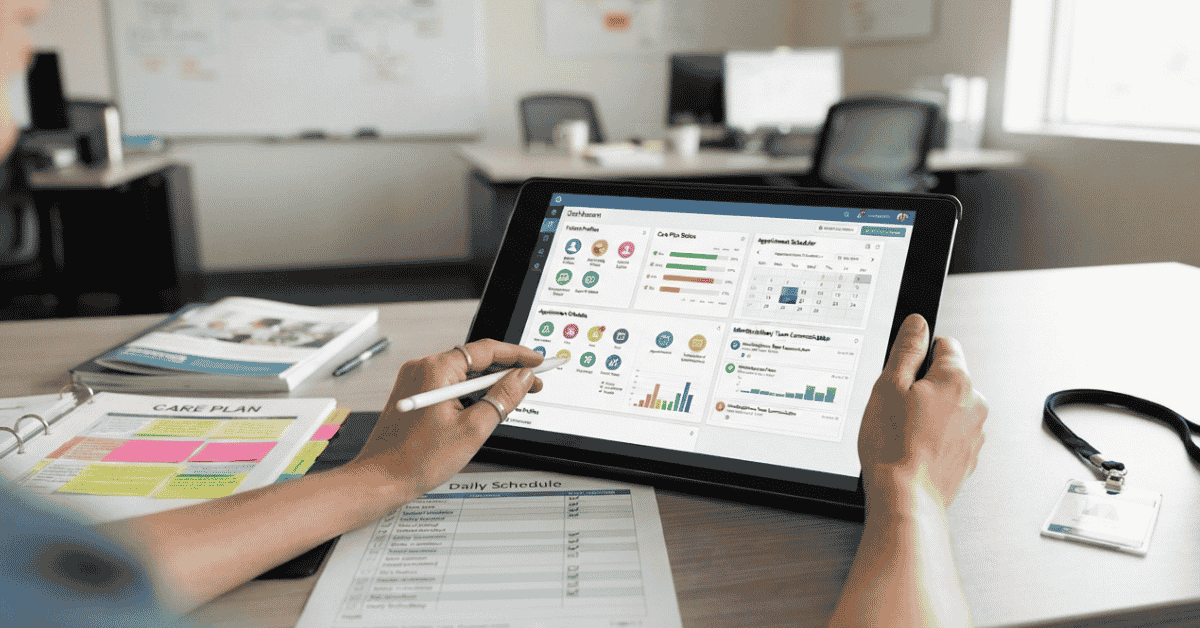
Care Management Tools help teams give better support with smart systems, clear care plans, and less daily stress.
I still remember my first day using care software. The room was quiet, and my desk felt crowded. I wanted a simple way to track needs. This guide shares my lessons, tips, and small thoughts on better care work.
Care Management Tools: Are They Really Helpful?
I asked myself this during a busy work week. My desk had notes, files, and sticky papers everywhere.
The clock kept ticking, and I felt behind. Each client needed care, yet details were easy to miss.
I guess many care teams feel this pressure. They want to help people but need better support.
Care Management Tools changed my view of daily tasks. They did not remove human care. They helped me stay focused.
The best part was the calm feeling. I could find key details faster and spend more time with people.
Life Before I Found This
Before these tools, my work felt scattered. Notes sat in folders and old files.
The room often smelled like paper and coffee. My screen showed many open tabs.
I wrote reminders by hand and checked them again. Still, small details could slip away.
The hardest part was keeping everything clear. Care work needs heart and strong memory.
But humans can miss things during busy days. That is normal.
I needed a better way to keep order. A simple system could help reduce stress.
Why This Matters Right Now
Care needs are growing across many areas today. Teams handle more tasks than before.
People want faster updates and better support. Care workers need tools that save time.
Care Management Tools help organize client details and care steps. They bring key data into one place.
I see more teams use digital systems now. They want fewer errors and smoother daily work.
Maybe this shift is about balance. Good tools help people focus more on people.
The First Big Lesson
My first big lesson was about connection. Good care tools should support people, not replace them.
A system can store notes and track tasks. But kindness still comes from humans.
Care Management Tools work best when teams use them well. They should make care feel easier.
I learned that simple design matters. A confusing tool can create more stress.
A clear system helps workers find details quickly. It gives them more time for real talks.
The best tools stay in the background. They quietly help without taking attention away.
That idea changed my view of digital care.
Small Tactics That Actually Work
I learned a few habits while using care tools. These small steps improved my daily work.
-
Keep client notes clear and short.
-
Update records after each care step.
-
Review tasks at the start of the day.
-
Use alerts for key follow-ups.
-
Keep team notes easy to read.
I also avoid adding too much data. Too many details can make systems harder.
I like simple layouts with clear menus. A clean screen feels less tiring.
Small routines create better results. The tool works best with good habits.
A Strange Detail I Noticed
I noticed something unusual about care tools. People often talk about features first.
Few people talk about the feeling of calm. Yet that feeling matters a lot.
A clean dashboard feels like a tidy room. It removes mental clutter.
The funny part is simple. A digital tool can create a human feeling.
Maybe the best feature is not a button. It is the peace it brings.
Style Comparison & Data
Different Care Management Tools offer different user experiences.
| Tool Type | Main Focus | User Feel |
|---|---|---|
| Basic Tracker | Task notes | Simple control |
| Client Platform | Care records | Better flow |
| Team System | Shared updates | More teamwork |
| Full Suite | Complete care | Strong support |
The right choice depends on team needs. Simple tools can still bring great value.
Non-Obvious Gains
Many people only notice time savings. Other benefits often stay hidden.
-
Better team trust.
-
Less mental stress.
-
Faster problem checks.
-
Clearer care history.
-
Stronger daily focus.
These gains grow over time. Small improvements can change work quality.
Myths vs. My Reality
I used to think care tools were only for large groups. I thought small teams did not need them.
But then I saw simple tools help daily work. Even small teams can gain from clear systems.
I used to think technology made care less personal. But then I learned good tools create more time for people.
I used to think more features meant better tools. But then I found simple systems often work best.
The reality feels clear now. Tools should support care, not control it.
Essential Principles for Mastery
Good care systems start with clear goals. Teams need to know their main needs first.
My first rule is simplicity. A tool should feel easy from day one.
My second rule is consistency. Updates should happen on a steady basis.
My third rule is privacy. Care details need careful handling.
My fourth rule is teamwork. Everyone should understand the system.
My fifth rule is learning. Teams should improve with time.
Care Management Tools can create better work habits. They help teams stay organized while keeping care human.
I believe the best systems combine skill and kindness.
Technology can help people serve people better.
FAQs about Care Management Tools
What are Care Management Tools used for?
Care Management Tools help teams organize care tasks, client notes, schedules, and updates. They make daily work easier and help staff track important details.
Can small teams use Care Management Tools?
Yes, small teams can use these tools. Simple systems can help manage tasks, improve teamwork, and keep care records clear.
Are Care Management Tools hard to learn?
Most modern tools are designed for easy use. Teams can learn them with basic training and regular practice.
Do Care Management Tools replace human care?
No, these tools do not replace people. They support workers by reducing busy tasks and helping them focus on better care.
How do I choose Care Management Tools?
Choose tools based on team size, care needs, ease of use, and data safety. The best tool should fit daily work habits.
My Final Takeaway
I now see Care Management Tools as helpful partners. They create space for better human care.
Small systems can create big change. Maybe the best care starts with less chaos.
Use tools wisely, stay kind, and keep people first.