
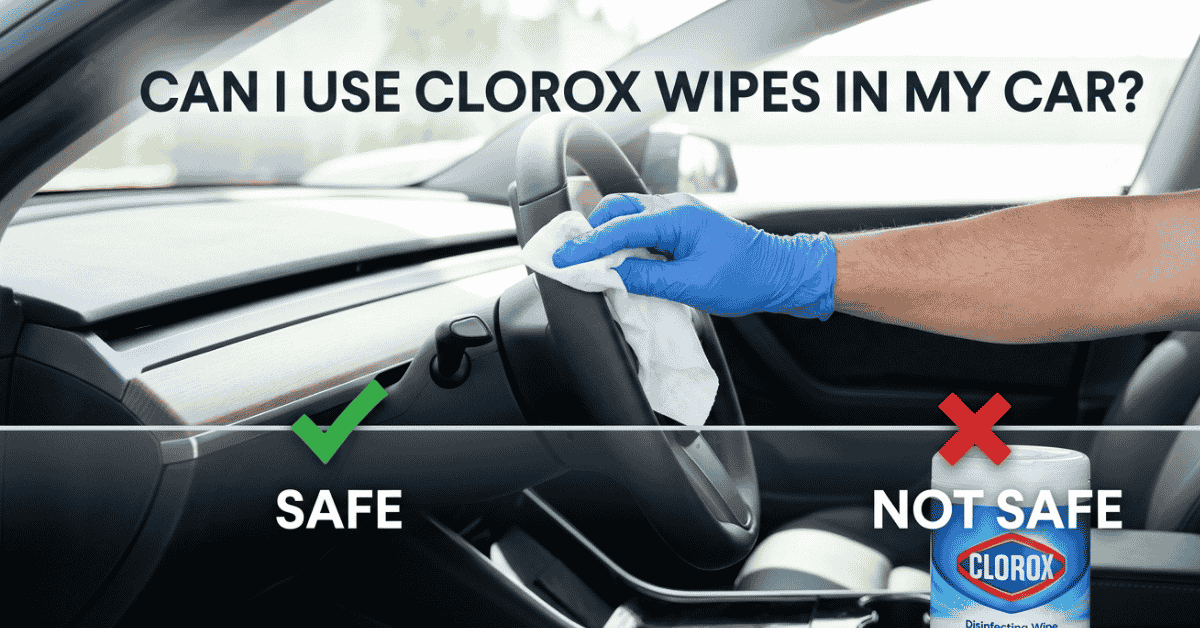
Can I use Clorox wipes in my car without damage? Learn where they work well, what to avoid, and how to clean your car safely.
I first asked myself, “Can I use Clorox wipes in my car?” after spilling coffee during a long drive. The cup holder looked awful. I grabbed a container of wipes from home and started cleaning. The results were mixed. Some surfaces cleaned beautifully. Others made me nervous. Since then, I have learned where these wipes work and where they can cause trouble.
Can I Use Clorox Wipes in My Car?
Yes, but only on certain surfaces.
Clorox wipes can help clean and disinfect parts of your vehicle. However, they are not ideal for every material.
I use them occasionally on hard surfaces, but I avoid sensitive areas.
Generally, they work best on:
- Plastic trim
- Cup holders
- Door handles
- Hard-touch surfaces
Use extra caution around leather, screens, and specialty finishes.
Why Do People Use Clorox Wipes in Cars?
Cars collect dirt quickly.
Even clean vehicles pick up germs and grime.
Quick Cleaning
One reason I keep wipes nearby is convenience.
They help clean:
- Sticky surfaces
- Fingerprints
- Dust buildup
- Food spills
The process takes only minutes.
Germ Reduction
Many people use wipes to disinfect.
Frequently touched areas include:
- Steering wheel
- Door handles
- Gear selectors
- Buttons
These surfaces see constant contact.
Easy Storage
A container of wipes fits easily in:
- Trunks
- Garages
- Home storage areas
That makes them convenient for routine cleaning.
Which Car Surfaces Are Usually Safe?
Not every surface reacts the same way.
Knowing where to use wipes is important.
Plastic Surfaces
Plastic is often the safest option.
I commonly clean:
- Cup holders
- Console areas
- Plastic door panels
The wipes usually work well here.
Vinyl Trim
Many vinyl surfaces tolerate occasional wipe use.
Benefits include:
- Easy cleaning
- Fast drying
- Simple maintenance
Still, avoid excessive use.
Door Handles
Door handles collect dirt quickly.
Wipes can help remove:
- Oils
- Smudges
- Grime
This is one of the areas I clean most often.
Storage Compartments
Center consoles and storage bins often become messy.
Clorox wipes can help freshen these areas quickly.
Which Surfaces Should Be Avoided?
This is where problems often happen.
Leather Seats
I avoid using Clorox wipes on leather.
Potential issues include:
- Drying
- Discoloration
- Surface wear
Leather needs products designed specifically for leather care.
Touchscreens
Modern vehicles contain large screens.
Clorox wipes may damage:
- Screen coatings
- Anti-glare layers
- Sensitive finishes
I always use screen-safe cleaners instead.
Instrument Clusters
Gauge covers can scratch easily.
Some chemicals may create:
- Haze
- Clouding
- Surface damage
Gentle microfiber cloths work better.
Suede and Alcantara
These materials require special care.
Strong cleaning products can damage their texture.
Avoid wipes on these surfaces.
Benefits of Using Clorox Wipes in a Car
There are good reasons people use them.
Fast Cleaning
Speed matters.
I can clean several surfaces in minutes.
This helps during busy weeks.
Convenient
Most households already have them.
That means:
- No special purchase
- Easy access
- Quick use
Convenience drives popularity.
Effective on Hard Surfaces
For many plastic areas, they work well.
They remove:
- Dirt
- Fingerprints
- Residue
The results are usually noticeable.
Useful for Small Messes
Minor spills happen.
Clorox wipes can help address messes before they become larger problems.
Clorox Wipes vs Other Car Cleaning Products
Different products serve different purposes.
| Cleaning Product | Plastic | Leather | Screens | Convenience |
|---|---|---|---|---|
| Clorox Wipes | Good | Poor | Poor | Excellent |
| Car Interior Cleaner | Excellent | Good | Fair | Good |
| Leather Cleaner | Poor | Excellent | Poor | Fair |
| Screen Cleaner | Poor | Poor | Excellent | Good |
| Microfiber Cloth | Good | Good | Good | Excellent |
I often use a combination rather than relying on one product.
How I Use Clorox Wipes in My Car
Over time, I developed a simple process.
Test First
Before cleaning a large area, test a small spot.
This helps identify any unexpected reactions.
Wipe Gently
Aggressive scrubbing is unnecessary.
Use light pressure.
This reduces wear on surfaces.
Dry the Area
After cleaning, I often use a microfiber cloth.
This helps:
- Remove excess moisture
- Improve appearance
- Prevent streaks
The finish usually looks better.
Follow With Proper Care
Some surfaces benefit from extra treatment.
For example:
- Leather conditioner
- Interior protectant
- UV protectant
These products help preserve materials.
Common Mistakes to Avoid
I made several of these mistakes myself.
Cleaning Screens With Clorox Wipes
This is one of the biggest errors.
Vehicle screens often have delicate coatings.
Use products designed for electronics instead.
Overusing Wipes
More is not always better.
Frequent exposure to strong cleaners may wear surfaces over time.
Moderation matters.
Ignoring Manufacturer Advice
Vehicle manufacturers often provide cleaning recommendations.
Check your owner’s manual when possible.
Leaving Residue Behind
Always inspect surfaces after cleaning.
A quick wipe with microfiber can improve results significantly.
When Clorox Wipes Make Sense
There are situations where they work well.
Emergency Cleaning
Spills happen unexpectedly.
Clorox wipes offer a quick solution.
Shared Vehicles
Cars used by multiple people often benefit from regular surface cleaning.
High-Touch Areas
Frequently touched surfaces can become dirty quickly.
Examples include:
- Door handles
- Console controls
- Storage compartments
These areas are good candidates for occasional wipe use.
Travel Situations
Road trips create messes.
I often carry cleaning supplies during long drives.
A few wipes can be surprisingly useful.
Better Alternatives for Sensitive Surfaces
Sometimes specialized products are worth the extra effort.
Leather Cleaners
These help preserve:
- Texture
- Softness
- Appearance
They are safer than disinfecting wipes.
Screen-Safe Cleaners
Modern displays deserve extra care.
Dedicated screen cleaners help avoid damage.
Interior Detailing Products
Many automotive cleaners are designed specifically for vehicle materials.
They often provide:
- Better protection
- Improved appearance
- Lower risk
I use these whenever possible.
My Experience Using Clorox Wipes in Cars
After years of occasional use, my opinion is simple.
Clorox wipes can be useful when used carefully. They work best on hard plastic surfaces and small messes. They are not universal cleaners for every part of a vehicle.
When I need quick cleaning, they can help. When I want long-term care, I reach for products made specifically for automotive interiors.
That balance has worked well for me.
FAQs
Can I use Clorox wipes in my car on plastic surfaces?
Yes. Clorox wipes generally work well on hard plastic surfaces such as cup holders and door panels. Learn more about safe interior cleaning.
Can I use Clorox wipes in my car on leather seats?
It is usually not recommended. Clorox wipes may dry out or damage leather over time. Learn more about proper leather care products.
Can I use Clorox wipes in my car on touchscreens?
No. Vehicle screens often have sensitive coatings that can be damaged by disinfecting wipes. Learn more about screen-safe cleaning methods.
Can I use Clorox wipes in my car every day?
Occasional use is generally better. Frequent cleaning with strong wipes may increase wear on some interior materials. Learn more about maintenance routines.
What is the best alternative to Clorox wipes for car interiors?
Automotive interior cleaners are often the safest choice because they are designed specifically for vehicle materials. Learn more about car detailing products.