
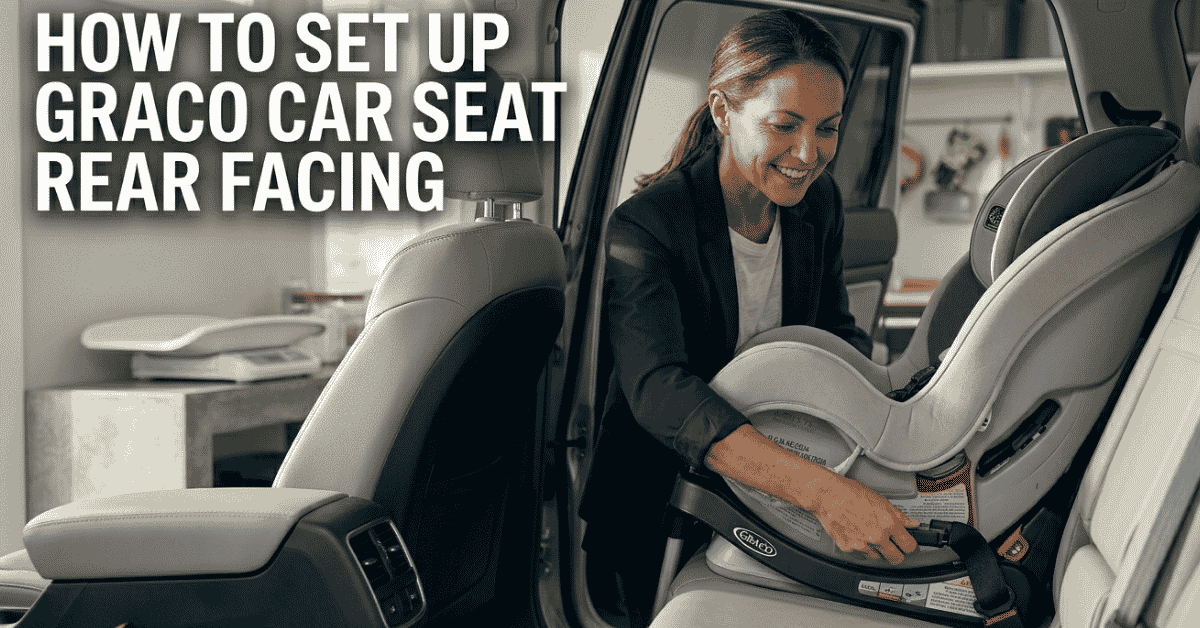
how to set up graco car seat rear facing is one of the most important questions new parents ask. I remember helping install a rear-facing seat before bringing a newborn home from the hospital. The instructions seemed simple at first, but small details quickly became confusing. Was the angle correct? Were the straps tight enough? Was the seat moving too much? These concerns are common. The good news is that most Graco rear-facing seats can be installed safely by following a few clear steps. This guide explains the process from start to finish.
Rear-facing travel provides the best protection for infants and young children because it supports the head, neck, and spine during a crash.
How to Set Up Graco Car Seat Rear Facing Correctly?
Many installation mistakes happen because parents rush through the process. Taking a few extra minutes can make a big difference. Graco designs its seats to be user-friendly, but every model has specific instructions that should be followed carefully. The goal is creating a secure installation with the correct recline angle and proper harness positioning. Once those elements are in place, daily use becomes much easier and safer.
Always begin by reading your Graco owner’s manual.
Step 1: Verify Rear-Facing Eligibility
Before installation, confirm your child meets the rear-facing requirements.
Check:
- Weight limits
- Height limits
- Age recommendations
Every Graco model has specific guidelines.
Step 2: Choose the Correct Vehicle Position
The safest locations are usually:
- Rear center seat
- Rear outboard seat
Avoid placing a rear-facing seat in front of an active airbag.
Step 3: Adjust the Recline Position
Most Graco seats include recline indicators.
Look for:
- Recline lines
- Bubble indicators
- Angle markers
Proper recline helps protect your child’s airway.
Step 4: Select Installation Method
You will typically use either:
| Installation Method | Description |
|---|---|
| LATCH System | Lower anchors in vehicle |
| Vehicle Seat Belt | Standard seat belt installation |
Use only the method approved by both Graco and your vehicle manufacturer.
Installing a Rear-Facing Graco Car Seat with LATCH
Many parents choose the LATCH system because it simplifies installation. LATCH stands for Lower Anchors and Tethers for Children. Most modern vehicles include lower anchor points that connect directly to compatible car seats. When installed correctly, the system provides a secure attachment without using the vehicle seat belt. Understanding how to connect and tighten the anchors helps ensure a safe setup.
Take your time during this step.
Locate the Lower Anchors
Vehicle anchors are usually found:
- Between seat cushions
- Marked with anchor symbols
- In rear seating positions
Check your vehicle owner’s manual if needed.
Connect the LATCH Connectors
Attach the connectors securely to:
- Left anchor
- Right anchor
Listen for a click when connected.
Tighten the Installation
Pull the adjustment strap firmly.
The goal is minimizing movement.
A properly installed seat should move less than one inch side-to-side at the belt path.
Verify Recline Position
Recheck the recline indicator after tightening.
Installation can sometimes change the angle.
Installing a Rear-Facing Graco Car Seat with a Seat Belt
Some vehicles require seat belt installation instead of LATCH. This method is equally safe when performed correctly. Many parents feel nervous about using the seat belt route, but the process becomes straightforward after a little practice. Following the correct belt path and locking the belt properly are the most important steps.
Read both manuals carefully.
Locate the Rear-Facing Belt Path
Most Graco seats clearly mark:
- Rear-facing belt path
- Routing guides
Follow the markings exactly.
Thread the Seat Belt
Route the belt through the designated path.
Ensure:
- No twists
- Smooth routing
- Correct positioning
Small errors can affect installation.
Lock the Seat Belt
Many vehicles use locking seat belts.
Typical process:
- Pull the belt fully out.
- Allow it to retract.
- Listen for locking clicks.
Your vehicle manual explains the exact procedure.
Tighten and Test
Apply pressure to the seat while tightening.
Then check movement.
Less than one inch of movement is the goal.
Harness Adjustment and Final Safety Checks
Installation is only part of the process. The harness must also fit correctly every time your child rides. Many otherwise secure car seats become less effective when harnesses are adjusted incorrectly. Taking a few moments to verify fit before each trip helps maximize protection and build good habits.
Consistency matters.
Position Harness Straps Correctly
For rear-facing children:
- Straps should be at or below shoulder level
This helps maintain proper restraint.
Tighten the Harness
A snug harness is essential.
Use the pinch test:
- Try pinching the strap at the shoulder.
- If excess material folds, tighten further.
No slack should remain.
Position the Chest Clip
The chest clip should sit:
- At armpit level
- Centered on the chest
Proper placement improves performance.
Perform a Final Inspection
Before driving, check:
- Recline angle
- Harness fit
- Chest clip position
- Seat movement
- Installation security
A quick review improves confidence.
Common Installation Mistakes
Avoid these errors:
- Loose installation
- Incorrect recline angle
- Twisted straps
- Loose harness
- Incorrect belt path
Small mistakes can affect safety.
Final Thoughts
Learning how to set up a Graco car seat rear facing takes patience, but the process becomes easier with practice. Focus on proper recline, secure installation, correct harness positioning, and routine safety checks. Whether using the LATCH system or vehicle seat belt, the goal remains the same: creating a secure environment that protects your child during every trip. Following the instructions provided by Graco and your vehicle manufacturer helps ensure the safest possible setup.
FAQs
Should I use LATCH or a seat belt to install a Graco rear-facing car seat?
Either method can be safe when used correctly and according to both the car seat and vehicle manuals.
How much movement is allowed after installation?
A properly installed rear-facing car seat should move less than one inch at the belt path.
Where should rear-facing harness straps sit?
The straps should be positioned at or slightly below the child’s shoulders for rear-facing use.
What is the correct chest clip position?
The chest clip should rest at armpit level and remain centered on the child’s chest.
How long should my child stay rear-facing?
Children should remain rear-facing until reaching the maximum rear-facing height or weight limit listed by the manufacturer.